Imagine the coldest, windiest, most remote place a person can work, and then imagine keeping the lights on there.
This is Ross Island, a speck of rock and ice at the bottom of the world.
For decades, staying warm here meant burning ship after ship of imported diesel.
Then something strange rose on a hill above the bases.
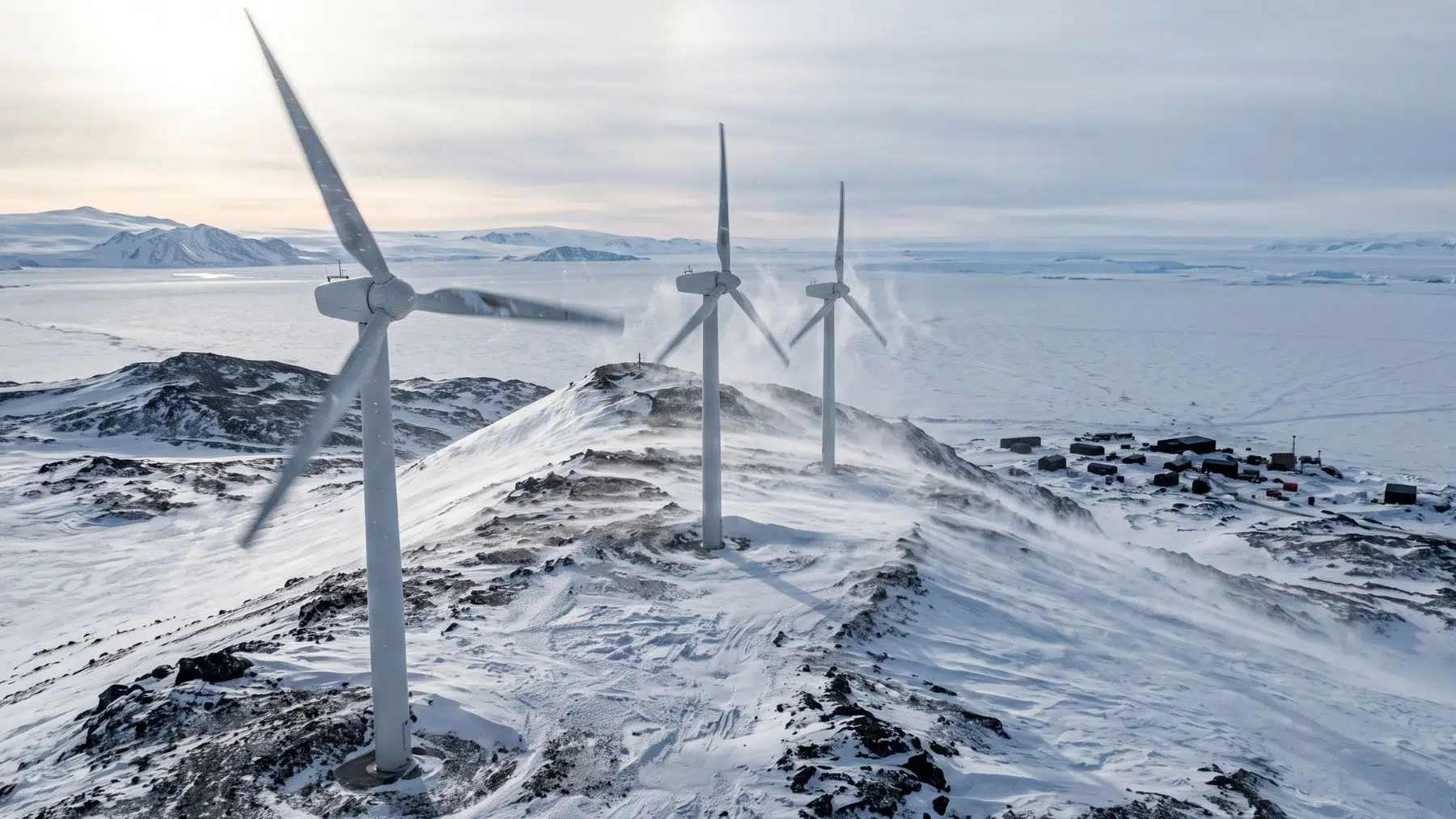
Three tall towers began to turn in the polar wind.
What they power is stranger still, and it crosses a national border.
The hardest place on Earth to plug in
Ross Island sits in the Ross Sea, farther south than almost anywhere humans live.
Two research bases perch on it, only a couple of miles apart.
One is the American McMurdo Station, the largest base on the continent.
The other is New Zealand’s much smaller Scott Base.
Winter temperatures plunge far below zero, and the sun vanishes for months.
Every drop of fuel has to arrive by ship across the roughest ocean on the planet.
That fuel then has to be stored, guarded, and burned around the clock.
Supplies for a whole year must arrive in one brief summer window.
Miss that window, and there is no second chance until the ice breaks again.
Keeping people alive here is staggeringly expensive.
And for a long time there seemed to be no other way.
Why diesel ruled the ice for so long
Antarctica runs on diesel because diesel is dependable.
A generator burns fuel the same way in a blizzard as on a calm day.
The wind here, by contrast, can be terrifying and violent.
Gusts scream across the ice at speeds that would flatten ordinary machines.
For years, engineers assumed no turbine could survive that punishment.
Cold this deep can turn steel brittle and freeze moving parts solid.
Shipping in giant blades and towers seemed almost impossible too.
A single failure in the dark of winter could put lives at risk.
That fear kept the bases loyal to their generators for a very long time.
So the bases kept burning fuel, and the tanks kept sailing south.
The waste and the risk of all that diesel kept climbing higher.
Three machines built for the bottom of the world
In 2009, a bold experiment finally changed the picture.
A team from New Zealand and the United States raised three turbines on Crater Hill.
They stand on a windswept ridge above both bases.
Each one is an Enercon E33, built to handle brutal cold and wild gusts.
Together the three wind turbines add up to almost one megawatt of power.
They were engineered to keep spinning in weather that would ground most machines.
Getting them there meant hauling every part across thousands of miles of sea.
Then crews assembled them in one of the shortest building seasons on Earth.
The towers had to be anchored deep into frozen volcanic rock.
Workers braved biting wind to bolt each section into place.
It was a gamble on a hill where almost nothing else stands upright.
One wind farm feeding two nations
Here is the part that makes this place unique.
The three turbines feed a single shared grid that links McMurdo and Scott Base.
An American base and a New Zealand base now draw clean power from the same wire.
It is the only place on Earth where these two nations pool their electricity like this.
According to one report, the wind farm cuts diesel use by about 463,000 liters every year.
That also erases roughly 1,242 metric tons of carbon dioxide annually.
Before the turbines, nearly all of that power came straight from fuel tanks.
Now the wind carries a large share of the load whenever it blows.
It is the southernmost wind farm anywhere in the world.
All of it runs on a fuel that arrives for absolutely nothing, the polar wind.
Life at the edge, and what comes next
The turbines share this island with some of the toughest wildlife alive.
Adelie penguins nest along the coasts of Ross Island each summer.
Weddell seals haul out on the sea ice that rings the shore.
The same relentless wind that batters them now helps run the bases beside them.
Researchers still track how the machines hold up against the extreme cold.
Each winter they survive adds weight to the whole idea.
According to one account, the project was built to prove clean power could work even here.
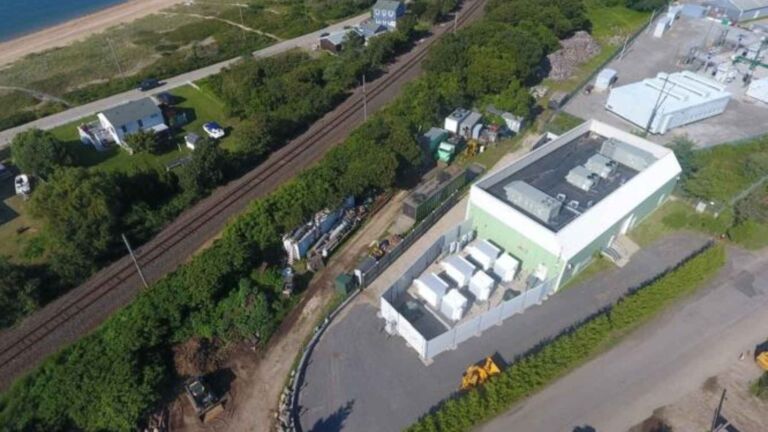
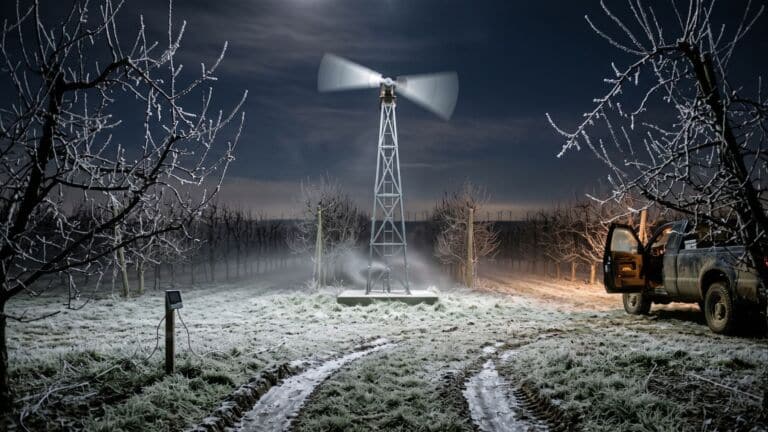
The same push shows up in gentler places, from an offshore wind farm to a small backyard tower.
If wind can carry the load at the bottom of the world, it can carry it almost anywhere.
Three towers on a frozen hill have made that case for over a decade.
Read the whole thing?
Get the week's signal, not the noise
Our sharpest reporting on energy, climate and nature — free, once a week.