There are signals all around you right now.
Invisible. Silent. Constant.
Every movement, every electronic device, every living organism generates tiny electrical pulses. But humans can’t feel them.
At least, not naturally.
Some animals can.
And now, scientists are trying to give us that same ability—so what does it actually mean to “feel” electricity?
How certain animals sense what humans cannot
In nature, survival often depends on sensing what others miss.
For some species, vision isn’t enough. Sound isn’t reliable. And smell has limits.
So evolution found another way.
It’s called electroreception.
This ability allows certain animals to detect electrical signals produced by muscle movement, nerve activity, and even the faintest biological processes.
Sharks use it to hunt in dark waters, sensing the electrical pulses of hidden prey.
But one animal has taken this ability even further.
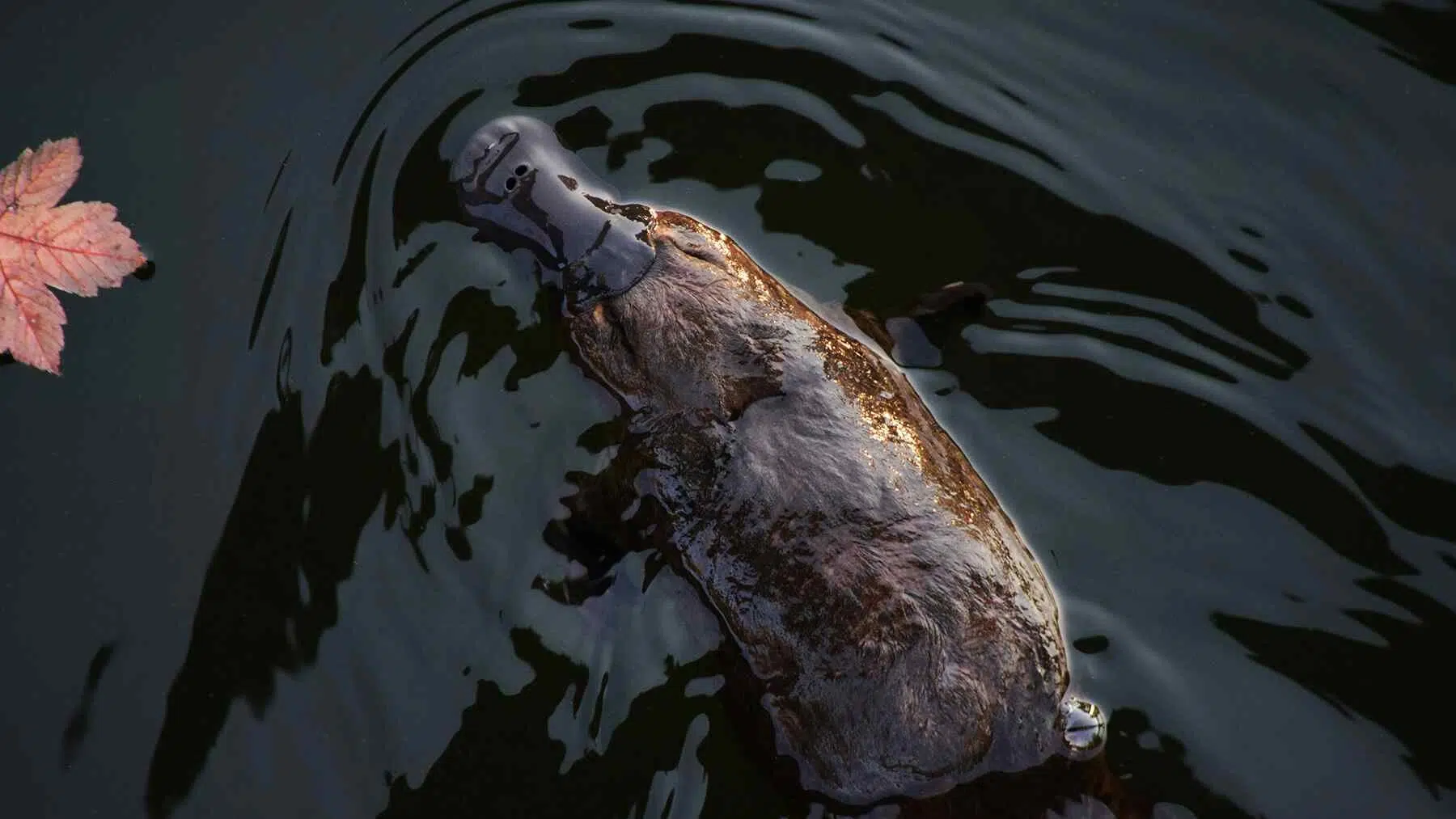
The platypus.
Living in murky rivers where visibility is almost zero, the platypus doesn’t rely on sight when hunting. Instead, it uses thousands of specialized receptors in its bill to detect electrical signals in the water.
Every movement made by a small creature sends out a signal.
And the platypus can feel it.
A natural sense that works like a hidden map
What makes electroreception so remarkable is how precise it is.
The platypus has around 40,000 electroreceptors concentrated in its bill. These receptors allow it to build a kind of “electrical map” of its surroundings.
It doesn’t see its prey.
It senses its presence.
Distance. Direction. Movement.
McGill University says that all of it comes from interpreting electrical signals in real time.
And it works even in complete darkness.
For years, scientists have studied this ability, trying to understand how biology can process such subtle information so efficiently.
Because if it could be replicated…
It could change how humans interact with the world.
How scientists are trying to give humans this sense
Researchers are now working on technologies that mimic electroreception.
Not by altering human biology directly, but by creating devices that translate electrical signals into sensations we can perceive.
One approach involves wearable sensors.
These devices detect electrical activity in the environment and convert it into tactile feedback—small vibrations or signals that the brain can learn to interpret.
In early experiments, this has already shown promise.
Some systems are being tested to help visually impaired individuals navigate their surroundings. Instead of relying only on sound or touch, they can begin to “feel” the presence of objects through electrical cues.
It’s not the same as natural electroreception.
But it’s a step in that direction. And it opens up possibilities that go far beyond navigation.
Why this could change more than just perception
If humans can learn to interpret electrical signals, the applications could be wide-ranging.
Medical technology could benefit.
Sensors inspired by electroreception might improve imaging techniques, detecting subtle changes in the body that current tools miss.
Prosthetics could become more advanced.
Artificial limbs equipped with electro-sensitive feedback could allow users to experience a more natural sense of interaction with their environment.
Even everyday technology could evolve.
Wearable devices might one day give people an entirely new layer of awareness—something between touch and intuition.
But the biggest shift is more fundamental.
It’s about perception.
Because for the first time, humans wouldn’t just rely on sight, sound, and touch.
They would gain access to something entirely new.
A sense that was always there—but never ours
Electroreception is not a futuristic concept.
It already exists.
Quietly, in rivers and oceans, used by animals that depend on it every day.
What’s changing is our ability to understand it—and potentially replicate it.
That doesn’t mean humans will suddenly “feel electricity” the way a platypus does.
But it does mean the boundary between human senses and the natural world is starting to shift.
And as that line moves, one question becomes harder to ignore.
If we can add new senses to our experience of reality… what else have we been missing all along?
Read the whole thing?
Get the week's signal, not the noise
Our sharpest reporting on energy, climate and nature — free, once a week.