
Every day, people drive on the same roads without thinking much about them. Highways are built to move cars and trucks, not to produce energy. But researchers now believe these familiar routes could play a surprising role in the future of clean power.
Instead of building entirely new systems, scientists are looking at how existing road infrastructure could be used in smarter ways. The idea is simple: the space connected to our highways may be doing nothing today — but it could help generate energy tomorrow.
An idea hiding in plain sight
For decades, clean energy solutions have focused on rooftops, open fields, and remote deserts. But researchers are now turning their attention to a vast, unused space that already exists and requires no new land, no major disruption, and no relocation of communities.
This space runs for millions of kilometers worldwide. It connects cities, crosses borders, and follows routes humanity already depends on. And most importantly, it sits directly beneath one of the most reliable energy sources on Earth.
Why this approach could change more than just energy
What makes this idea especially intriguing is that its benefits go beyond electricity. The structure in question could also offer protection — from heat, rain, snow, and even wear and tear caused by extreme weather. It could improve safety, reduce maintenance costs, and make existing infrastructure last longer.
Public institutions such as the U.S. Department of Energy have already highlighted the importance of integrating renewable energy into infrastructure that people use every day, rather than treating energy systems as something separate from daily life.
The reveal: turning highways into power plants
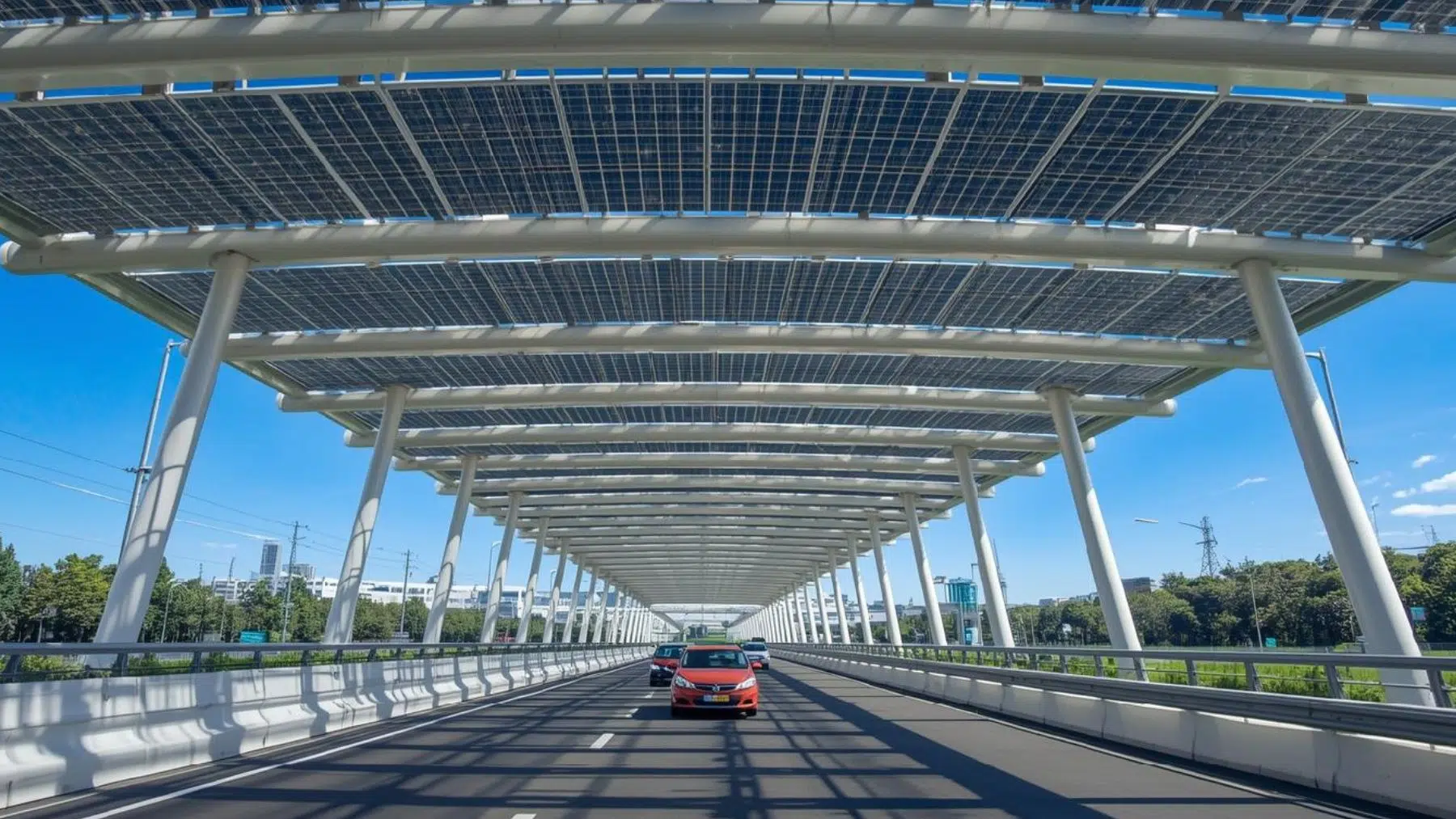
Only toward the end of the research does the full picture become clear. Scientists are proposing to install solar panels as elevated roofs over highways, creating continuous solar canopies that generate electricity while vehicles pass beneath them.
According to the study, covering the world’s highways this way could produce up to 17.58 petawatt-hours of electricity per year — enough to meet more than 60% of global electricity demand — while reducing global carbon emissions by nearly 28%. All of this would be achieved without consuming additional land, a key limitation of many renewable energy projects.
What this means for the future
The idea is still largely theoretical, with only small pilot projects in place, and challenges such as cost, engineering complexity, and maintenance remain. Researchers from institutions like MIT stress that large-scale implementation would require long-term planning and international cooperation.
Still, the concept offers a powerful reminder: the path to a cleaner future may not always require radical new inventions. Sometimes, it’s about rethinking what we already have. In this case, the road ahead might not just take us somewhere — it could help power the journey itself.
Read the whole thing?
Get the week's signal, not the noise
Our sharpest reporting on energy, climate and nature — free, once a week.


