On a September day in 2025, a crowd gathered along a farm road in Madison County, New York, and watched history fall.
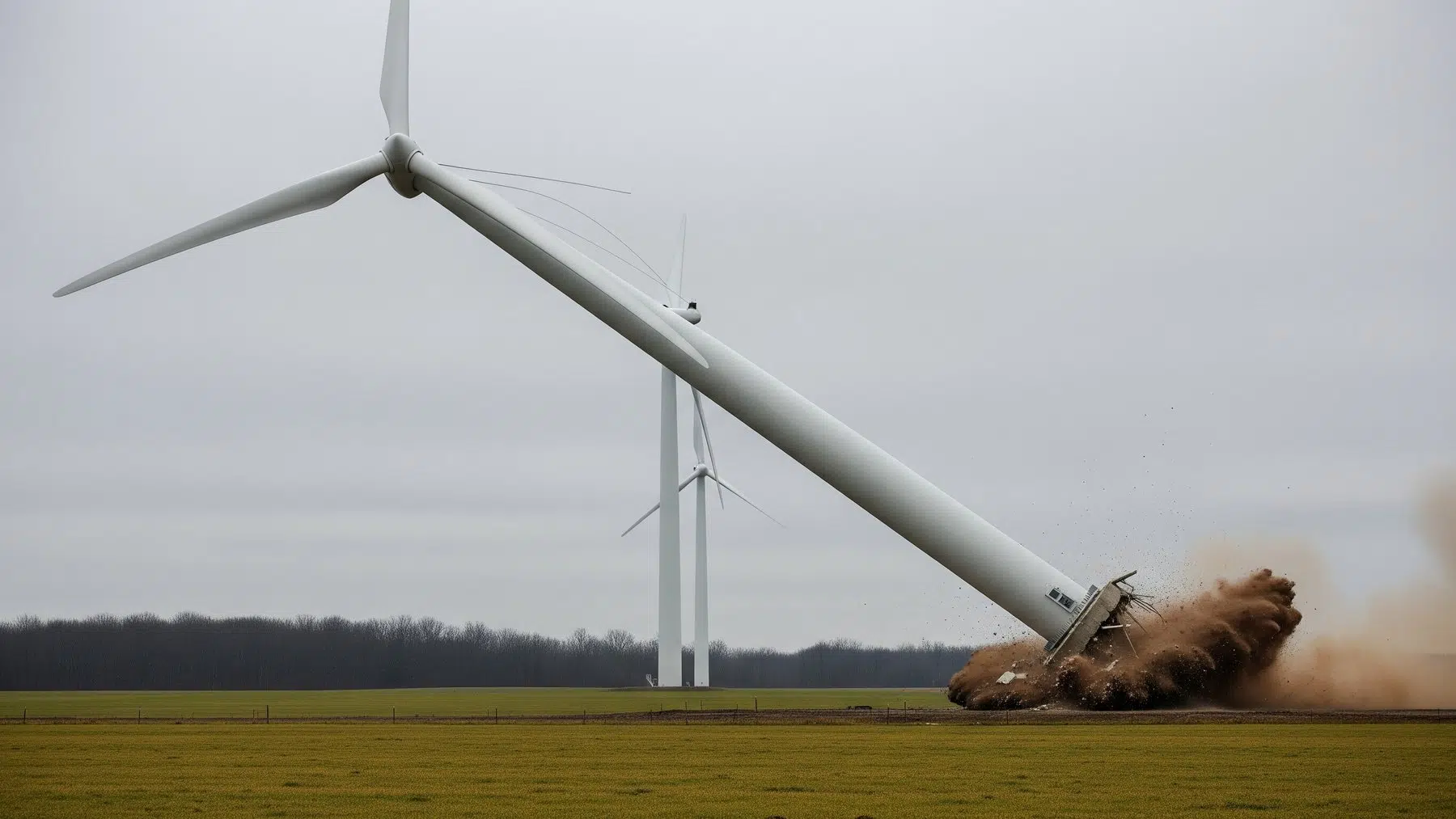
Seven steel towers, each standing more than 200 feet tall, came down one after another in a rolling chain of controlled blasts.
The whole thing was over in about 30 seconds.
What those towers left behind, and what is already being planned for the same stretch of dairy farmland, turns out to say something remarkable about how far American wind power has traveled in a single generation.
The turbines that started it all
Madison Wind Power was the first commercial wind farm built in New York, and its seven turbines were heralded 25 years ago as harbingers of the state’s green energy future.
It was also the first merchant wind farm in the entire country.
U.S. Energy Secretary Bill Richardson was among the VIPs who showed up for the groundbreaking in April 2000.
The wind turbines quickly became a kind of tourist destination, with people stopping from U.S. Route 20 to see the facility.
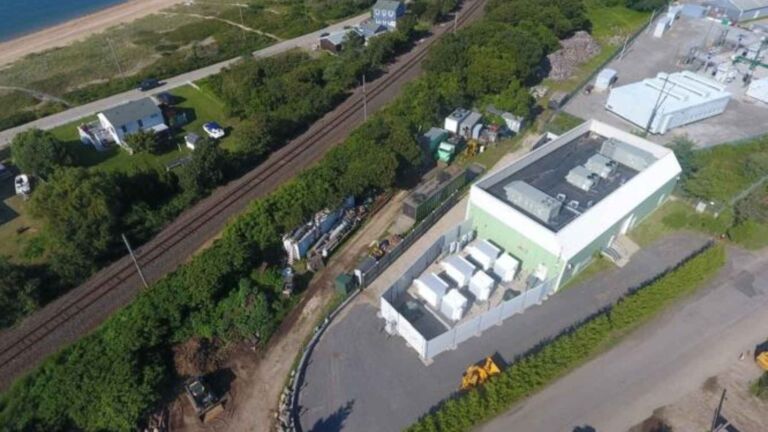
The Madison facility sat on private dairy farmland in the town and county of Madison, in upstate New York.
The seven turbines stood 220 feet tall at the hub with a total capacity of 11.5 megawatts, enough to power thousands of homes.
A slow fade no one could fix
By the 2020s, something had shifted.
In 2011 the farm generated 21,700 megawatt hours, enough for nearly 3,000 homes.
Last year it produced only one third that much.
The turbines were not victims of a political decision or a health scare.
The components needed to keep them running had become harder and more expensive to procure.
As project manager Rachel Smith told CNYCentral, “it turned out that these wind facilities were prototypes at the time and it was just really hard to find the parts to refurbish them.”
The most economical path, she said, was to take them down and start a new project.
At the time of the farm’s construction, it was anticipated to have an operational lifespan of 20 to 25 years.
By 2025 the project was no longer considered economically viable.
Thirty seconds to erase a landmark
The turbines were blown up one after another, and it took about 30 seconds for the blasts to knock them all down.
Farmers and neighbors who had lived alongside them for a quarter century watched from the road.
For many, the towers had simply become part of the landscape, as familiar as the silos and fence lines around them.
After they fell, the turbines were pieced apart into transportable, recyclable components and removed from the site.
Small debris was cleaned up by hand and a magnet sweep.
The land was then restored to its natural use.
What that means for the fields, and for the creatures that share them, is where the story gets genuinely surprising.
A generation of wind power later, the numbers are staggering
This is the real story the demolition tells.
New York now has 2,000 megawatts of installed wind capacity, many times the output of Madison, with more on the way.
Today the world’s largest wind turbine, a record breaking offshore machine built by Dongfang Electric and installed in 2025, is capable of generating up to 26 megawatts of electricity.
A single modern machine now outperforms the entire original Madison farm on its own.
EDP, the renewable energy group responsible for Madison, plans to develop a new, much larger wind farm in central New York called the Rolling Upland Wind Farm.
It will carry a capacity of over 76 megawatts, more than six times Madison’s total output.
Wind turbines leave 98 percent of a project’s leased land available for farming or wildlife habitat, a figure borne out by research showing that Wyoming pronghorns simply move to the far side of the towers rather than abandoning the land altogether.
When operational, Madison alone saved more than 20 million gallons of water each year and prevented the air pollution that causes smog and acid rain.
What rises where the old towers fell
The dairy farms that hosted Madison’s turbines for 25 years are not going still.
Rolling Upland Wind Farm will be located in Madison and Sangerfield townships, adjacent to the old Madison site.
It will also provide local landowners with a stable income through lease payments.
Wind production in New York has grown from just 21 gigawatt hours in 2001 to nearly 6,000 gigawatt hours across all sectors in 2024.
The fields themselves, freed from the original foundations, will return to grass and pasture.
The grassland birds and raptors that share Madison County’s rolling terrain will find the same open farmland they have always known, with newer, fewer, and more powerful towers rising nearby.
A pioneer’s end, in other words, is just the pasture making room for what comes next.
Read the whole thing?
Get the week's signal, not the noise
Our sharpest reporting on energy, climate and nature — free, once a week.