A flat panel slides off the back of a truck in Cedartown, Georgia, and onto a belt.
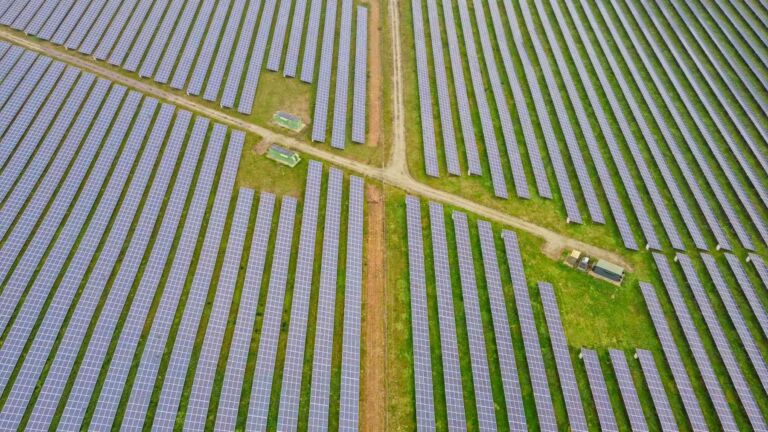
It spent years in a field, turning sunlight into power for a farm or a utility somewhere.
Now it weighs roughly 40 to 50 pounds and carries silver, copper, glass and aluminum that nobody wants to bury.
The problem has always been getting those materials back out without shredding them into worthless powder.
The plant here is built around exactly that problem, so what happens to a panel on the belt?
What the belt in Cedartown actually does to a worn panel
A standard silicon module is about three quarters glass by weight, wrapped in an aluminum frame and bonded together by a thin polymer film that locks the cells against the glass front, with a plastic backsheet behind. That encapsulant is what keeps a panel weatherproof through decades outdoors, and it is also what makes pulling the thing apart so difficult.
The aluminum frame and the junction box come off first, and those steps are straightforward. Stripped frame sections go back into the metals market at close to commodity value. The harder step is parting the cover glass from the laminate beneath it without grinding that glass into dust too fine to remelt.
The operator says its advanced recycling line separates the glass from the laminate, then shreds and processes the laminate through multiple stages to pull out the silver, copper and aluminum. According to the operator’s announcement, the process allows for 100 percent landfill diversion and recovers 96 percent of the value from the silver, copper, aluminum, glass and other critical minerals within a solar panel. What moves off the end of the line is sorted material streams rather than mixed rubble.
Inside a building built just to take things apart
The plant fills a 255,000 square foot shell on the edge of town, a former garment factory that local reporting says the company used to stockpile panels while the interior was prepared. The operator says the system more than doubles the throughput of its earlier recycling lines, which matters because the fixed cost per panel drops fast once the line is moving enough volume to cover its overhead.
Module glass is not window glass. Solar cover glass is low in iron and carries coatings, so it cannot simply be melted with ordinary cullet without preprocessing.
So the glass stream stays separate from the moment it parts from the cell stack. That discipline is what lets the cullet hold real commodity value rather than being sold cheap as mixed electronic scrap, and it is central to the economics of the whole operation.
The numbers already coming off the line
Recycling began at the site in late January, and the facility reports thousands of panels a week now, on a ramp toward one million panels annually by the end of 2026 and up to 5 gigawatts of panels a year at full capacity. That is around 10 million panels, which the operator puts at an estimated 25 to 30 percent of the panels the United States retires in 2030.
The pipeline behind that figure is large. The operator points to Energy Information Administration forecasts of as much as 70 GW of new solar generating capacity in 2026 and 2027, a 49 percent increase over capacity operating at the end of 2025. All of it will eventually need somewhere to go.
The layer that still gives every recycler the most trouble
The encapsulant is not the only stubborn part. The backsheet, usually a fluorinated plastic, is among the hardest fractions to place. Even in the European Union, where recycling is required, many facilities recover mainly the bulk aluminum and glass that make up over 80 percent of a silicon panel’s mass, and much of the remaining material is incinerated despite containing silver, copper and silicon.
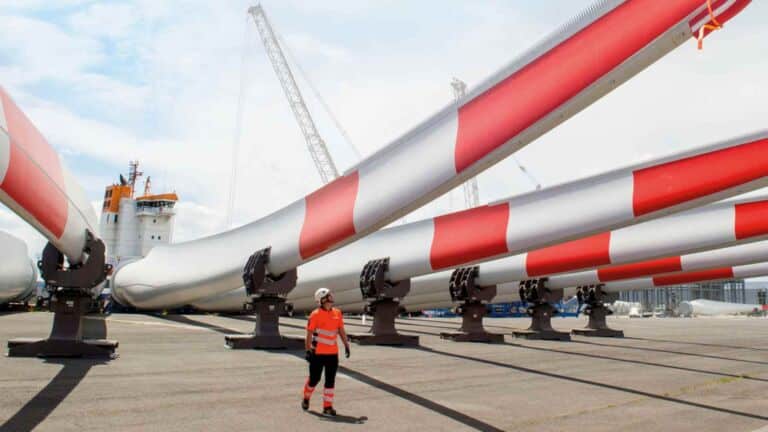
The US picture is thinner still. An EPA assessment reports that interest in panel recycling has been limited by the value of recovered materials, that only about 10 percent of panels are recycled today, and that recycling costs exceed recovery economics, leaving a large volume of material headed to landfill. Wind turbine blades have faced a similar landfill problem, and solutions there arrived slowly.
Against that baseline, a claim of 96 percent value recovery is worth watching closely, because most US capacity has historically stopped not far past the frame.
What is taking shape on the lot next door
The recycling plant sits next to the site of a future solar glass factory, an integrated campus meant to recover and remanufacture materials from end of life panels. The idea is direct: clean cullet feeds the furnace next door instead of riding a truck to an outside glass plant.
The operator has described the glass plant as the first in the country to make new solar glass from materials recovered from retired panels. It is not built yet. The operator says customer commitments cover more than 80 percent of the glass factory’s planned 5 GW capacity, with groundbreaking on track for mid-2026 and first glass in 2028, on a 260 acre site in Cedartown’s North Industrial Park.
“Our recycling facility in Cedartown represents a step-change in how we’re delivering end-of-life infrastructure,” the company’s chief executive and co-founder said. The broader solar materials field keeps producing inventive ideas, and what is running in Cedartown is the unglamorous half: a belt, a frame stripper and bins of sorted cullet. The open question is the loop itself. Until the furnace next door exists, the recycled glass has to find buyers in a market that mostly imports its cover glass today.
Read the whole thing?
Get the week's signal, not the noise
Our sharpest reporting on energy, climate and nature — free, once a week.