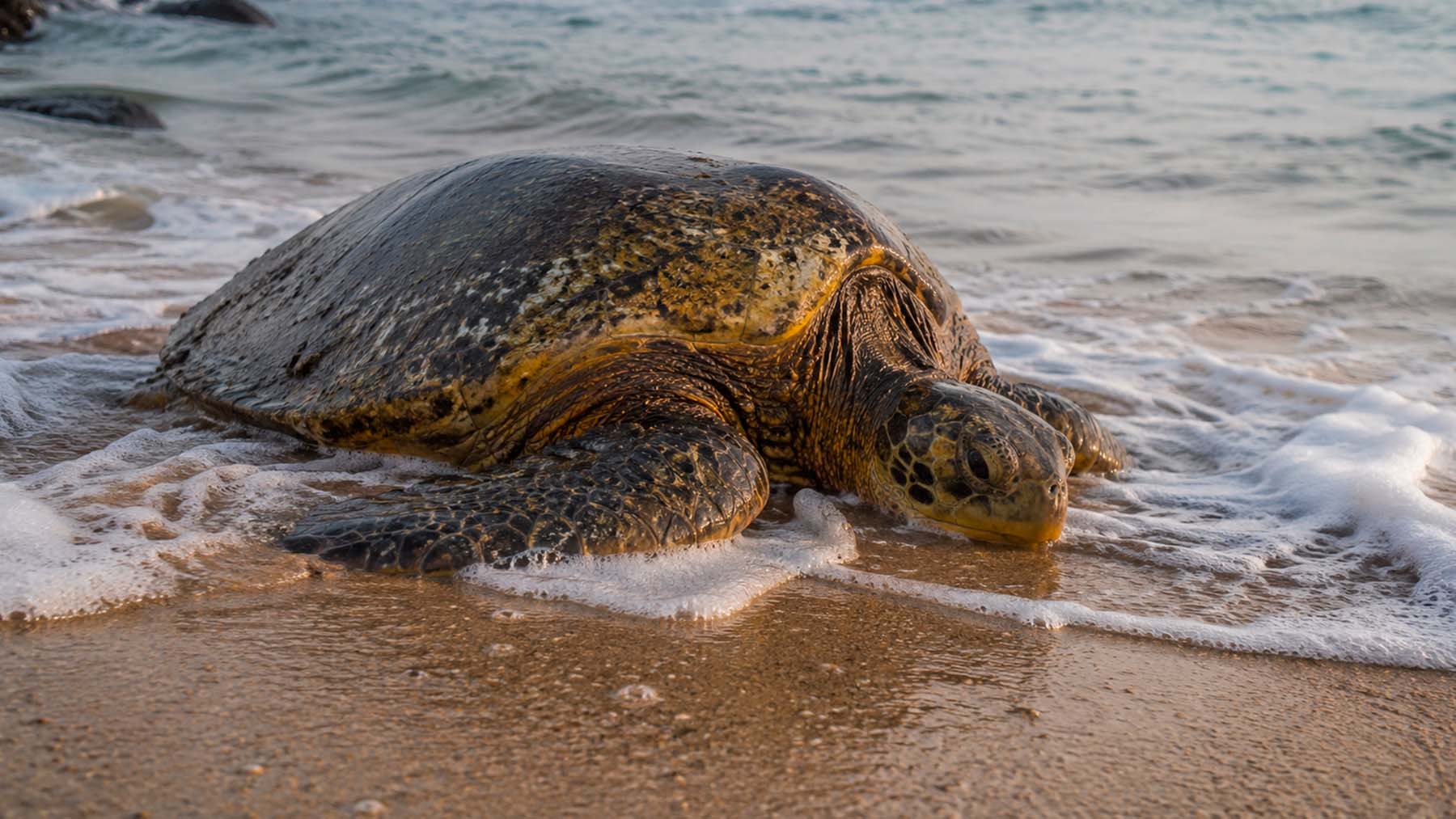
When Sophia arrived at Brevard Zoo’s Sea Turtle Rehabilitation Center, the 114-pound loggerhead was carrying more than 20 fishing hooks — and fishing line — lodged deep in her digestive tract. The veterinary team managed to remove two of them. The rest were simply out of reach.
Standard tools weren’t built for a patient in a shell.
A patient unlike any other
Sophia’s situation was serious from the moment she arrived. At 114 pounds, she was a substantial loggerhead — but the real concern was what was inside her. More than 20 fishing hooks, along with fishing line, were lodged throughout her digestive tract. The zoo’s veterinary team removed two. The rest refused to cooperate.
Sea turtle anatomy made the problem harder than it sounds. The shell limits how much of the gastrointestinal tract is physically accessible, and the transition from the esophagus to the stomach involves a sharp turn that standard veterinary tools simply aren’t designed to navigate. Without a way to reach the remaining hooks, Sophia’s path back to the ocean looked uncertain at best.
The urgency was real. Hooks left in place can cause internal damage, infection, and slow deterioration — and for a wild animal whose survival depends on returning to open water, “wait and see” wasn’t a viable plan.
When human medicine crossed into marine care
The solution came from an unexpected direction. Orlando Health Regional Medical Center’s Endoscopy Unit donated advanced endoscopy equipment and instruments to Brevard Zoo’s Sea Turtle Rehabilitation Center — tools built for human patients, now repurposed for a loggerhead in a shell.
An endoscopy is a minimally invasive procedure in which a physician uses an endoscope — a long, flexible tube equipped with a camera and light — to examine the interior of the body without major surgery. It’s a routine tool in gastroenterology. It had never been part of sea turtle rehabilitation.
Dr. George Christophi, a gastroenterologist at Orlando Health Melbourne Hospital, stepped in as a consultant. He was candid about the learning curve. “Certainly, I had to catch up on my turtle anatomy to consult with our partners here at the zoo,” he said with a laugh. The core challenge, though, translated across species: navigate a difficult turn in the GI tract, locate foreign objects, remove them with precision. Dr. Christophi also noted that the flexibility of the scope — the same quality that makes it effective in human procedures — may allow the team to reach areas of a turtle’s digestive system that were previously inaccessible. That’s a significant shift.
What the new equipment actually makes possible
With the donated tools in place, the veterinary team now has something they didn’t have before: visibility. A clear view of the interior of an injured turtle’s body changes what’s possible during a procedure. Instead of working blind or relying on imaging alone, clinicians can see exactly where hooks are lodged and how to approach them.
For Sophia specifically, the plan involves attempting to remove more of the remaining hooks — and potentially cutting or removing wire still lodged in her body. That kind of precision work requires exactly the equipment Orlando Health provided.
Dr. Rachel Turner, director of veterinary programs at Brevard Zoo, put it plainly: “This equipment expands our ability to care for patients with more severe fishing line and hook ingestion.” She also pointed to something beyond the technology itself. “This is an invaluable opportunity for collaboration and education between our two teams,” she said. The partnership isn’t just about one turtle — it’s building a shared knowledge base between zoo veterinarians and hospital physicians that could shape how both teams handle complex cases going forward.
A growing crisis on the water
Sophia’s case is striking, but it isn’t rare. Brevard Zoo’s Sea Turtle Rehabilitation Center treats hundreds of sick and injured sea turtles every year, and a growing share of those cases involve boat strikes and improperly discarded fishing gear — hooks, lines, and other equipment that ends up in the water and, eventually, inside marine animals.
Conservationists and local officials have continued pushing for more responsible practices on the water. Awareness campaigns, fishing gear disposal stations, boating guidelines — all of it plays a role. But the turtles keep coming in.
What Sophia’s case illustrates is the scale of the problem. Twenty-plus hooks in a single animal isn’t an outlier. It’s a signal. The threats facing sea turtles along Florida’s coast are escalating, and the tools needed to address them have to keep pace.
Beyond Sophia: what this partnership means for marine medicine
The goal for Sophia is the same as it is for every turtle that passes through the rehabilitation center: get her healthy and get her back to the ocean. That remains the benchmark, even as her case has sparked something larger.
Dr. Christophi framed the collaboration in broad terms. “This collaboration demonstrates how medical innovation and teamwork can extend beyond human healthcare to benefit the broader community,” he said. It’s a straightforward idea with real implications — expertise developed in one field, applied carefully in another, with meaningful results.
Dr. Turner called it a partnership that “strengthens the future of marine animal medicine in our region.” That regional focus matters, but the model itself is portable. Cross-disciplinary collaborations between human medical facilities and wildlife rehabilitation centers are still uncommon. If this one produces results — for Sophia and for the turtles that come after her — it could become a template worth replicating elsewhere. Other rehabilitation centers face similar challenges. Other hospitals have similar equipment. The question is whether more of them will find their way to the same table.
Read the whole thing?
Get the week's signal, not the noise
Our sharpest reporting on energy, climate and nature — free, once a week.