
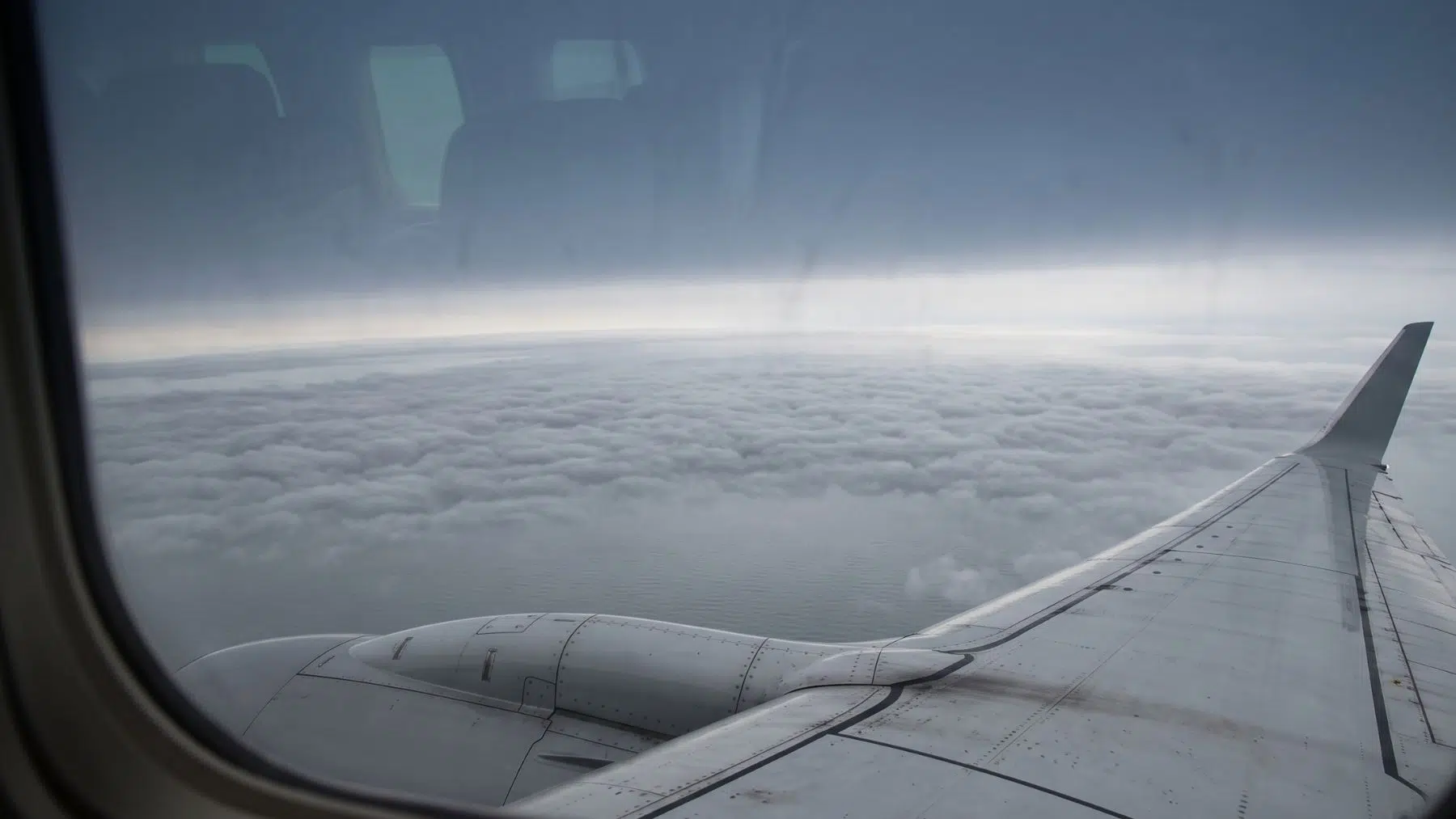
On a winter night in February 2024, a Virgin Atlantic jet climbed out of Washington Dulles and did something almost nobody noticed.
The cabin stayed calm. The seatbelt sign behaved. Dinner arrived on time.
Yet the flight tracker told a wilder story, with the ground speed racing past 802 mph.
Something far above the ocean had grabbed the aircraft and hurled it east toward London.
The plane touched down 45 minutes early, and the reason stayed invisible from every window.
Passengers stepped off believing they had simply caught a good night for flying.
The river of air that pilots chase
Miles above your seat, the sky moves in narrow currents that never rest.
These are the jet streams, ribbons of wind that race from west to east around the planet.
They sit roughly six miles up, in the mid to upper part of the troposphere.
That is exactly where long haul jets prefer to cruise.
The strongest of them can push well past 250 mph.
Most days they run gentler, closer to 110 mph.
So a jet holding its normal 575 mph can borrow a huge shove from behind.
For decades pilots have leaned on this free push to trim both time and fuel.
Why the sky flows faster in winter
The engine behind these winds is a simple clash of temperature.
Warm tropical air presses up against cold polar air, and the gap between them builds pressure.
That pressure shoves air sideways, and the spin of the Earth bends it into a fast moving band.
The result is a current hundreds of miles wide and only a few miles thick.
In winter the temperature clash grows sharper, so the winds grow stronger.
That is why an eastbound crossing often beats the return leg by an hour or more.
The same restless air also decides how early a flight from New York or Washington will land.
The passengers who felt nothing at 802 mph
Here is the part that trips people up.
A ground speed of 802 mph sounds supersonic, yet nobody on board felt a thing.
The trick is that a plane moves through the air around it, not across the map below.
That surrounding air was already racing east, carrying the jet like a leaf on a river.
Relative to the wind, the aircraft was still cruising at its ordinary pace.
Everyone aboard was, in a real sense, standing still inside a sprinting mass of air.
The speed of sound at that height sits near 660 mph, lower than it is down at sea level.
So while the map flashed a blistering number, the wings never came close to the sound barrier.
No sonic boom. No rattled windows. Just an early gate.
What the weather balloon caught that night
The full scale of the night only showed up when the readings came in.
A weather balloon over the mid Atlantic clocked winds of 265 mph near 34,000 feet.
The National Weather Service office for Baltimore and Washington called it the second strongest upper level wind in the region since records began in 1948.
That was the shove behind Virgin Atlantic Flight 22, which hit 802 mph near 33,350 feet and reached London 45 minutes early.
It was far from alone in the sky.
A United 787 flying from Newark to Lisbon touched 838 mph along the same corridor.
British Airways Flight 292 clocked 806 mph and landed 32 minutes early, while Flight 216 pushed to 809 mph.
Forecasters had flagged the setup for days, and the near record winds matched what the balloons measured.
Even a spinning offshore wind farm feels calmer gusts than the ones roaring overhead that night.
A separate ocean and an even wilder ride
The Atlantic was not the only place the sky misbehaved that winter.
Weeks earlier, on January 25, a China Airlines Boeing 777 freighter caught its own monster tailwind.
Flight CI 5116, running from Taipei to Los Angeles, reached 826 mph over the Pacific.
That surge traced back to El Niño, which had nudged the Pacific jet stream into overdrive.
Different ocean, same lesson, with the wind doing the heavy lifting while the engines simply held station.
That is why the outbound leg felt like magic while the return promised a slog.
You can follow these speeds on public trackers, and the record run over the Pacific is still logged for anyone curious.
For travelers it is mostly a welcome gift, since a faster crossing burns less fuel and lands ahead of time.
The catch waits on the way home, when that same river turns into a wall of headwind.
Clean power like a rooftop solar panel array shrugs off the wind, yet a westbound jet has to fight straight through it.
Read the whole thing?
Get the week's signal, not the noise
Our sharpest reporting on energy, climate and nature — free, once a week.


