Volunteers analyzing space telescope data have identified thousands of dim objects in the neighborhood of our Sun.
By analyzing the infrared data acquired by NASA’s WISE (Wide-field Infrared Survey Explorer), the volunteers identified 3,006 motion-confirmed brown dwarf candidates.
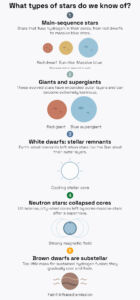
Brown dwarfs are compact substellar bodies often referred to as ‘failed stars.
If these candidates are confirmed through follow-up spectroscopy, this decade-long research would more than double the number of known brown dwarfs recorded in our vicinity.
Searching for glowing bodies along the stellar boundary
Brown dwarfs are substellar bodies situated between giant planets and low-mass stars.
Unlike normal stars, they lack sufficient mass for sustained hydrogen fusion, though some briefly fuse deuterium early in their lives. Over time, they cool and radiate leftover thermal energy, emitting primarily—though not exclusively—in infrared wavelengths.
Learning about these bodies is essential to understand mass distribution in our galaxy.
Spotting proper motion across infrared flipbooks
NASA’s Backyard Worlds mission is dependent on sequentially taken space telescope images.
Before its mission ended in 2024, the WISE satellite orbited Earth for years, capturing millions of infrared sky images. Backyard Worlds researchers now analyze these archived observations.
Brown dwarf stars are found within a relatively close proximity to our solar system and thus move against a fixed background of distant stars.
Blink animations were produced by project leaders from sky images. Citizen scientists examine the animation frames like a flipbook for dark spots that show movement over the years.
Pattern analysis of this motion indicates that they are local astronomical bodies.
Detection of actual motion will enable scientists to distinguish local bodies from fixed background stars and other extragalactic sources.
Combining human vision with automated filters
Noisy infrared background proves difficult for computer vision detection algorithms.
Detection software is prone to mistake features like red galaxies in the distance and also mistake diffraction spikes for motion.
However, the human eye is good at detecting visual patterns over time.
More than 100,000 internet users examined the images, eliminating electronic noise and determining whether there were any moving objects.
While motion analysis confirmed these objects are local candidates, follow-up spectroscopy using ground-based telescopes is still required to confirm their exact spectral types.
Scientists used a combination of human ability and data filtering algorithms to detect visual patterns.
Uncovering rare subdwarfs and cold atmospheric worlds
Among the objects discovered and categorized recently, some were extreme T subdwarfs. These are believed to be ancient brown dwarfs with a low metallicity that formed during the early life of the galaxy.
Some bodies have super cold atmospheres.
Ultracool Y-type brown dwarfs having atmospheric temperatures similar to that of Earth have been found, along with some exotic objects displaying auroral emissions at the poles.
These cold atmospheres are similar to those of gas giant planets.
Caltech/IPAC explains that by focusing on brown dwarfs individually, researchers can study cloud decks made of methane and water vapor without the intense light of the host star.
Atmospheres of substellar objects provide a natural laboratory for exoplanets.
Rewriting the census of our cosmic neighborhood
Surveying local brown dwarfs changes how scientists view the process of star formation.
This discovery showed that there is one brown dwarf for every three to four stars around our Sun, which modifies the theories on mass distribution in the galaxy, NASA Science reports.
With the doubling of the number of objects to analyze in just one decade, citizen science helps astronomers explore thousands of new objects using space telescopes.
With future surveys of the sky providing vast amounts of information in pictures, it will take the joint effort of human pattern recognition and machine learning to reveal all secrets of our galaxy.
Read the whole thing?
Get the week's signal, not the noise
Our sharpest reporting on energy, climate and nature — free, once a week.