

The bird shouldn’t have been there.
Maryland was not part of the species’ expected distribution.
After banders at the Patuxent Research Refuge examined a small migrant captured at the refuge, the identification indicated a small migrant captured at the refuge in Maryland.
Every year, millions of songbirds migrate between breeding and wintering sites.
Most of these birds follow established migration routes which were developed through generations of migrating.
This bird didn’t.
How a western warbler ended up in Maryland
After examining the warbler, banders at the Patuxent Research Refuge recognized that it belonged to a species that shouldn’t have been there.
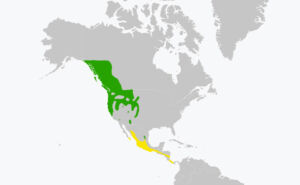
MacGillivray’s warblers migrate through western North America toward wintering areas in western Central America, while Maryland sits far east of the species’ typical migration route.
Additionally, the bird was identified as being a first-year individual.
Young birds are more likely than adult birds to show up in unusual locations as they are making their initial migration without prior experience from previous migrants.
Some birds may simply wander slightly beyond their usual location.
Others may migrate hundreds or even thousands of miles away from their normal habitat.
This warbler fell into the latter category.
Initially, what appeared to be just another migrant passing through a banding station eventually turned out to be something much rarer.
The warbler represented a western species far outside its normal range.
Why confirming the species required closer study
Rare birds present an initial problem.
Locating such a bird is only part of solving the problem.
Identifying the exact species is required.
MacGillivray’s warblers resemble other Western Warblers especially if viewed briefly while in flight.
Therefore, careful analysis was necessary to confirm identification.
Band-stations offer advantages to researchers when dealing with such problems.
Migrants may be studied and photographed in detail and measured in ways seldom available under field conditions.
Such data allow researchers to compare the bird’s physical attributes with those of established identification features.
Separating it from similar warblers
Initially, it was suspected that the bird might be an unusual Mourning Warbler because that species is a more expected migrant in the region.
As more information became available, it became increasingly obvious that the migrant was a MacGillivray’s warbler.
The identification process was later detailed by the U.S. Geological Survey.
Ultimately, that identification changed an interesting sight into a significant state record.
Maryland birders have recorded hundreds of species since the hobby started.
However, documenting a new species requires substantial proof.
The warbler provided such proof.
Its presence became the first documented and photographed record of the species in Maryland.
What the record means for Maryland birders
Each year, rare birds are found in unfamiliar locations.
Most are only noted by local birders and never gain wider recognition.
This one was different.
A first state record adds permanently to the documented avifauna of an area.
All future birders, researchers, and record committee members will be able to use this individual as a reference example for future birders in Maryland.
How one bird rewrote the record book
The find illustrates how imperfect migration still is despite the incredible reliability shown by birds as navigators.
Even highly developed migration systems occasionally send birds far beyond their intended destination.
It seems that occurred here.
Rather than staying on the western migration path associated with its species, the young warbler migrated all the way to the eastern side of the continent.
Regardless, both for the bird and for researchers, it was an extremely rare event.
The record illustrated how monitoring stations can document uncommon migrations which would probably remain undetected otherwise.
It also illustrated how an ordinary day of banding can easily become historic due to an unanticipated occurrence.
One lost migrant was sufficient to rewrite Maryland’s bird records.
Read the whole thing?
Get the week's signal, not the noise
Our sharpest reporting on energy, climate and nature — free, once a week.




