
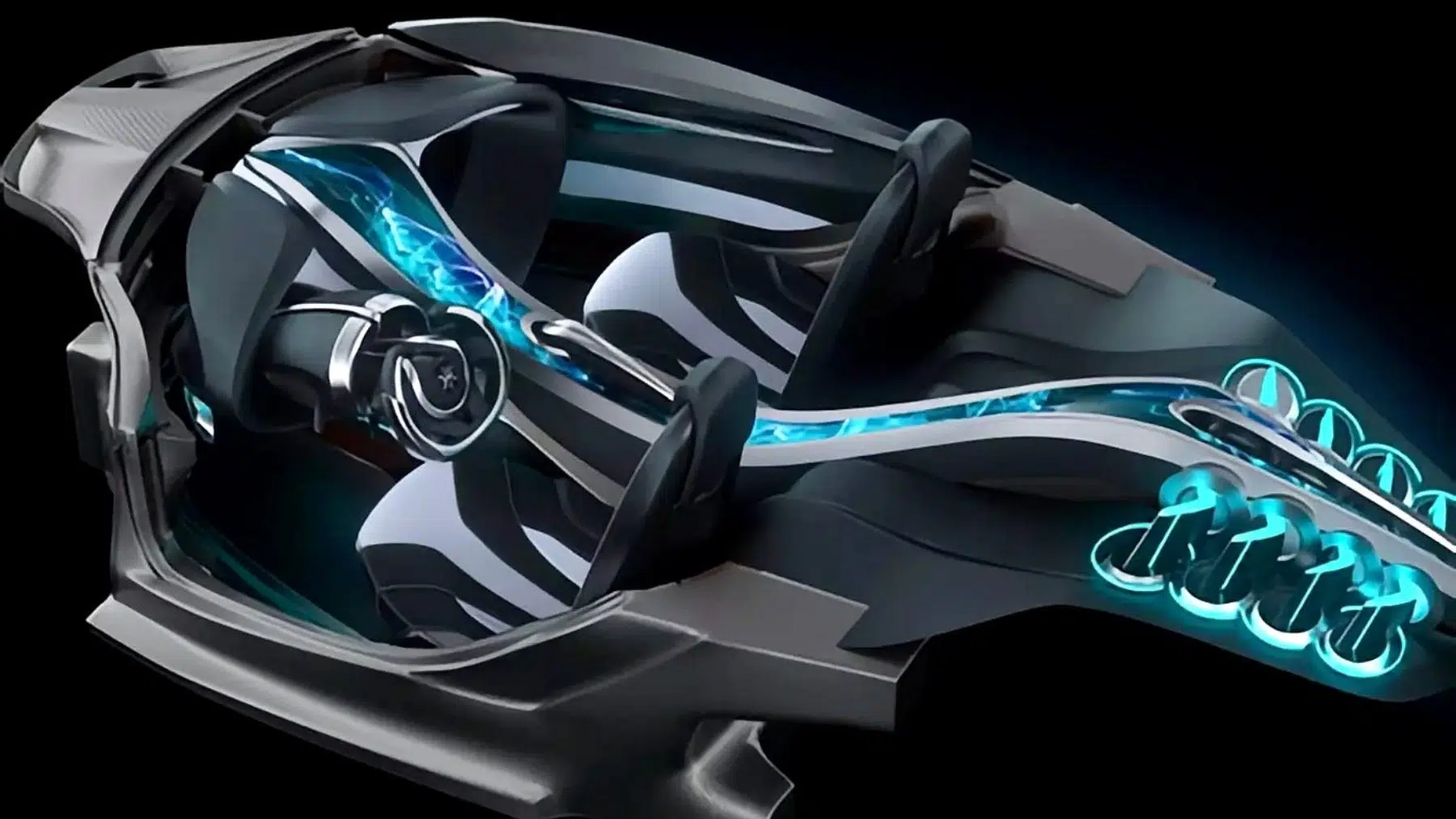
The organized mobility industry originated from the evolution of the internal combustion engine in the mid-19th century. While the industry itself is relatively young, we could once again find ourselves amid a new era in global mobility. Clean power is the drive behind this new 2,000+ HP powertrain, and in its case, power does not come cheap. Find out why this model is worth $2M.
A new era in global mobility
The competition is tough in an industry pressured to deliver power, sustainability, and safety all in one vehicle. Not to mention keeping up with the ever-changing regulations and global events. However, in 2020, Hyperion Inc. in California announced a first-of-its-kind supercar that literally has it all. This supercar is called the Hyperion XP-1.
The Hyperion XP-1 prototype showcased its maiden voyage in 2020, and according to the company, it’s very similar to the production version. This supercar will utilize advanced technology that is typically used in the fields of astronautics and aeronautics. It will be combined with clean fuel to deliver high performance and officially mark a new era in global mobility.
The clean power that drives this vehicle
The world revolves around renewable energy sources and applauds any technology that has little to virtually zero carbon emissions. Unfortunately, many automotive companies and their loyal customers still struggle to bid farewell to the internal combustion engine. This is why Hyperion Inc. has been developing a powertrain powered by clean fuel as an alternative to keep the magnificent roar of internal combustion engines alive. Their plan?
The Hyperion XP-1 will be powered by hydrogen fuel cell technology. Skilled NASA engineers reportedly developed this technology, which utilizes an electrochemical double-layer capacitor (EDLC) and traditional hydrogen fuel cell technology to change hydrogen to electricity. The supercar’s hydrogen will also be produced by natural gas, which increases its efficiency.
“There are enough car companies. We’re an energy company that’s building this car to tell a story. Our goal is to tell the story of hydrogen with inspiring vehicles and infrastructure solutions. With the debut of the XP-1, we aim to kick-start the final frontier towards a cleaner tomorrow for generations to come.” – Angelo Kafantaris, Hyperion Motors CEO.
With great power comes a great price
According to the company, the variable-vehicle technology framework will be available in variations of passenger and commercial cars. Now, this supercar is powerful, and power does not come cheap. Once in production, you can buy the Hyperion XP-1 for $2M. Sounds crazy? Some might say it’s worth it, others not so much. Here are the key features for you to decide.
Key features of this supercar
- Four electric motors
- 2,000+ HP
- Top speed of 221 mph
- Goes from 0-60 in under 2.2 seconds
- Recharges in less than five minutes
- Features solar panels
- Features water-absorbing panels
- 1,000+ miles of driving range
Now, it has been five years, and we have yet to see the Hyperion XP-1 supercar on the road. Production for 300 examples of the Hyperion XP-1 was scheduled to begin after the prototype’s 2020 debut; however, the COVID-19 pandemic most likely hindered those production plans (issues with supply chains and whatnot). Since the end of the pandemic in 2023, there has not been much of an update on this supercar. Whether other energy priorities took the first tier, we do not know.
Only time will tell when the Hyperion XP-1 supercar will be taking the road. For those who have the patience and a spare $2M lying around, the Hyperion XP-1 is available for online purchase on the company’s official website. There is one thing we do know for certain, and it’s that competition remains fierce, as many other automotive companies have unveiled models with hydrogen engine technology.
Disclaimer: Our coverage of events affecting companies is purely informative and descriptive. Under no circumstances does it seek to promote an opinion or create a trend, nor can it be taken as investment advice or a recommendation of any kind.
Read the whole thing?
Get the week's signal, not the noise
Our sharpest reporting on energy, climate and nature — free, once a week.


