
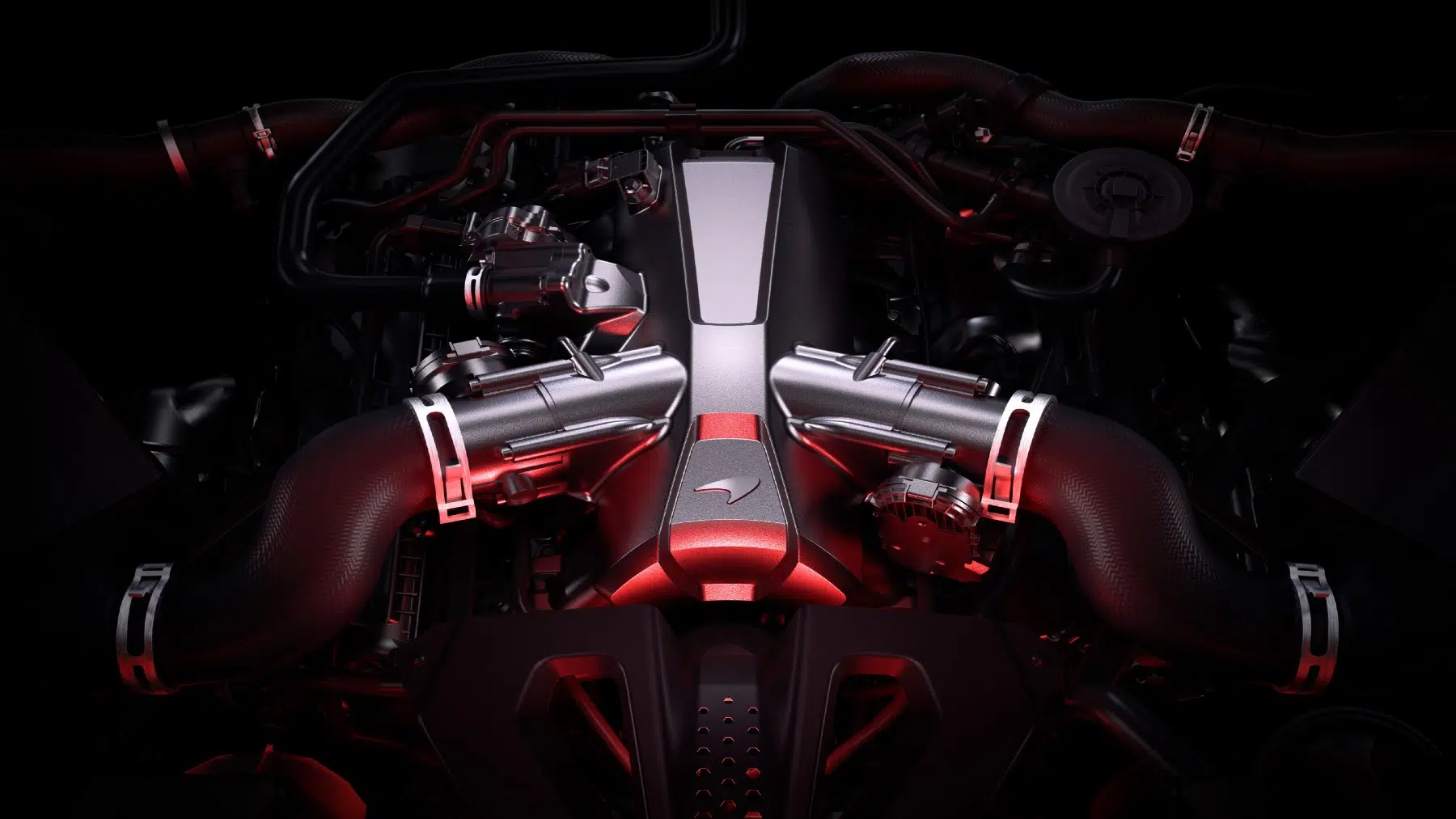
Italian manufacturers like Ferrari, Lamborghini, and Maserati had the upper hand in creating turbocharged cars, but things are different now. The UK has brands just as exclusive as those that make it possible. Aston Martin, Bentley, and McLaren: all British and with special features that can leave the competition behind. With technology advancing and engineers finding new ways to power a supercar by moving some engine parts to other places and incorporating electric powertrains to create hybrid cars, a powerful UK brand has created a state-of-the-art engine.
New cars are coming out with a unique engine design
One of the newest features incorporated by Lamborghini in its new turbocharged car, the Temerario, places the engine between the “V” shape, and opens more space for electrical features to work as auxiliary to the combustion components. On the other side, the adaptations work out just fine for a Lamborghini, but for other cars that don’t have the same design, they have to find another way to get the horsepower up.
Luxury manufacturers are always trying to find the next big thing, but sometimes the only thing they can do is move some parts to other places to give the car more power. These turbocharged luxury brands are still not at the hypercar level, such as Bugatti, Koenigsegg, or Pagani, but are still faster than most vehicles on the street – sometimes not even a turbocharged or supercharged engine is enough to beat them. But now, McLaren might have found a way to enter the supercar era.
McLaren lands a Turbocharged powerhouse
McLaren’s latest model, the 750S, is proof that British engineering is catching up fast. Under the hood, it’s powered by a reworked version of the V8 from the 720S — a 4.0-liter twin-turbocharged engine, known internally as the M840T. This turbocharged vehicle can push out 750 PS (740 bhp) and 800 Nm of torque, going from 0 to 100 km/h in just 2.8 seconds. It doesn’t stop there: it hits 200 km/h in 7.2 seconds and reaches 300 km/h in under 20 seconds.
To pull this off, McLaren made smart choices. The engine sits in the middle of the car for better weight distribution and handling balance, and the crankshaft, pistons, and connecting rods are all lightweight to cut down on mass. It’s also got a flat-plane crank and a dry sump system, helping with both performance and durability.
Boost is controlled more precisely now thanks to electronically managed wastegates, and the twin-scroll turbos run at higher pressure. There’s even a second fuel pump, but it only kicks in when the engine really needs it — a move to avoid wasting energy.
The engine is paired with a 7-speed sequential gearbox that’s been tuned with a shorter final drive ratio to deliver quicker acceleration. Built specifically for high-performance driving, the transmission uses a pinion and crown wheel made from 20NiCrMo — a nickel-chromium alloy usually found in Formula 1 cars, known for handling extreme loads and speeds.
McLaren adjusts the car to maintain the iconic noise
To give drivers a stronger feeling of closeness with the car, McLaren fine-tuned the engine mounts on the 750S, so the V8 can be more present both in sound and feel, especially during startup and at high performance. The updated mounting system, with enhanced lateral and diagonal links, plays a big role in this complete experience. They’ve also redesigned the exhaust: a central-exit, stainless-steel setup that’s 2.2 kg lighter than the one used in the 720S, helping the engine breathe better and sound sharper.
According to McLaren’s head of vehicle development, Ben Gulliver, the focus with the 750S wasn’t just on speed or numbers, but on creating a more emotional and exhilarating connection between the car and the driver.
Our coverage of events affecting companies is purely informative and descriptive. Under no circumstances does it seek to promote an opinion or create a trend, nor can it be taken as investment advice or a recommendation of any kind.
Read the whole thing?
Get the week's signal, not the noise
Our sharpest reporting on energy, climate and nature — free, once a week.


