There’s a silent exodus going down in the Arctic snow.
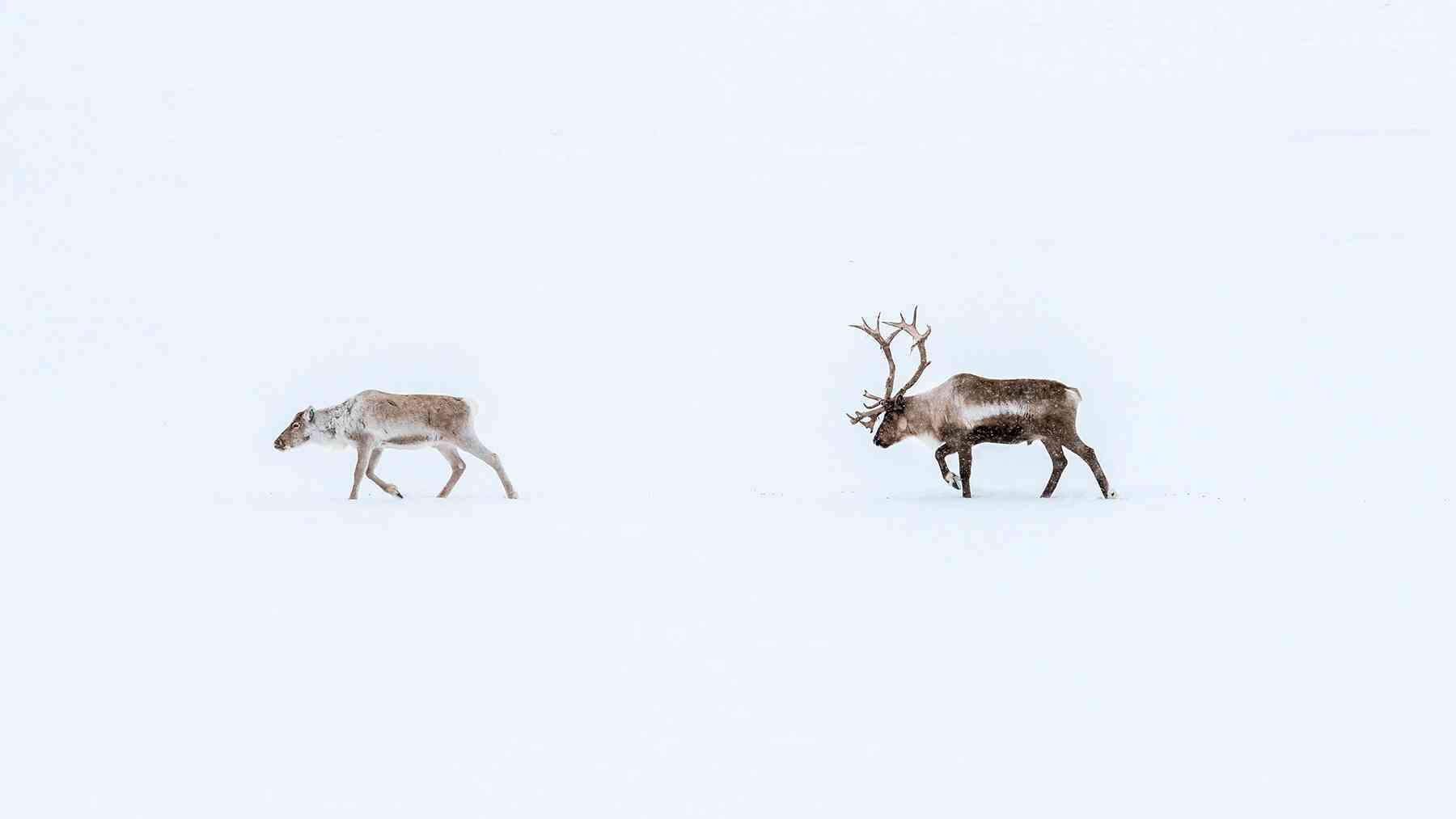
Land that has served as ancestral reindeer calving grounds for generations is being deserted. Instead, pregnant reindeer cows are making a trek of miles through harsh terrain to give birth in the unforgiving wilderness.
It’s modern wind energy infrastructure that’s driving them away.
But it’s not humans or noise that’s terrifying them. It’s something far more subtle.
Why are these animals balking at the mere sight of wind turbines?
The frozen flight: How green energy is the enemy of reindeer
A rhythm that has endured for longer than we know is breaking across the Scandinavian tundra.
In spring, reindeer about to calve seek out the same sanctuaries used by their mothers ahead of them.
But now, these vital grounds are being abandoned.
The region’s indigenous Sámi people have made it their mission to guide these herds through the snow. It’s been this way for generations.
But there’s a new conflict threatening their way of life.
Massive green energy projects are encroaching onto traditional grazing lands. And to reindeer, they’re intolerable.
To escape, the herds are embarking on grueling journeys of more than three miles in the bitter cold. The terrain they’re aiming for is harsher and less optimal.
But they’re looking for safety.
Scientists tracking the animals noticed something bizarre in their behavior.
The herds are not just fleeing from construction activity or people. They continue to boycott the areas long after the installations have settled into peaceful operation.
It’s the operation of the turbines that the reindeer are rejecting. And it’s all down to instinct and a specific disruption to their senses.
Why do these ancient herds refuse to look at the massive wind turbines?
A far-from-random exclusion zone
This is not a random shift, according to the hard data.
Skarin et al.’s ecological studies revealed a stark pattern in the GPS tracking. When reindeer are vulnerable in the calving season, they consistently avoid operational wind farms by two to three miles.
It’s not the noise that’s behind this panicked exodus. The low hum of the movement of the blades doesn’t carry far enough to cause this level of fright.
The sites are mostly automated and empty of humans, so that can’t be the issue either.
A crucial clue lies in the data. The exclusion zone lines up perfectly with a direct line of exposure.
As soon as there are hills in the way of the view of the spinning blades, the reindeer relax. When the landscape opens up, they head for the hills again.
There’s something in the environment that they’re actively absorbing, and it’s a threat they can’t accept, according to the National Institutes of Health.
If it’s not the sound or the presence of people, what invisible risk are the reindeer so desperate to avoid?
Reindeer perceive a horror that humans cannot
Why did these herds travel miles in the harsh environment just to get out of range of sight?
The answer lies in a sensory world that’s hidden to us.
Reindeer have a rare evolutionary trait that allows them to see ultraviolet (UV) light. This special vision helps them spot predators, food, and fences in the blinding white of the Arctic snow.
To human eyes, operational wind turbines are just smooth structures spinning peacefully in the distance.
A reindeer’s ultimate horror show
High-voltage power lines and active turbines do not just sit there. They flash dramatically, humming with light and casting terrifying, strobing UV shadows.
To a reindeer, they’re perceived as giant, frightening predators looming on the horizon.
For a pregnant one seeking safety, a wind turbine looks like a glowing, flashing threat that can’t really be comprehended.
This psychological barrier simply cannot be overcome.
A tragic irony is revealed in our global fight against carbon emissions. In our rush to save the planet’s future, we have accidentally built structures that literally terrify the wildlife we aim to protect.
How do we balance saving the planet and maintaining the peace of the creatures living on it?
Read the whole thing?
Get the week's signal, not the noise
Our sharpest reporting on energy, climate and nature — free, once a week.