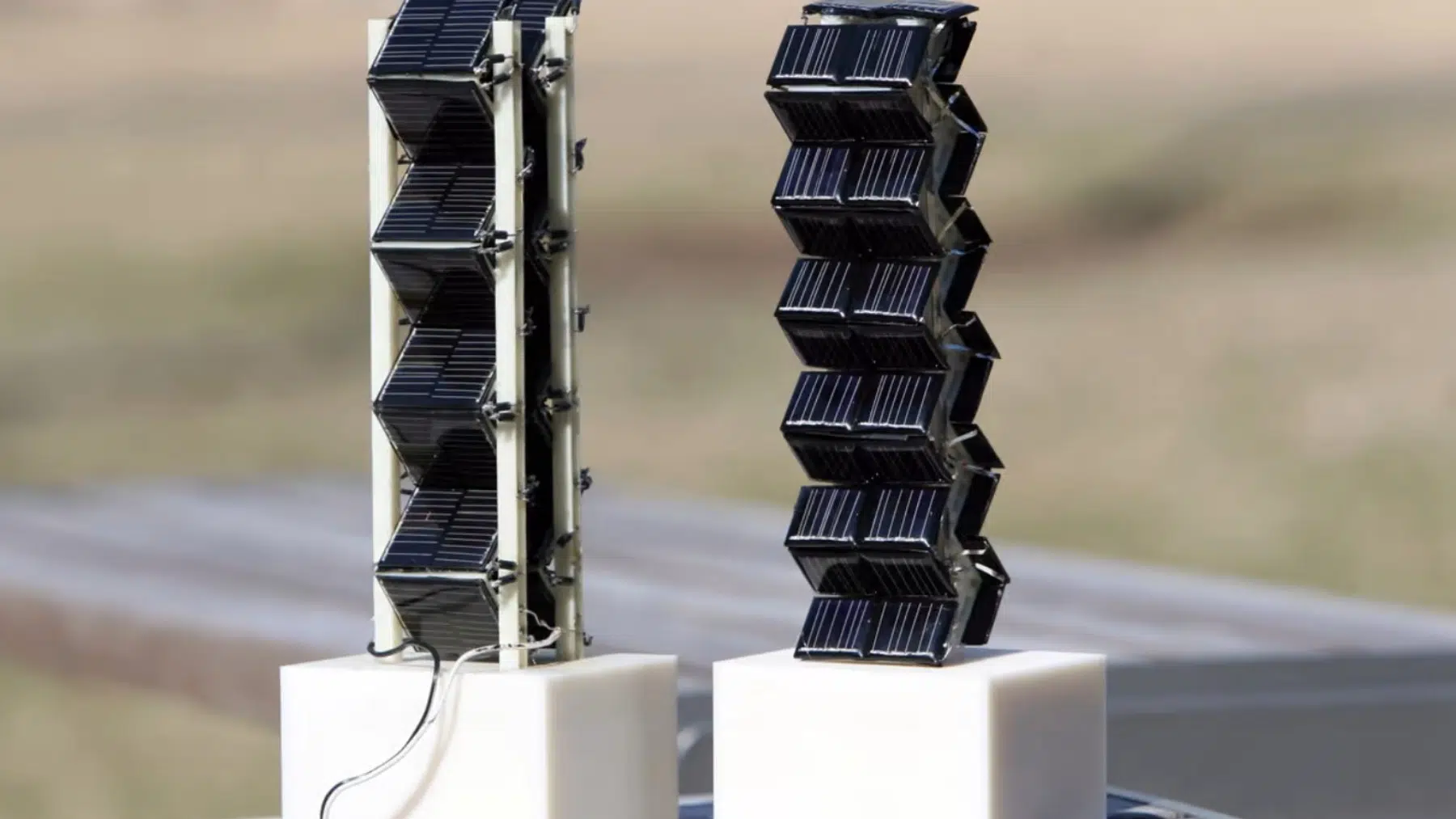
In the past decades, conventional solar panels have dominated the energy sector, with households and businesses utilising them. However, America has found the light, something better and more convenient that could change how we produce power. The US has created a cube-shaped solar panel, which is believed to be up to twenty times more powerful. It is not ordinary.
This is groundbreaking in a world that is searching for cheaper and more efficient ways of producing sustainable power. Researchers at MIT (Massachusetts Institute of Technology) discovered that they could use their creativity to develop a cube-shaped solar panel. What sticks out is that it also caters to locations where the sun is not likely to be stronger.
Why do solar panels shaped like cubes have so much more power?
One of the unique features of this solar panel is its three-dimensional design. It is very different from the ones we know that are flat and work well when there is full sunlight. The cool thing about America’s development of cube-shaped solar panels is that they can absorb the sun from all angles and directions, capturing sunlight more efficiently during low-angle hours like mornings and evenings.
Another reason why solar panels shaped like cubes have so much more power is because they provide more space. The cubes are stacked vertically, allowing room for them to generate enough power compared to the flat-shaped solar panels. Because of this, they are perfect for roofs, urban settings, and places with little land. Experts believe this new development could open up new possibilities.
How the MIT team came up with this idea
According to an article by MIT News, the MIT team first explored a vast array of potential configurations using a computer algorithm. They then created analytical software that can test any configuration across a wide range of weather conditions, seasons, and latitudes. They then constructed and tested three distinct configurations of solar cells on the roof of an MIT laboratory building for a few weeks to validate the predictions of their model.
Could the cube-shaped solar panel dominate the energy sector?
When it comes to dominating, maybe not, but definitely when it comes to playing a significant role as one of the best solar energy source options. Additionally, because solar energy is becoming cheaper and more reliable, there is a huge guarantee that it will replace fossil fuels, and because it caters to nations with low to no sunlight, it is a game-changer.
If governments and businesses see its value and adopt this cube-shaped solar panel, it will be part of the next generation of sustainable energy resources. This is definitely a step toward knocking on the doors of a green and eco-friendly environment, remaining economical and experiencing an easy way to generate power in the short and long run.
They are more expensive than the traditional flat solar panels, but still worth it
One thing is that such 3-D modules are more expensive than the common panels; however, here is the key difference: Cube-shaped panels provide a much higher energy output across different weather conditions and over the different seasons of the year. It is because of this advantage that this development will attract many individuals and businesses. The good outweighs the bad.
Marco Bernardi, co-author and MIT graduate researcher, expressed that even though the cost per unit is higher than standard flat panels, the system produces more energy and works reliably over time, making it worth the cost. The only key challenge would be manufacturing these cube-shaped solar panels on a large scale.
Read the whole thing?
Get the week's signal, not the noise
Our sharpest reporting on energy, climate and nature — free, once a week.