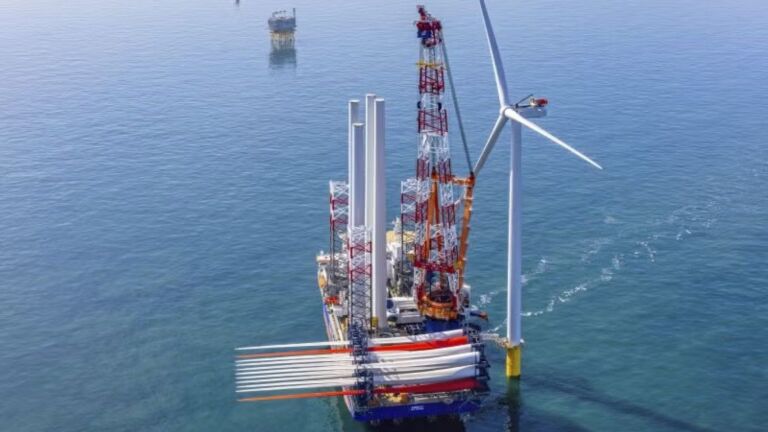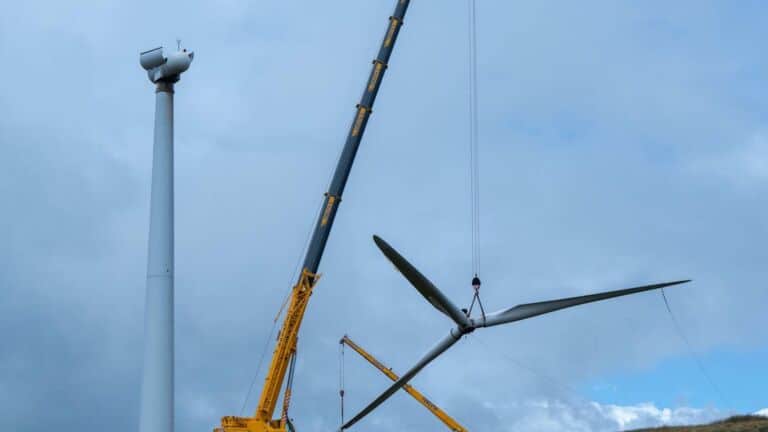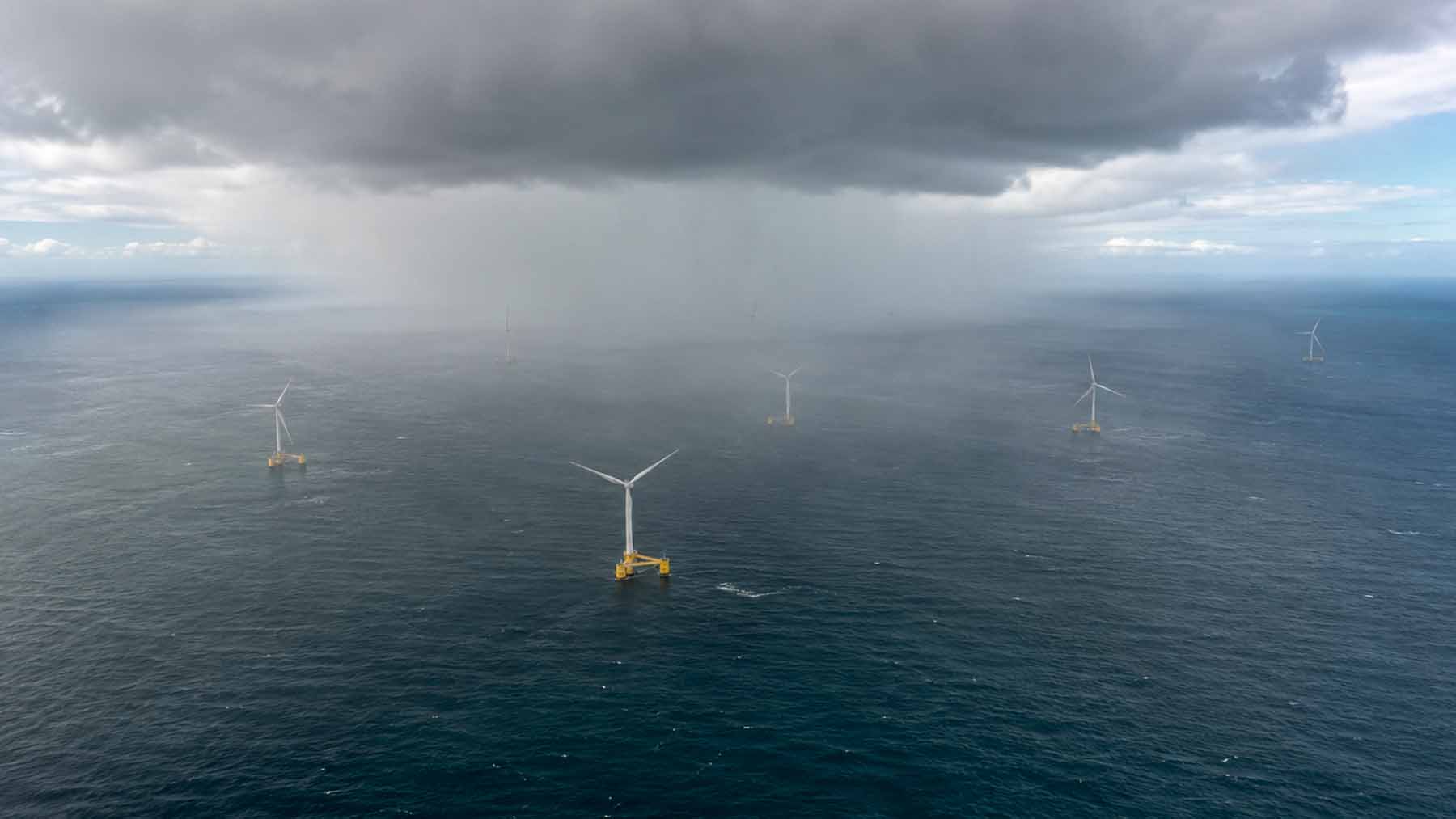
The expansion of offshore wind energy in response to international climate targets means more work for marine atmospheric researchers.
They are paying much closer attention to regional surface environments. Recent high-resolution atmospheric modeling indicates that large-scale turbine arrays are capable of altering the climate.
While developers focus on producing increasing volumes of clean power, coastal studies are drawing attention to the impact.
What is the effect of giant spinning turbine blades on the atmosphere?
How offshore turbines affect conditions in the lower atmosphere
Offshore wind is among the fastest-growing sectors of green electricity generation in coastal waters all around the world. Environmental engineers have been studying the interaction between the ocean environment and the infrastructure for decades, looking at wildlife, seabed conditions, and ocean currents.
But researching the atmosphere around the increasingly expansive turbines is a more recent direction of study. The contact point where the ocean meets the lower atmosphere sees exchanges of heat, moisture, and momentum. The movement of thousands of turbine blades in open waters creates an unavoidable interaction with the airflow on the surface.
Baseline measurements near the water show that wind speeds immediately downwind of the turbines can drop by more than two miles per hour. This changes the normal thermodynamic balance between the seawater and the air.
Oceanographers recorded that heat transfer from the sea surface into the atmosphere drops inside wind farms. These atmospheric shifts cover wide oceanic areas, leading to unplanned-for weather phenomena.
The growing downwind effects of expanding infrastructure
Offshore wind projects used to be few and far between, with installations operating in isolated clusters. Now, the industry has expanded to cover massive multi-gigawatt corridors, and their atmospheric reach has likewise increased.
Changes in the atmosphere associated with large-scale wind farming are not limited to the immediate area. The reality is downstream wakes behind the structures, extending up to 25 miles before the air recovers its normal speed and temperature. Modeling shows that this effect is cumulative, and it results in distinct microclimatic zones.
The surface air temperatures around the turbines get slightly higher, while vertical air movement changes to involve multiple layers of the atmosphere. Meteorologists tracking regional weather patterns picked up that these layers start to interact with cloud systems. This is particularly noticeable in autumn, when the thermal contrast is highest.
Accurate climate forecasting is becoming dependent on understanding how wind farms affect air density and moisture distribution.
The upside-down umbrella mechanism
Atmospheric scientists discovered that turbine blades create vertical mixing in the air column with an “upside-down umbrella” mechanism. As the rotors turn, they pull cold, moist air upward from near the sea surface into higher atmospheric levels.
Below the rotor height, the surrounding air becomes warmer and drier. Above the spinning blades, the ascending air becomes significantly colder and moister, reports Hereon.
This localized elevation of moist, cool air increases condensation, expanding cloud cover and generating approximately five percent more rainfall directly over offshore wind farms.
Weather forecasting is now dependent on understanding wake patterns
Confirming that large renewable energy installations influence local weather patterns provides essential physical clarity for modern coastal oceanography. Incorporating these physical atmospheric wake dynamics into future regional climate models ensures that environmental impact assessments remain accurate and trustworthy as global offshore wind energy deployments accelerate rapidly worldwide.
Beyond atmospheric changes, industrial marine installations also reshape physical oceanic conditions below the water surface. Submerged foundation networks alter localized current flow, sediment transport, and nutrient distribution across vulnerable coastal marine habitats. Investigating how submerged offshore structures transform regional biological food webs reveals how large-scale energy infrastructure reshapes both the atmosphere above and the marine ecosystems.
Read the whole thing?
Get the week's signal, not the noise
Our sharpest reporting on energy, climate and nature — free, once a week.