The first signs of a strange illness in sea star populations emerged off the coast of North America in 2013. Healthy-appearing sea stars then exhibited unusual symptoms; their bodies lost strength.
Lesions turned white on their skin.
Their arms curled up, came apart, and dropped off. Eventually, some individuals disintegrated into mushy, decaying tissue.
The event was called one of the biggest marine wildlife epidemics in history.
No one knew what was making them sick for years.
A disease that transformed the coastline
As a result, the outbreak was named Sea Star Wasting Disease (SSWD). At least twenty different species of sea stars were impacted by SSWD in North America’s Pacific Coast region.
The reach of the outbreak extended from Alaska to California and heavily damaged local populations.
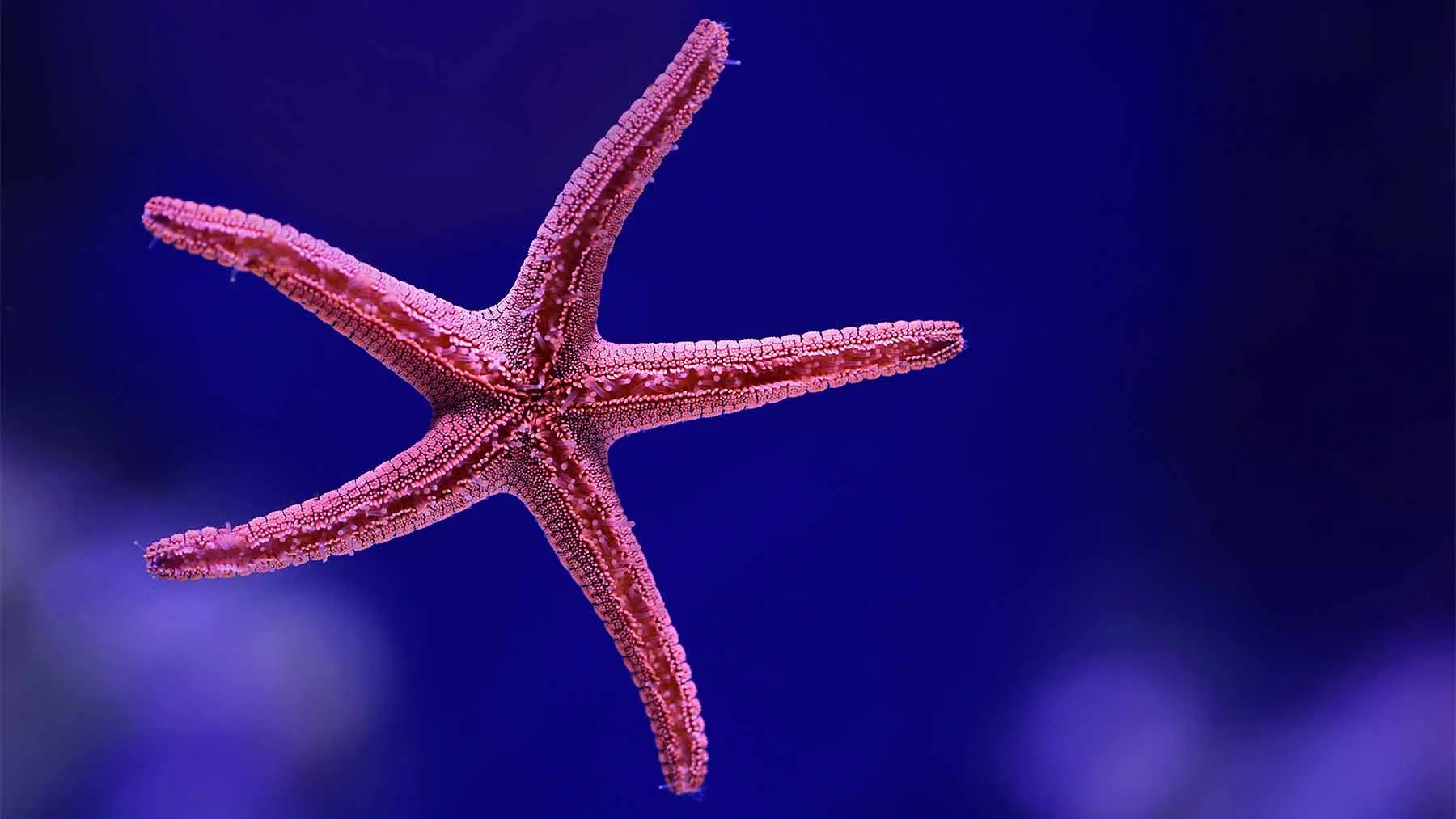
One of the most severely hit species is the sunflower sea star. Sunflower sea stars are among the largest sea stars, growing large enough to cover a bike tire. Some have as many as 24 arms.
Sunflower sea stars help maintain balance within coastal ecosystems. They consume large quantities of sea urchins, which would otherwise eat huge amounts of kelp if left unchecked.
More than ninety percent of sunflower sea stars vanished in certain parts of the continental United States.
The sunflower sea star has now been designated critically endangered.
Researchers searched for causes of the epidemic for years. Many believed it was a virus.
Other researchers investigated possible links between SSWD, rising ocean temperatures, and marine heat waves.
But none of these hypotheses fully explained why SSWD occurred.
The search continued for more than a decade
The mystery continued because SSWD progressed so rapidly. Within just a few days, researchers saw extreme symptoms develop in many infected sea stars.
They also observed arm twisting, tissue decay, and the overall collapse of the animals’ bodies.
Because the disease spread so quickly, finding its origin proved extremely challenging.
Samples from animals exhibiting symptoms of SSWD were collected from various locations along the Pacific Coast, according to USGS. Tissue samples were examined for numerous diseases.
Extensive studies still failed to identify the source of the outbreak.
Scientists from around the world, including researchers at the University of Washington, joined the effort to determine what caused the outbreak.
Because the disease occurred across such an extensive range, researchers were able to study diseased sea stars from throughout much of the Pacific Coast.
Later, investigators turned to a different type of sample. Rather than focusing only on tissue samples, researchers evaluated coelomic fluid from infected sea stars.
Coelomic fluid performs functions similar to blood in sea stars.
That change revealed patterns that investigators had previously overlooked.
Years of searching finally produced a breakthrough
Following nearly four years of collaborative research from around the world, researchers finally discovered how the epidemic had originated.
Prior to that, researchers examined several other plausible explanations.
Eventually, they established a link to the cause of SSWD.
The answer was Vibrio pectenicida
By testing experimental models, researchers demonstrated a direct relationship between Vibrio pectenicida and SSWD. Earlier investigations had focused on viral agents and other potential explanations.
However, researchers found unusually high concentrations of the bacterium in coelomic fluid collected from infected sea stars. Experimental confirmation supported that association.
This marked the end of more than a decade of speculation about the cause of SSWD.
The discovery identified the bacterial strain responsible for the disease.
Scientists now had a foundation for developing conservation and recovery strategies for affected sea star populations.
The discovery also removed uncertainty about whether some unidentified environmental influence was responsible.
Ultimately, the sea stars that appeared to melt away were not victims of an unknown environmental force. They were facing a specific bacterium that had gone undetected for more than a decade.
Along parts of the Pacific Coast, more than 95 percent of it vanished after ecosystem changes triggered a collapse in underwater kelp forests.
Read the whole thing?
Get the week's signal, not the noise
Our sharpest reporting on energy, climate and nature — free, once a week.