
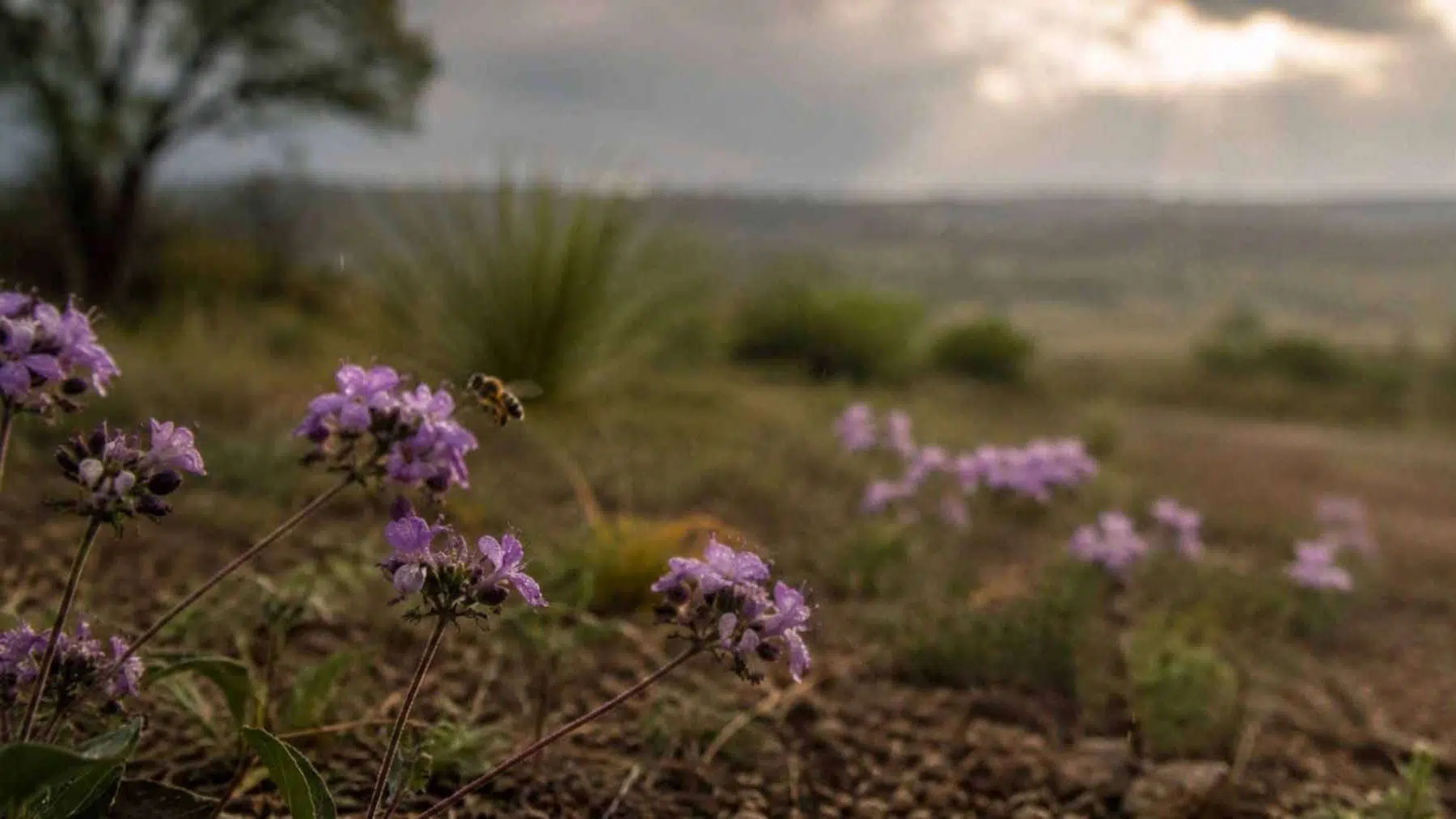
The dry brushlands of southwestern Texas are home to cenizo shrubs that often go for months without a single blossom. It is just too dry.
Then, when heavy rainfall finally arrives, purple flowers cover the branches. But this only lasts a few days.
Entomologists have now identified one kind of bee that times its life cycle with the brief blooming of the cenizo flowers. What drove this insect to link its entire survival to just one unpredictable plant?
How bee specimens spent decades sitting unclassified in museums
Jack Neff was the first melittologist (bee specialist) to collect specimens of this ground-dwelling bee decades ago in Texas. Its physiology, at under an inch long, did not fit any of the known subgroups of bees, so it remained unclassified in entomology archives.
The bee needed to be placed with the genus Andrena, which already contains 1,800 species across the world. However, this could not happen without carrying out extensive genetic analysis.
Three institutions collaborated to give the insect an identity: Washington State University, the University of Kansas, and the Central Texas Melittological Institute. The scientists’ work involved combined morphological and genomic analyses. Eventually, after sequencing DNA extracted from specimen legs and analyzing physical traits, researchers confirmed the insect belonged to the subgenus Labergeia.
The official name of Andrena cenizophila was assigned in a March 2026 study published in the Journal of Melittology. The research highlights the success of advanced genomic sequencing in cataloging insects that have been sitting in museum specimen collections for decades.
Mass blooming shrubs in dry regions will not be timed
The native shrub Leucophyllum frutescens, also called cenizo, Texas Ranger, or Texas purple sage, does not follow the seasons. Its flowering cycle follows a distinct pattern dictated by moisture shifts. For a week after heavy rainfall, usually in late spring, the cenizo will briefly peak in bloom. But this is still as unpredictable as the regional precipitation patterns, and the window is broad.
For a specialized pollinator like the bee, there are ecological risks in relying on a plant with such an erratic schedule. Most species of bee mitigate the risks by foraging across several different species of plants, ensuring a reliable food supply over spring and summer.
Relying on a host plant that does not flower for most of the year is a challenge. The availability of food for developing larvae is a gamble, but these mining bees are sticking to their strategy.
Researchers set out to analyze the pollen collected on the female bees to figure out why the species is determined to wait for the cenizo flower and no other.
Explaining the dependency on a single, unstable floral host
When the pollen grains carried in the scopal leg hairs of Andrena cenizophila were microscopically analyzed, it showed that 100 percent of the pollen originated from cenizo flowers. There are terms for this relationship: extreme oligolegy (with monophagy).
The Andrena cenizophila the only known mining bee species in the Western Hemisphere exclusively dedicated to plants in the figwort family, Scrophulariaceae.
The bee waits underground nearly all year because its offspring depend entirely on cenizo pollen for larval development, according to Washington State University.
Females have a week to ensure the next generation’s success
Female bees must collect all necessary nutrients during the narrow one-week blooming window to provision their subterranean nests.
By synchronizing its adult emergence directly with the moisture-triggered flowering of cenizo, the bee eliminates competition from generalized pollinators and secures an abundant, concentrated food source tailored specifically for its young.
While taxonomic and genetic work successfully identified this specialist pollinator, significant questions remain.
Researchers have yet to locate an active underground nest, leaving the bee’s exact overwintering biology undiscovered.
Uncovering these hidden subterranean habitats will provide valuable insights into how native specialist bees adapt to harsh, unpredictable desert environments, and we can use the data in future conservation efforts.
You can find the full study here: Bossert, S., Zabinsksi, W., & Neff, J. L. (2026). A new species of Andrena (Labergeia) from Texas with an unusual phenology and floral host, including a redescription of Labergeia (Hymenoptera: Andrenidae). Journal of Melittology, 141. https://doi.org/10.17161/jom.vi141.24606
Read the whole thing?
Get the week's signal, not the noise
Our sharpest reporting on energy, climate and nature — free, once a week.




