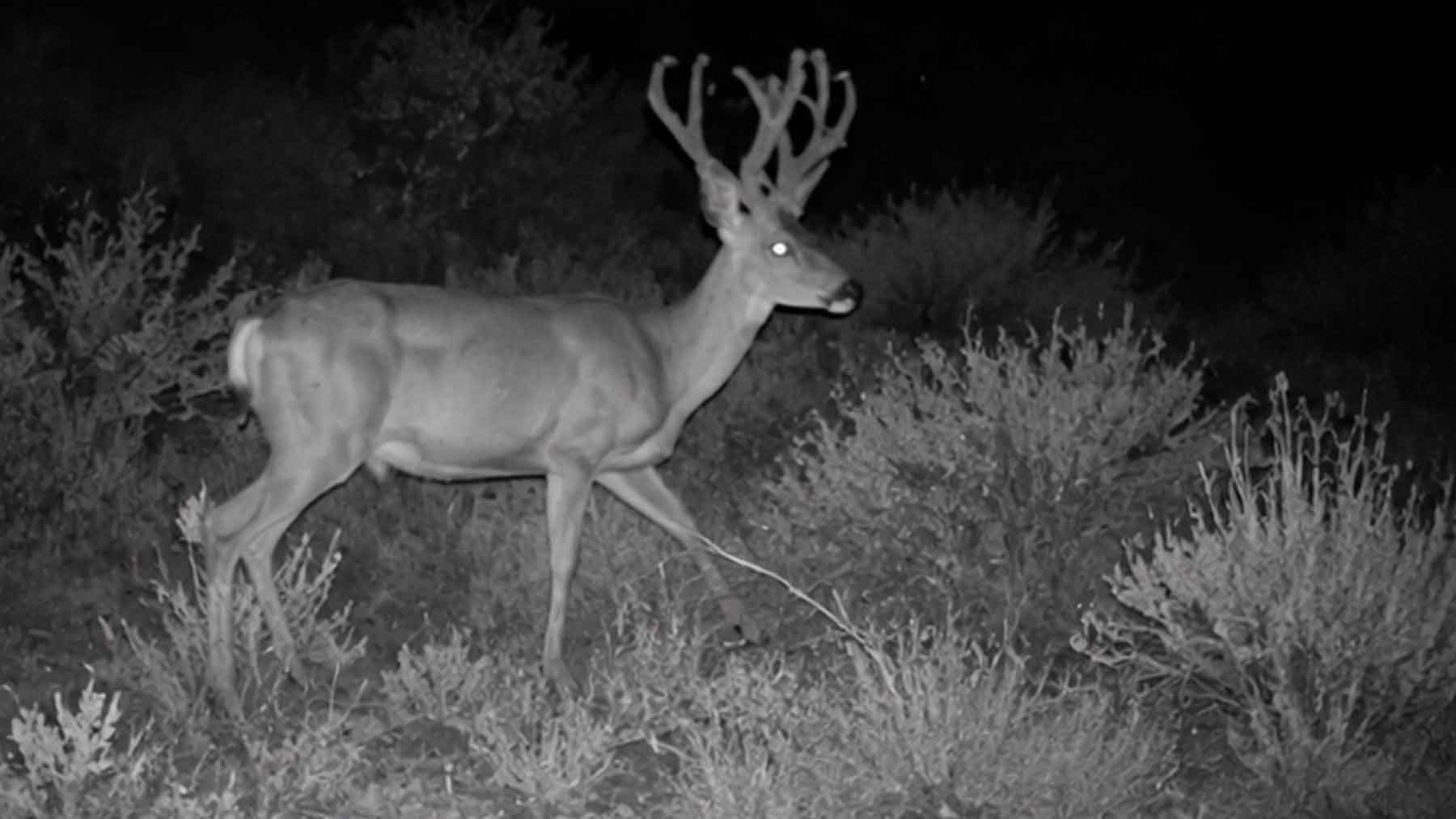
The Hanford Site, a former plutonium-production complex in Washington State, delivered a wildlife surprise recently.
Researchers monitoring photographs captured by field crew at the federal reservation saw a deer with prominent antlers.
The animal was initially logged as a young or physically altered male buck, but examination of its physiology revealed something else. The antlered mule deer was most likely a female.
How was this possible?
How initial field observations led to a mistake in categorization
The Hanford Site is located on shrub-steppe land currently undergoing ecological monitoring.
Field scientists set out to study ungulate movements, estimate herd numbers, and evaluate the health of the wildlife around the out-of-commission plutonium-production complex.
In the process, one set of photographs stood out. A unique individual was noticed traveling with established groups of mule deer. It had clear antler growth, so it was assumed the specimen was a male and logged as such.
It is not unusual for younger males to exhibit smaller antlers during early development. These may even be irregularly formed. Injured or old bucks could also have unusual branch formations.
Given that these observations are not uncommon, researchers assumed that it was simply a young or injured male with a few structural differences to its antlers.
Initially, there were no indications to challenge the classification.
However, after scientists carried out a far more detailed high-resolution analysis, the deer had to be reclassified under its true identity.
A mystery to be considered in ecological context
The Hanford Site in south-central Washington State covers 586 square miles, and public access has been restricted since the 1940s. There is a security buffer zone around the facility that has ended up being an unintended biological sanctuary.
It is a good place for long-term native species monitoring, seeing as the populations are not under pressure from hunters.
After the initial images of the unusual deer were processed, environmental biologists decided to have a closer look. They reexamined the high-res frames of the antlered mule deer from different angles, and the closer inspection revealed physical characteristics that contradicted the first classification as a buck.
The specimen’s longer snout, slender neck, and lack of tarsal-gland staining led researchers to believe it was most likely female.
Environmental researchers had to concede that they were probably looking at an antlered doe. This kind of physical contradiction is rare, and scientific questions immediately started being asked.
How could a female deer develop antlers that nature dictates are only grown by males?
The specialists turned to ungulate endocrinology studies for an explanation.
Monitoring conclusions drawn from biological conclusions
Biological research explains that antler growth in deer is controlled by circulating hormone levels, specifically testosterone, according to the Hanford Field Office.
While male bucks experience dramatic seasonal hormone spikes that drive antler development, hardening, and annual shedding, female deer typically maintain low testosterone levels.
However, in approximately one out of every ten thousand does, hormonal irregularities occur.
Elevated testosterone production—caused by adrenal anomalies, ovarian tissue variations, or natural endocrine shifts—can stimulate pedicle formation and antler growth in females.
Because female deer lack the sharp hormonal fluctuations required to harden bone and shed velvet, their antlers usually remain covered in soft velvet year-round without being cast annually.
Long-term monitoring will provide more insight
Biologists suggested that this rare physiological phenomenon may account for the unusual female mule deer documented on the nuclear reservation buffer zone.
The official Hanford report concluded that continuous camera surveillance provides critical, non-invasive data for tracking herd health and identifying biological anomalies across federal land.
Maintaining long-term monitoring allows scientists to evaluate wildlife population dynamics and track rare traits while preserving the shrub-steppe ecosystem.
Read the whole thing?
Get the week's signal, not the noise
Our sharpest reporting on energy, climate and nature — free, once a week.