
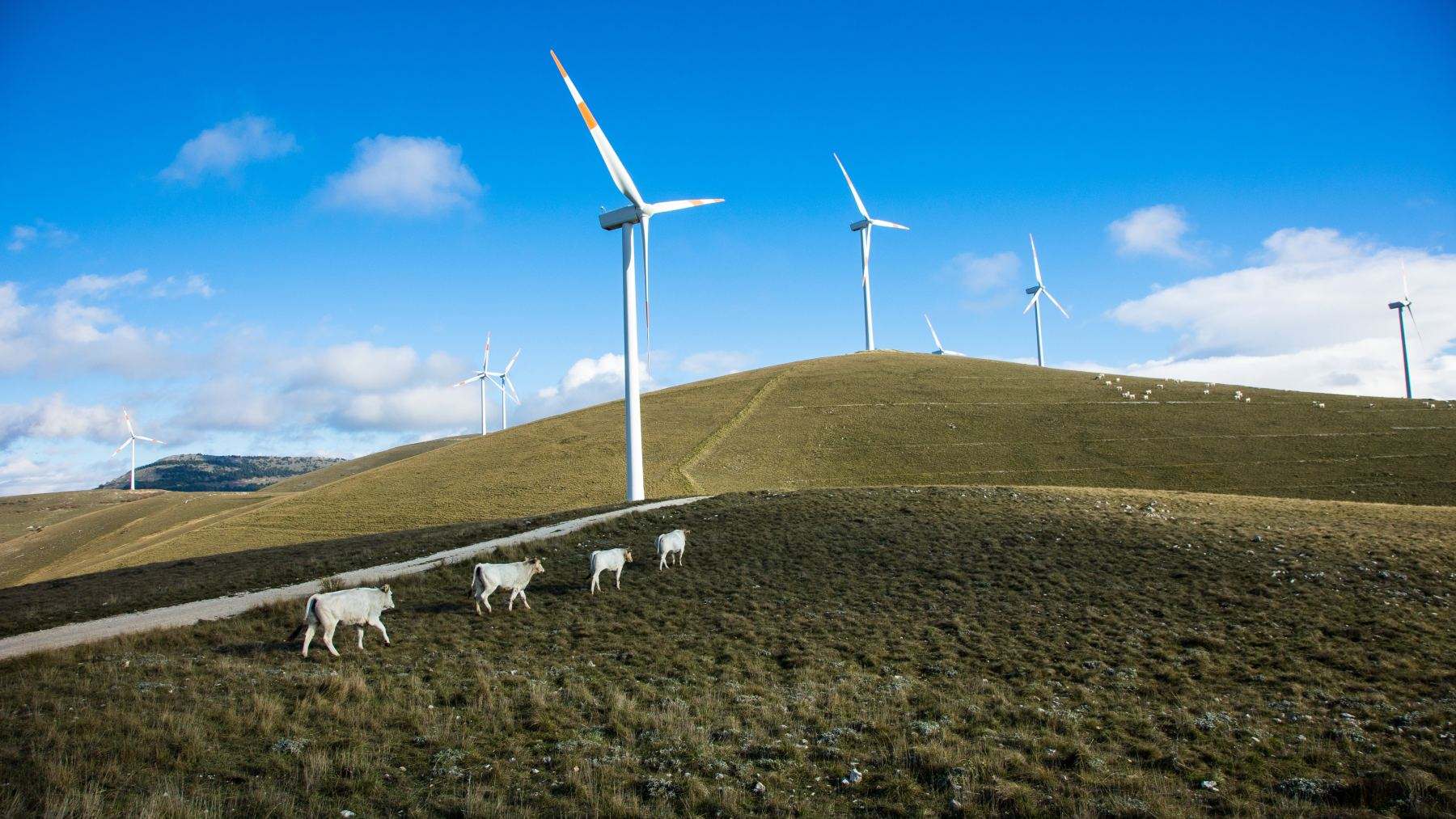
People generally equate wildlife conservation with nature reserves. However, a new study challenges this view by documenting a wind farm’s role in conserving wildlife in northeastern Mexico.
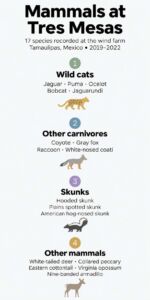
For three years, camera traps placed around turbines recorded 17 mammal species.
The cameras caught five wild cat species, and all species detected had larger populations toward the end of the observation period.
Cameras set up along turbine corridors caught many species expected to only occur in pristine environments.
It appears that the findings contradict the common perception that industrial-scale green energy sites are always “dead” biological spaces.
A central question guided the work throughout the study
The study focused on the Tres Mesas wind farm in Tamaulipas, Mexico, where camera traps monitored medium-sized and larger terrestrial mammals.
More than 8,000 detection records were collected between 2019 and 2022.
The research focused on which species were using the landscape and how their populations changed over time.
Continuous camera trapping allowed the researchers to measure how animals changed as the operation of the turbines continued each year.
What the cameras revealed was not what many would expect
A wind farm is fundamentally a modified landscape and not a preserved or protected wilderness area.
In addition to having the highest level of carnivorous mammals present, Tres Mesas has active maintenance traffic and moving rotors as well.
Top predators utilized the turbine service roads and surrounding brush for hunting and movement.
Camera trap captures documented five wild cat species within the wind farm, including jaguars, pumas, ocelots, bobcats, and jaguarundis.
Instead of declining over time, most species were more numerous during the final sampling period.
The results became even more surprising over time
During the course of the three-year monitoring period, 17 mammalian species were detected via camera trap captures, according to data published through FAO AGRIS.
Diversity also increased substantially during the third sampling period.
Additionally, statistical analysis demonstrated a trend towards increasing species evenness by the conclusion of 2022.
Species richness indicated that the number of mammals utilizing the site did not fluctuate dramatically throughout the duration of the study.
Across each successive survey year, relative abundance also increased. Herbivore populations exhibited some of the greatest increases.
White-tailed deer and collared peccaries demonstrated increases in encounter rates during subsequent survey phases.
Together, these patterns indicate that while the mammalian community may have persisted on-site during the study, it became increasingly balanced among study areas.
One wind farm cannot answer every question
These results do not imply that all wind farms will produce similar results.
This study focused solely on a single location in northeastern Mexico, where supporting wildlife records have also been published through GBIF.
The reduced presence of hunters in combination with low density cattle grazing likely produced optimal habitat for native carnivores.
In this instance, wildlife and infrastructure coexisted; however, it should not be assumed that renewable energy projects provide similar opportunities for wildlife.
The implications extend beyond a single site
Those findings alter how the biodiversity potential of this site can be assessed.
The data collected via camera traps demonstrate that operational wind farms can maintain mammalian communities that are as diverse as those found in adjacent natural habitats.
Adjacent protected natural areas have virtually identical species lists, although they possess formal conservation status.
These results indicate that there may be instances where conservation value exists in landscapes that have previously undergone modification for human use.
What coexistence looks like in practice remains uncertain
That comparison broadens the discussion beyond a single wind farm.
As renewable energy generation expands, understanding how wildlife and infrastructure coexist will become increasingly important.
Traditional assessments often focus on habitat loss and operational disturbance.
Sites such as Tres Mesas could help reveal how conservation and energy production can share the same landscape.
Wildlife management measures could bring conservation benefits to private infrastructure projects across the region.
Additional post-construction monitoring could help developers design wind farms with less impact on wildlife.
Read the whole thing?
Get the week's signal, not the noise
Our sharpest reporting on energy, climate and nature — free, once a week.


