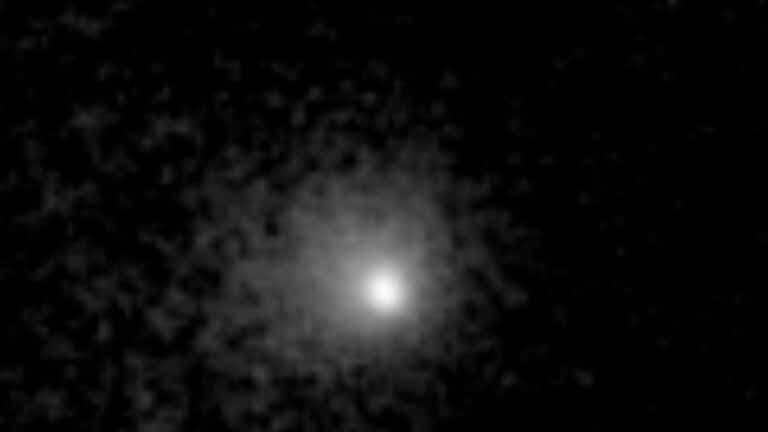
When Miguel Montargès saw the processed images, he jumped from his chair.
For an astronomer who’d spent years chasing a ghost around one of the most studied stars in the night sky, that reaction made perfect sense. Betelgeuse — the reddish giant visible to the naked eye in Orion’s shoulder, watched by humans for millennia — has never stopped producing surprises. But this one, buried in data from a single December observation, had been hiding for nearly a century.
A century-long hunt finally yields results
The idea that Betelgeuse might not travel alone dates back roughly a hundred years. Astronomers first raised the possibility of a companion to explain the star’s well-known brightness variations — the same fluctuations that have fascinated observers for millennia. Despite decades of careful watching, no one could pin down a clear detection. The companion stayed a hypothesis: persistent, but unproven.
That changed when two studies published in 2024 made precise predictions. Both indicated that Betelgeuse B would reach its greatest apparent separation from Betelgeuse in December 2024 — the widest apparent gap between the two stars as seen from Earth, and the best possible window for observation. Montargès and his team planned around that window, then spent months working through the data before the result finally came into focus.
The image that changed everything
The team used the SPHERE instrument on ESO‘s Very Large Telescope, located in Chile’s Atacama Desert. What they captured was a direct image — actual light coming from Betelgeuse B itself, not merely its gravitational influence or an indirect signature.
SPHERE was originally built to hunt exoplanets. The advanced post-processing techniques developed for that work turned out to be equally powerful when applied to a stellar companion around a massive, evolved star — a different problem entirely. Co-author Anthony Boccaletti called it “remarkable” that tools designed for one purpose could excel so clearly at another.
Earlier hints had come from the Gemini North Telescope in Hawaiʻi, which provided a possible direct detection. The new VLT data, though, is the strongest evidence yet and the clearest image. Montargès admitted he hadn’t expected SPHERE to be sensitive enough to pull it off — and that admission makes the result harder to ignore.
Bigger than predicted — and that is why they saw it
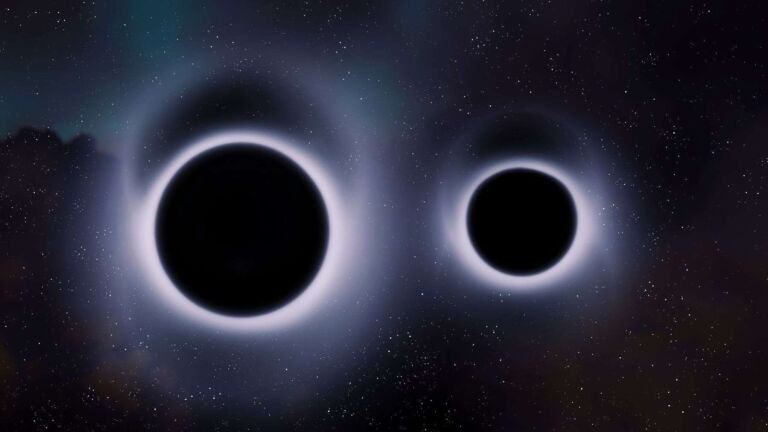
When astronomers originally modeled Betelgeuse B, they estimated it would carry roughly the same mass as the Sun. The new observations tell a different story. The companion appears to be two to three times more massive — significantly larger than anyone had anticipated.
That extra mass matters beyond the headline number. A more massive star is also a brighter one, and it was precisely that greater brightness that made detection possible at all. A solar-mass companion, as originally predicted, may have stayed invisible even to SPHERE.
Montargès put it plainly: “Because it is more massive than predicted, we see it.” He also noted how rare it is to discover a bright, massive companion orbiting one of the most thoroughly studied stars in the sky — calling these “among the best moments in science: seeing something new, unexpected.”
Betelgeuse’s dramatic dimming — and what the companion might add
Betelgeuse made global headlines when its brightness dropped sharply, triggering widespread speculation that a supernova might be imminent. The star is expected to end its life in an explosion eventually, so the dimming felt significant.
Montargès’s own earlier research settled that question. His team used ESO’s VLT to show that a cloud of dust had temporarily blocked part of Betelgeuse’s light — not a sign of impending collapse. The star wasn’t about to explode. It was obscured.
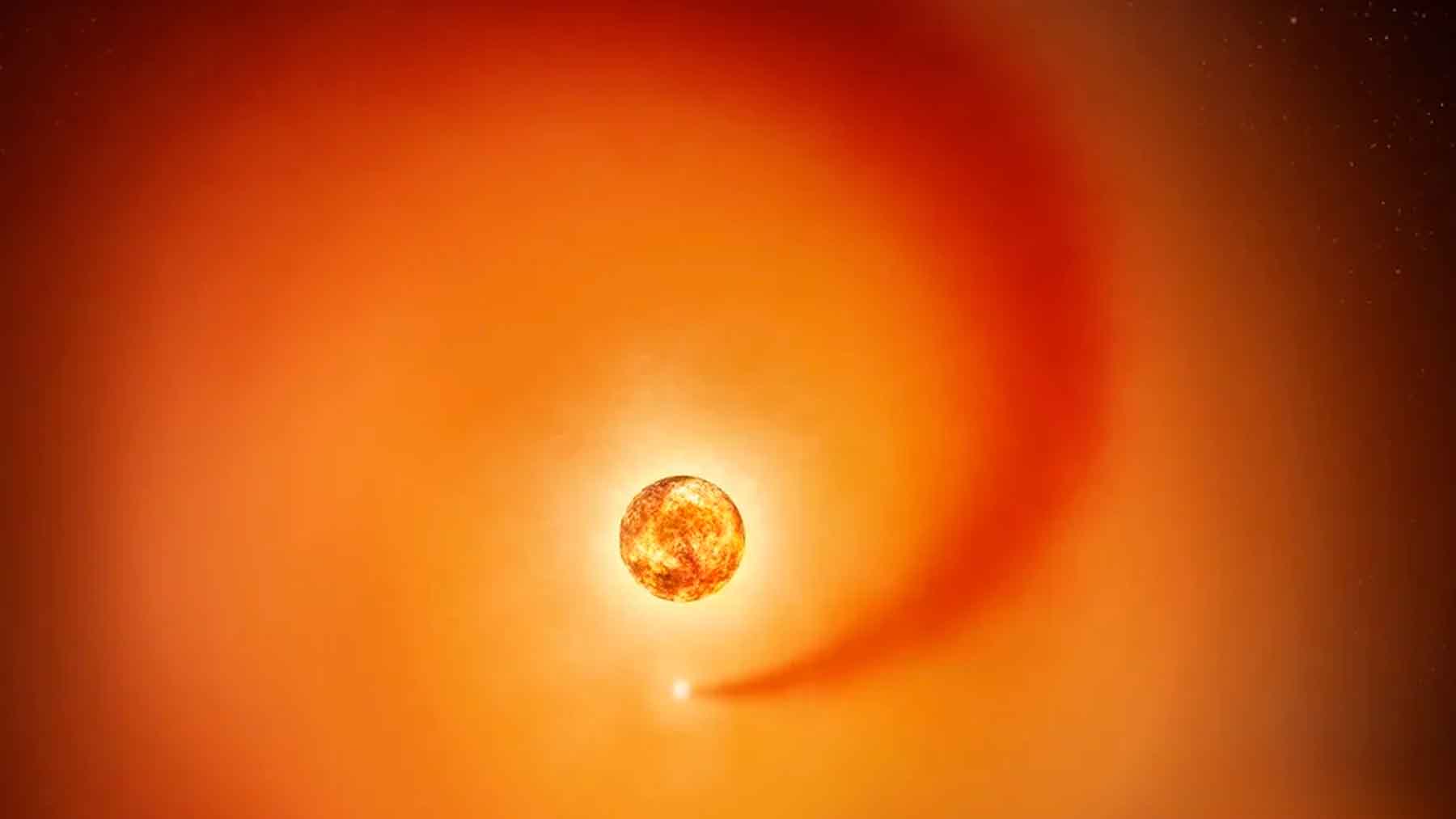
Now, with Betelgeuse B entering the picture, scientists face a new layer of complexity. A companion of this mass could influence how the red supergiant evolves over time, and whether it might alter the timing or character of the eventual supernova remains fully open.
What comes next: confirming the companion’s orbit
The discovery is compelling, but astronomers aren’t ready to call it fully confirmed. The scientific standard requires a follow-up observation showing Betelgeuse B on the opposite side of the star — exactly where its predicted orbit says it should appear next.
That confirmatory observation is expected within roughly one year. Montargès says there is “very little space left for doubt,” but orbital proof is what the field demands before the case is closed.
Once confirmation arrives, the deeper work begins. Researchers will model how Betelgeuse B interacts with the red supergiant and whether it plays any role in shaping Betelgeuse’s eventual fate. As Montargès concluded: “The question is truly opened whether this companion is going to have an impact on the evolution of the red supergiant.” After a century of searching, the answers are finally within reach — and the most important ones may still lie ahead.
Read the whole thing?
Get the week's signal, not the noise
Our sharpest reporting on energy, climate and nature — free, once a week.