You probably imagine NASA hunting for habitable planets, blue worlds, and earth-like atmospheres. Especially signs of life.
But lately, telescopes are honing in on something else entirely — tiny red specks sitting deep in the early universe.
They’re faint, compact, and definitely don’t behave the way astronomers expected.
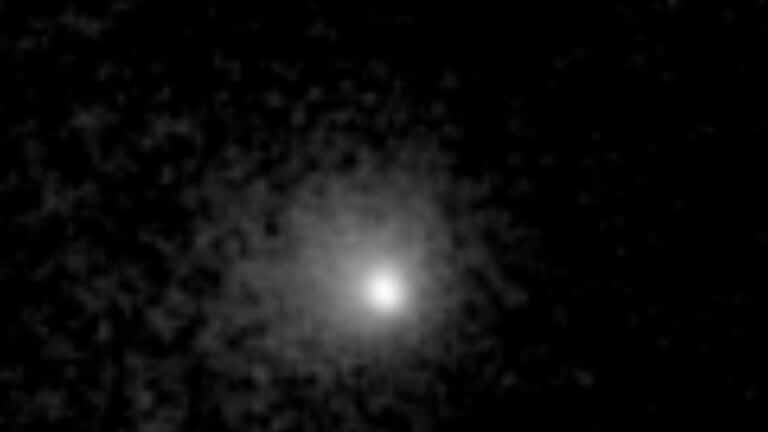
Scientists are arguing what these cosmic embers actually are, after one of these mysterious red dots appeared near a famously chaotic galaxy collision.
NASA isn’t just looking for red dots out there… or so they say
NASA doesn’t just aimlessly point telescopes at things it finds interesting in space — it’s currently focusing on red specks out there that it’s struggling to make sense of.
For years now, powerful infrared observatories like the NASA-affiliated James Webb Space Telescope have been picking up tiny, mysterious red dots scattered across the distant universe.
These Little Red Dots, as they’re called, show up in deep-field images from when the cosmos was less than a billion years old. Their makeup remains a mystery.
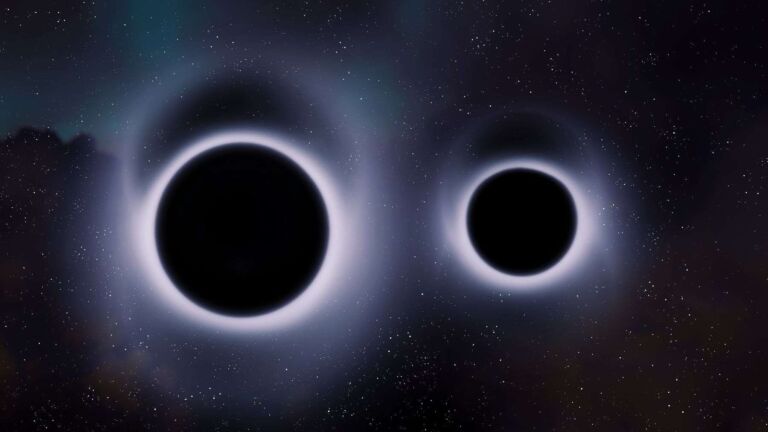
Some theories speculate that these red specks are ultra-compact galaxies featuring intense star formation, but obscured by dust so we can’t see what’s going on. Others think they could be the start of black holes — the supermassive kind — growing inside the cores of ancient galaxies.
Whatever they are, these red dots keep popping up further and further into deep space. Every time they make an appearance, they raise a fresh cosmic mystery.
Mayall’s Object, a real mystery in the universe
One of these areas where a red dot has joined the party has a name that sounds almost like a villain in a space movie — Mayall’s Object. It’s sitting about 500 million light-years away, passing time in the constellation of Ursa Major.
This phenomenon isn’t a peaceful island of stars. Not even close.
Mayall’s Object is the messy aftermath of two galaxies slamming into each other — a cosmic collision that rearranged stars and gas into a bizarre shape.
Imagine a galactic smash-up so intense it throws matter to the four corners, leaving behind a structure that almost looks like a ring with a tail attached. It’s sign that one system pierced through another with unbelievable force, and many of us would find it fascinating.
Astronomers call it peculiar for a reason, and just when scientists thought the mystery couldn’t get stranger…
A tiny red dot was spotted near it, a glowing hint of something unexpected happening around the wreckage of this cosmic collision.
As if that weren’t enough, an enigmatic red dot appears
At first glance, Mayall’s Object is already odd. Its peculiar shape has puzzled astronomers for decades.
But now something even stranger has shown up in deep-space surveys.
In the goings-on of objects like Mayall’s, astronomers have spotted tiny, intensely red dots scattered across the outer edges of the universe. They’re so small and vivid that they stand out like glowing coals in the cosmic blackness.
These aren’t fuzzy galaxies; more like pointy red sparks that light up mid-infrared images from powerful observatories and observations from Caltech.
Why are they “red”, though? Two factors must be considered: these dots are so far from us that their light has been stretched — red-shifted — by the universe’s expansion. They’re often surrounded by dust that has the effect of blocking bluer light. This leaves only deep red wavelengths visible.
And here’s where it gets weird
Researchers don’t even agree what they are, and the discussion is getting intense. Some think they might be active black holes that feast on gas, like hungry, blazing cosmic engines.
Others propose they’re compact early galaxies packed with stars and dust, or, more vaguely, exotic objects that modern astrophysics can’t explain yet.
In a universe full of mysteries, these enigmatic red dots of light appearing where nothing should be keep astronomers scratching their heads and asking, just how weird can the cosmos can get?
Read the whole thing?
Get the week's signal, not the noise
Our sharpest reporting on energy, climate and nature — free, once a week.