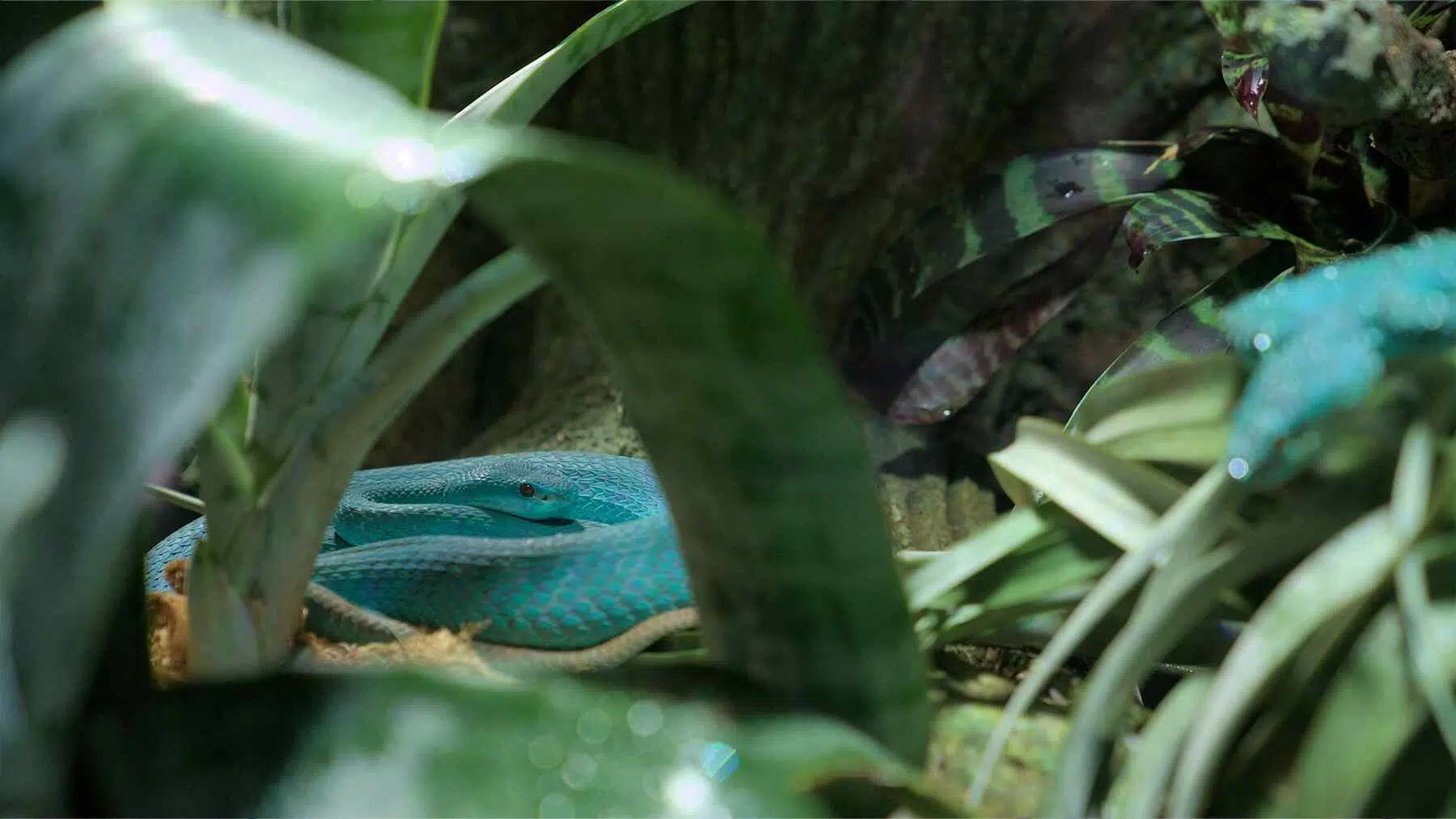
Deep in Cambodia’s isolated caves, a turquoise viper hides in total darkness while another serpent launches into the air.
Scientists never expected these discoveries in “empty” caverns.
Instead, strange creatures lurk in the shadows of these isolated underground worlds.
Each find raises deeper questions as unknown species emerge from the gloom.
What else could be living inside these hidden systems? Which unknown species do you think are still waiting to be found?
Why these underground worlds are acting like isolated islands
Hidden within Cambodia’s jagged limestone hills, these formations look like ordinary rock from above.
Below the surface, however, they reveal a sprawling labyrinth of underground networks.
60 caves across Battambang Province were surveyed. Many had never been glimpsed by human eyes.
Researchers discovered that each cavern acts as its own sealed ecosystem.
Unlike the world above, conditions inside these limestone corridors remain remarkably stable throughout the seasons. This persistent environment has allowed life to evolve in total, undisturbed isolation for millennia.
These systems are essentially remote islands, just buried deep underground.
However, this extreme seclusion has also fostered remarkable rarities: specialized creatures found nowhere else on the planet, perfectly adapted to a life of shadows.
As the team pushed deeper into the karst, the true scale of this biological treasure trove became clear.
What exactly began to emerge from the darkness in Cambodia?
The most remarkable finds were waiting in the furthest shadows
Initially, the findings seemed small.
Tiny invertebrates cling to the walls of the cave.
Parts of the world enable species to evolve in complete isolation. This region was one of them.
After the tiny creatures, reptiles emerged from the cracks and shadows. Some looked familiar, others looked almost alien.
Something was off about this cave system.
Researchers began cataloging new features and patterns.
Unusual scales. Odd colors. Strange and different body shapes.
The darkness, isolation, and water chemistry had reshaped these creatures.
They evolved along significantly separate paths over time. Each animal adapting to its own unique habitat.
More and more strange creatures emerged out of the darkness.
The researchers found a hidden world in this Cambodian cave. They also installed several camera traps.
They found evidence of larger animals nearby. including rare and threatened mammals.
But the most striking discoveries only came later. They didn’t just crawl and hide from humans.
Some moved with remarkable precision. Others seemingly defied researchers’ expectations.
That’s when the expedition changed. It went from survey to revelation.
What they found has been detailed in the “Karst Biodiversity Report,” published in Fauna & Flora.
A hidden cave with biodiversity at its heart, revealing a silent ecosystem
Underground caves can hide species that science knows almost nothing about.
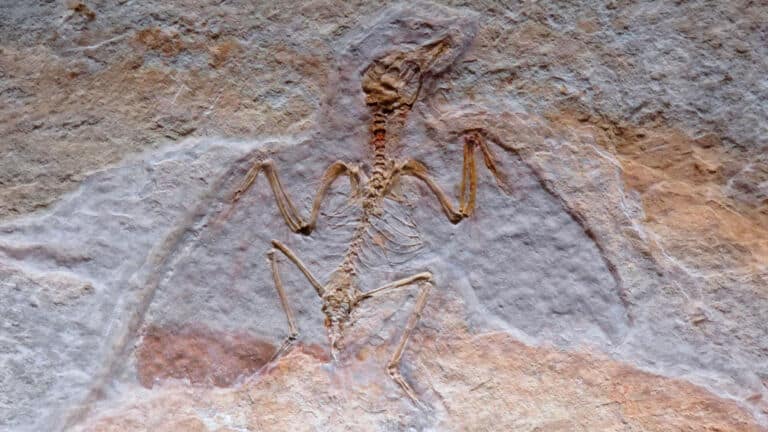
But this one hosted so much more than just fossils.
Researchers found at least 11 species new to science. Including the aforementioned bright turquoise pit viper.
A venomous snake that can track prey with heat-sensing abilities.
They also found a “flying snake”. A species capable of flattening its body to glide through the air.
The cave also revealed several new gecko species. Namely, the Cyrtodactylus kampingpoiensis and Hemiphyllodactylus khpoh.
Among the other first-time discoveries were two previously unknown micro-snails. As small as a human fingernail.
Even a few unknown millipedes, each perfectly adapted to this unique habitat.
Together, these discoveries form a hidden underground ecosystem.
A place in Cambodia where evolution runs silently and independently of the world.
Scientists estimate that over 90% of the world’s caves have yet to be explored.
Meaning that there may be other hidden ecosystems for us to find.
Unknown species patiently waiting for humanity to discover them. New expeditions to enter these hidden regions are underway.
Other missions have found ancient evidence of animals long lost to science. But what about living creatures?
As we explore the world, will we find more of these yet-to-be-discovered animals?
Read the whole thing?
Get the week's signal, not the noise
Our sharpest reporting on energy, climate and nature — free, once a week.