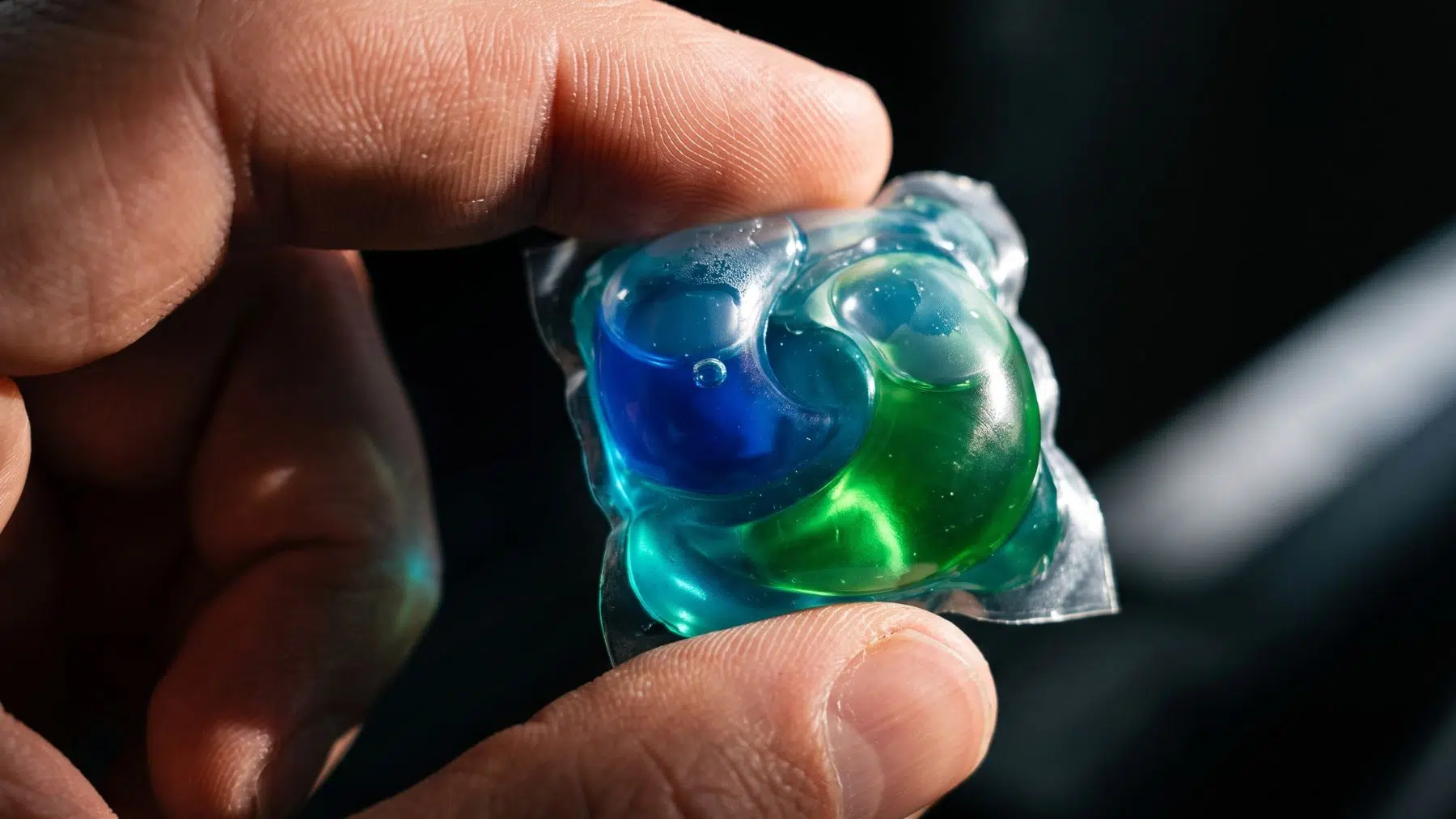
Picture the scene, dinner is done, the plates are loaded, and a single bright pod drops into the drawer.
One click, one wash, and the dishes are gleaming by morning.
It feels like the tidiest solution in the whole kitchen.
The little pod hides a longer journey than anyone imagines.
But something travels far beyond that drawer, and it does not stop at the drain.
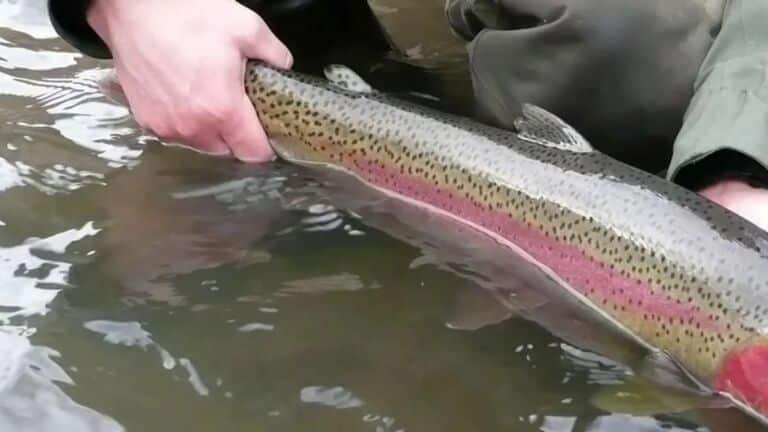
What it carries reaches all the way to a river and its fish.
The little packet that promised to solve everything
Dishwasher pods became a household staple because they are genuinely clever.
A pre measured dose of concentrated cleaner is sealed inside a dissolving wrapper.
No mess, no guesswork, and no wasted powder spilling across the counter.
Tens of millions of American homes now use dishwasher pods every single night.
That adds up to an enormous daily pulse of chemistry flowing into the drain.
Few household habits have spread through American kitchens so quickly.
Most people picture it vanishing somewhere harmless downstream.
The reality at the other end of that pipe is more complicated.
And it starts with what is actually packed inside.
What the pod is really made of
Inside a pod are surfactants that lift grease and food off the plates.
There is also benzotriazole, a compound added to stop cutlery from tarnishing.
And there is the dissolving film itself, a thin plastic called polyvinyl alcohol.
Phosphates once did much of the heavy scrubbing, and they fed serious algae problems.
So in 2010 many US states capped them, cutting them from about 9 percent to under 1.
That fixed a lot of the old phosphate story, but it did not end the others.
The surfactants, the benzotriazole, and the film all head down the same drain.
Each one reaches a treatment plant, and not all of it breaks back down, because some is built to last.
What the treatment plant fails to catch
Treatment plants do an impressive job on many pollutants, but a few slip through.
Benzotriazole is one of them, because it barely biodegrades and only partly washes out.
It has been measured moving through major rivers like the Rhine in steady loads.
The dissolving film is the other surprise, and it is plastic.
According to one study, more than 75 percent of that pod film survives treatment.
Roughly six in ten of those tons end up in sludge that is spread on farmland.
The rest slips out in treated water, adding up to thousands of tons a year.
Once in the sludge, some of that plastic can travel onto fields with the fertilizer.
Industry calls the film biodegradable, but it does not always finish breaking down in real rivers.
What it does to the fish on the other side
Here is the part of the story that plays out far from any kitchen.
Once these chemicals reach open water, aquatic life is exposed to them day and night.
Fish cannot leave the water, so they carry whatever the current brings.
Benzotriazole has turned up in river after river across Europe and beyond.
According to one review, one Swiss river carried it at up to 6.3 micrograms per liter.
Lab studies show the compound can disrupt the hormone systems of fish.
Researchers have recorded damage to fish ovaries and shifts in their reproductive chemistry.
The leftover nutrients feed algae blooms that choke the oxygen out of the water.
That is the same process behind the blooms that plague places like Lake Erie, and it slowly reshapes an entire ecosystem.
A river that does not have to run this way
None of this means the pod itself is a villain, and the science is still growing.
At the low levels found in most rivers, the sharpest harm is far from certain.
These chemicals are also just one pressure among many on aquatic life.
But the overall pattern points in one direction across dozens of studies.
Fewer of these compounds reaching the water is simply better for the fish.
Reading the label is a small act with a long downstream reach.
Phosphate free and plastic free pods made from plant based materials already exist.
The same tension shows up wherever people share water with wildlife, from octopuses to the seals near an offshore wind farm.
A river thick with fish and a rack of clean plates are not competing goals.
The distance between them is about the width of one ingredient label.
Read the whole thing?
Get the week's signal, not the noise
Our sharpest reporting on energy, climate and nature — free, once a week.