
Two pieces of metal sliding against each other inside an engine are never supposed to touch.
That is the whole trick of a bearing, and it is not achieved with hardness or with clever surfaces.
It is achieved with a film of oil.
The crankshaft spins, drags fluid around with it, and the pressure building in that wedge of fluid holds the shaft clear of the metal underneath.
Let the film get thin enough and the two surfaces finally meet.
After that the bearing is gone in seconds.
The film grows as the oil gets heavier
Film thickness in a plain bearing comes down to three things and no others.
How fast the shaft turns, how hard the load presses on it, and how strongly the oil resists being squeezed out of the gap.
Speed and load are already fixed by the engine. Viscosity is the single term anybody can still change after the machine has been built and sold.
Go from a thin grade to a heavier one and the wedge carries more load before it collapses, which pushes the bearing further into full fluid separation.
That is the entire logic of this remedy. Nothing inside the engine is touched.
The trade is real. Heavier oil drags more, so it costs a little fuel economy and takes longer to reach the top of the engine on a freezing morning.
The maker judged that a fair price against a seized crankshaft.
The engine and the vehicles carrying it
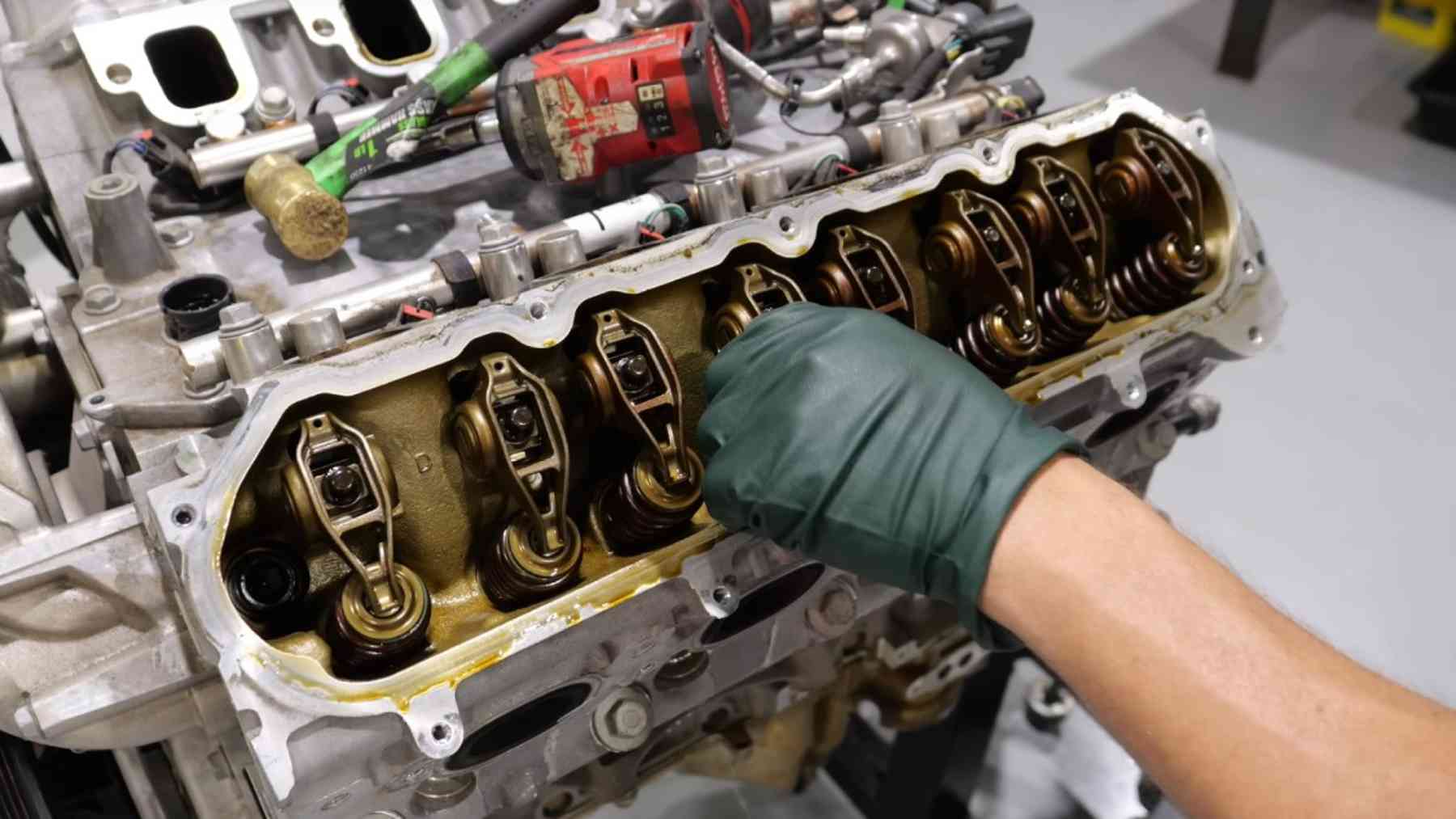
The unit is a naturally aspirated 6.2 liter V8, the biggest gasoline engine offered in these trucks and the one buyers pay extra to get.
It goes into full size pickups, into large three row SUVs, and into the luxury versions of both.
The defect itself traces to manufacturing debris and to dimensional problems in the crankshaft and the connecting rods.
When one of these engines goes, it does not go gently. Owners describe a knock that arrives without warning, then a total loss of propulsion, sometimes at highway speed.
Around 600,000 vehicles were called in for the original inspection.
The population now under review is closer to a million.
What the complaint file shows after the repair
The recall was issued in the spring of 2025 and covered engines built between March of 2021 and May of 2024.
Dealers ran an inspection first. Engines that failed it were replaced outright. Engines that passed were given a heavier oil specification, a fresh filter and a new filler cap printed with the grade the owner is now supposed to buy.
The specification moved from a thin 20 weight to a 40 weight.
Federal investigators then opened an engineering analysis in August of 2026, covering roughly 997,743 vehicles from model years 2021 through 2026.
By that point the defect office had logged 499 reports of engine failure after the remedy, 473 of them on the oil path and 26 on engines that had already been swapped for new ones.
Another 191 failures came from engines built after the original cutoff date, which means those trucks were never in the recall.
What those numbers do not prove
499 reports against a million vehicles is a small rate, and a complaint file is not a failure rate.
People with a broken engine file. People whose trucks are fine never do, so the file counts the unhappy and measures nothing else.
There is also no published teardown showing that the oil remedy failed on its own terms. An engine already carrying damage before the inspection would have failed afterward whatever went into the sump.
The inspection is the weak point worth watching, because it has to catch a bearing that is wearing but not yet audible, in the way that a latch problem or an overloaded axle tends to stay invisible until something actually breaks.
The investigators frame it that way themselves, describing the work as a review of the remedy rather than the defect, which is an unusual thing for a regulator to say out loud.
A recall that changed a label instead of a part
Here is what makes this case strange. The remedy for almost every mechanical recall is a new component, fitted once, and then the matter is closed.
The remedy for most of this fleet was a different fluid and a sticker telling the owner which fluid to keep using.
That hands the fix to every future oil change, at every quick lube counter, for the rest of the vehicle’s life.
One bottle of the old grade quietly undoes it, and no warning light anywhere will mention that it happened, as the trade coverage of the docket keeps pointing out.
The thicker oil was never really a repair.
It was a margin.
Read the whole thing?
Get the week's signal, not the noise
Our sharpest reporting on energy, climate and nature — free, once a week.


