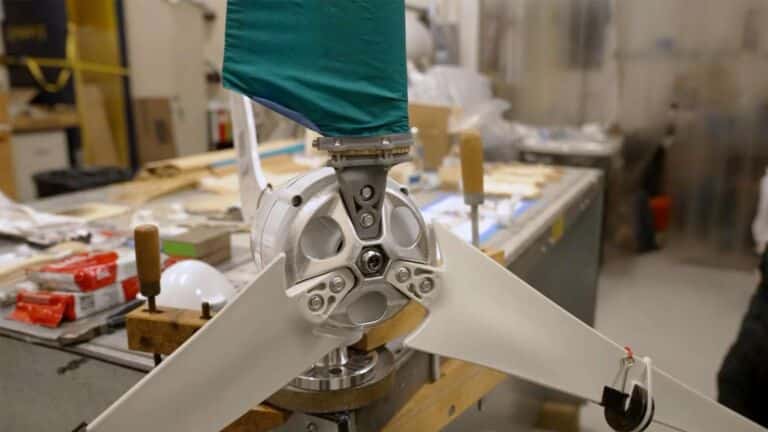
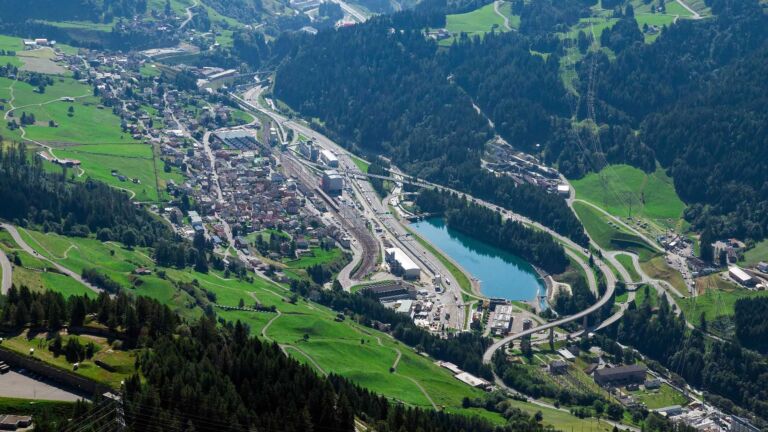
A wind farm on the ridges of West Maui sees 20 turbines operating above the Kaheawa Pasture.
Search crews hit a milestone recently: the latest annual monitoring report reveals that 123 consecutive months went by without finding a single protected species carcass on the site.
However, over 20 years of operation, the deaths of 35 native geese, 13 bats, and eight petrels have been noted in the field logs.
What has it taken for this wind facility to manage rare animal impacts for two decades?
How power has been flowing from Maui’s windy ridges for 20 years
The Kaheawa Wind Power I project was built in 2006, with 20 utility-scale turbines installed in one of the windiest corridors on Maui Island.
Operations require state and federal incidental take permits because the mountain ridge overlaps with wildlife habitats. There are four listed species covered: the Hawaiian hoary bat, Hawaiian goose, Hawaiian petrel, and Newell’s shearwater.
The project employs site searchers to inspect the cleared land 230 feet around the turbine bases. The total number of carcasses found directly around the turbines is 56, covering geese, bats, and petrels. The highest number of deaths per species is 35, with the geese being struck more than the other two species. No Newell’s shearwater deaths have been recorded at all.
Clearing of vegetation is a weekly task. Monitoring plots need to be accessible to search teams.
Documenting the search results provides a baseline for tracking bird and bat strikes across the site. It is important for environmental records to match the actual conditions on the ground.
Two metrics to keep an eye on: Search efficiency and detection rates
The process of searching for carcasses involves specially trained canine handlers who carry out inspections of all 20 plots once a week, all year round.
The process is taken seriously, with site managers carrying out quarterly bias correction trials to make sure the records are accurate, as reported by Tetra Tech. This task measures how long carcasses remain on the ground before scavengers discover them.
The trials also measure how reliably search teams locate the carcasses. Recent testing with dog teams saw a 98 percent detection rate for bats and 100 percent detection of birds. Bat mean carcass persistence probabilities were 87 percent for bats and 100 percent for geese.
Acoustic monitors spread across the mountain picked up bat activity on eight percent of the nights selected for sampling. There was a spike in detections in August and September, matching periods of lactation and post-lactation breeding.
The patterns in the acoustic monitoring data indicate at which times the bats are active in the area, which assists in refining risk assessments during seasonal windows, according to the Hawai’i Department of Land and Natural Resources.
Statistical estimates and long-term mitigation
Because field searchers cannot locate every fallen carcass, biologists use statistical software to estimate total mortality.
Using the evidence of absence estimator at an 80 percent credibility level, managers calculate cumulative take—combining direct recoveries and unobserved losses—at less than or equal to 32 bats, 56 Hawaiian geese, and 24 petrels.
These statistical projections keep the facility within permitted Tier 2 limits for bats and Tier 1 limits for native geese. Mitigation obligations for Hawaiian petrels and Newell’s shearwaters were fulfilled through predator control and breeding protection programs on neighboring islands.
The complex monitoring system is ongoing
However, statistical modeling has clear limits. Recording zero fatalities over an extended stretch does not eliminate future risk. Scavenger removal and search timing still introduce monitoring variables into the data.
Maintaining compliance requires active predator trapping, vegetation control around turbine pads, and ongoing support for off-site release pens. As the permit term approaches its end, operators continue coordinating with agency biologists to evaluate ongoing protection measures.
Understanding how mountain wind developments interact with local species provides vital context for clean energy planning. Similar ecological tracking questions are now emerging at large-scale solar installations built across inland wildlife corridors.
Read the whole thing?
Get the week's signal, not the noise
Our sharpest reporting on energy, climate and nature — free, once a week.