Something incredible has been hiding in Mars’s frozen deserts. It’s taken over 10 years for one robot to pick it up.
But it took an engineering feat and a high-stakes gamble to bring it to light.
An aging robotic geologist trawling for secrets in the dust of the Gale Crater had a meltdown. And it led to a one-off experiment that paid off big-time.
How did scientists use a failure to unlock one of the Red Planet’s most significant discoveries?
How one lonely robot’s endless curiosity eventually paid off
NASA planted the Curiosity rover on Mars more than a decade ago. Hopes were always high that it would deliver the groundbreaking data needed to advance eventual human life on the planet.
But Curiosity is getting on in years. There’s only so much it can still deliver while it endures.
Designed to drill the cold, radiation-saturated surface, it was only a matter of time before supplies ran out.
NASA researchers had a difficult choice to make when onboard supplies ran low.
And a hard call that took years to make was made.
In a feat of engineering, scientists pivoted to a risky and untried experiment. But it meant the end of one of Curiosity‘s functions entirely.
They turned to “wet chemistry” in an environment where organic preservation seems impossible. But it took the last remaining fluid cups to pull it off.
The dice were thrown, and the mechanical gamble paid off. The way we analyze alien dirt has been changed forever.
Uncovering a 3.5 billion year-old time capsule
Mars’s Gale Crater wasn’t always a dust bowl. It was once a liquid water lake layered in mud. And NASA needed to inspect it.
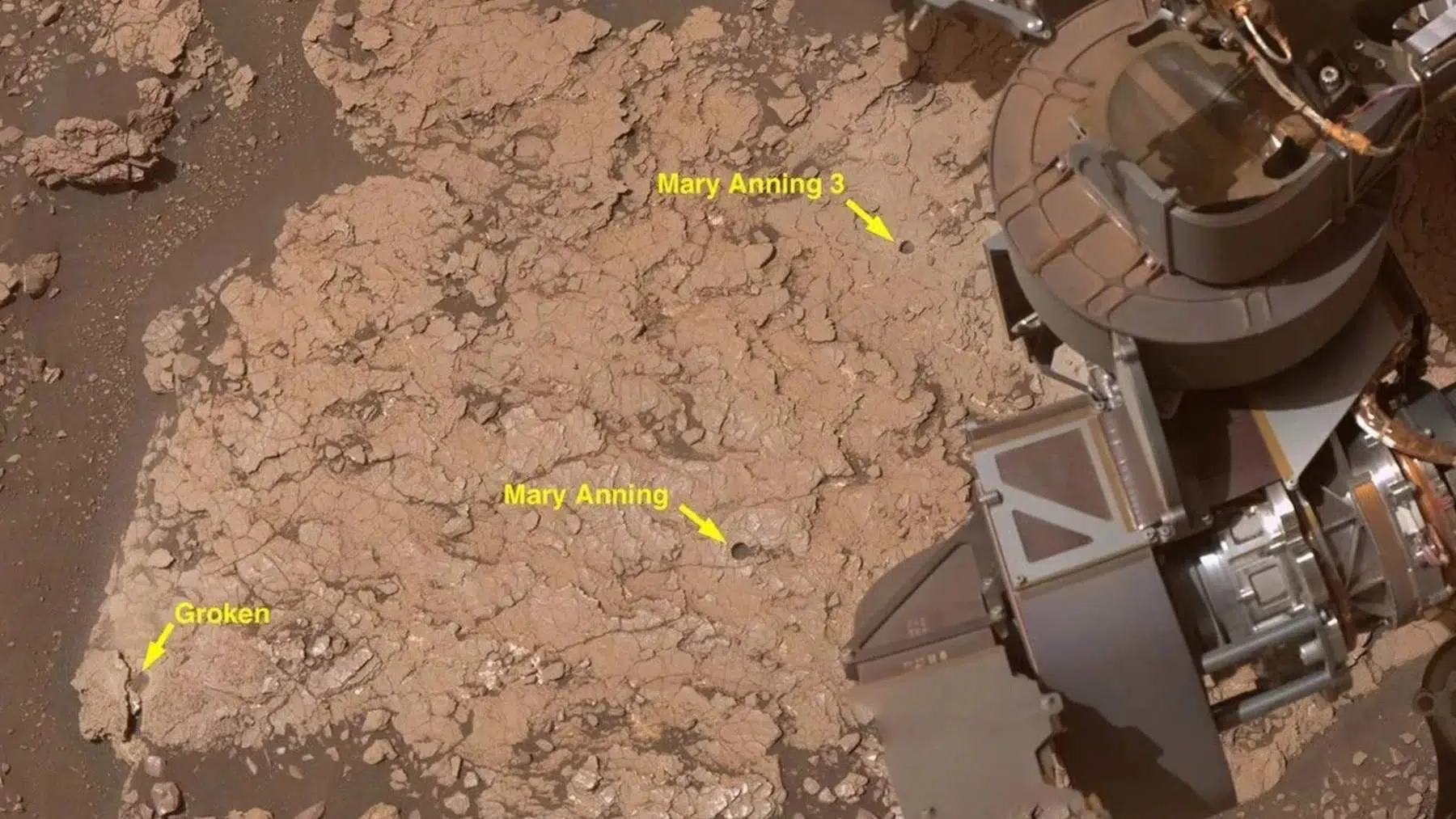
Members of the rover’s team had to decide the best possible spot for Curiosity to drill a sample to test for organic material.
The rover only had two wet chemistry cups left. So the experiment had to count. They decided on a site and grabbed the clay mineral-containing sandstone sample.

The clay layers are able to preserve organic molecules. They suggested that water was not only present in the distant past, but that it disappeared and reappeared.
Energy options to sustain life have also been found.
Curiosity took more than six years after landing to reach the clay layer in the Glen Torridon region of Mount Sharp. But the wait was worth it.
Evidence of mudstones from ancient lakes was detected. Sandstone also showed up where moving water once trickled into the lakes.
The risk was a total triumph. Fragile material that endured billions of years of harsh radiation is now open to human scrutiny.
What NASA found wasn’t standard Martian dust—it was unprecedented. And also by accident, like how a cosmologist figured out a way to get to the planet in just 33 days.
21 unique carbon-containing molecules pulled from the rock
The new data showed 21 distinct carbon-containing molecules and seven organic compounds never seen on Mars before.
Curiosity’s onboard chemical solvent unlocked two groundbreaking discoveries.
First, nitrogen heterocycles were found. These nitrogen-bearing molecules are critical. They are the fundamental precursors to RNA and DNA—the literal building blocks of life.
Scientists identified benzothiophene next. The presence of this complex, sulfur-bearing molecule is highly significant.
It points to two fascinating possibilities: ancient Mars was either a bustling, active hydrothermal system, or the planet has a history of meteorite impacts.
Identifying complex organic molecules was a major breakthrough
Finding these organic molecules is not definitive proof of life on Mars.
They could have appeared naturally from non-biological chemical reactions or carbon-rich meteorite impacts.
But it still confirms something profound. We now know beyond doubt that ancient Mars once held all the complex chemical keys to life. Could we find the fuels to ignite it?
Read the whole thing?
Get the week's signal, not the noise
Our sharpest reporting on energy, climate and nature — free, once a week.