A blade this size is one object.
Not a stack of parts bolted together, but a single shell of glass cloth and hardened resin, cured once and never meant to come apart again.
That is the whole problem with it.
Everything else on an offshore turbine gets recycled at the end without much argument, because steel and copper go back to a furnace. The blades go to a landfill or a cement kiln.
How a cured blade comes apart again
The resin is what locks it shut.
A standard blade uses a thermoset epoxy, and thermoset means the chemistry runs one way. Once it cures, heating it again will not soften it, it will only burn it.
So the fibers stay trapped.
You can grind the whole shell into filler, or you can feed it into a kiln where the resin burns as fuel and the glass ends up in the clinker, but neither one gives you the glass back as glass.
The change is in the resin, not the process.
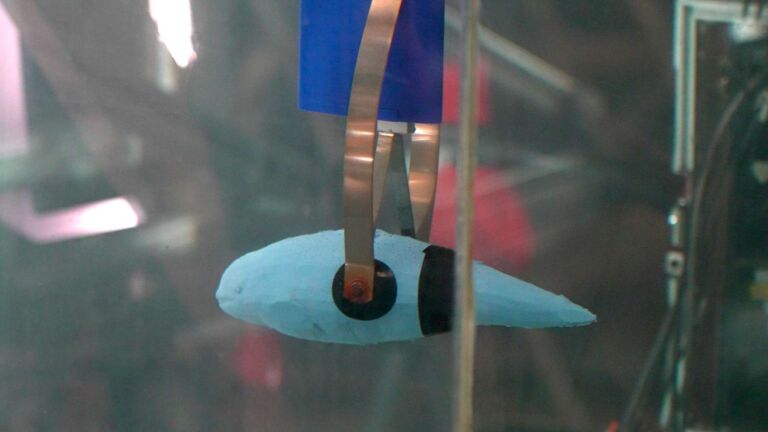
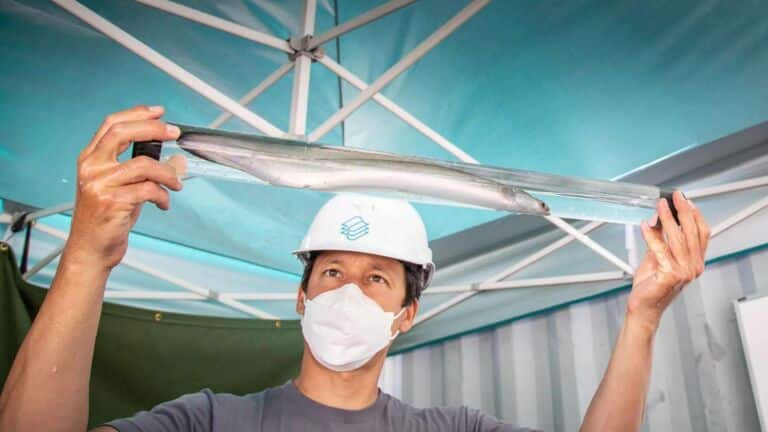
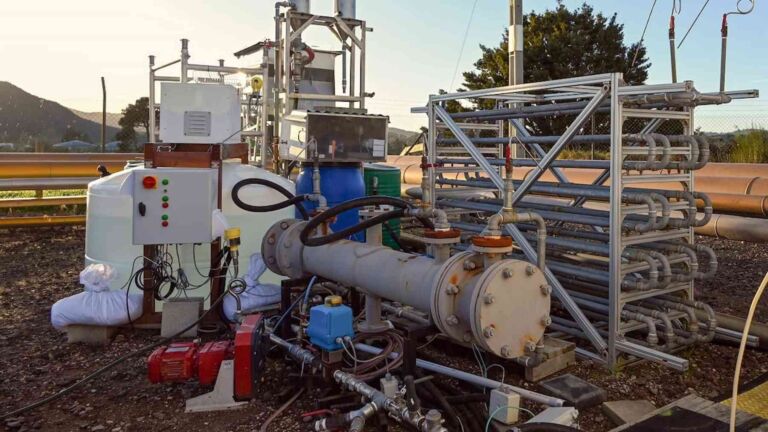
Siemens Gamesa built a blade around a resin designed to come undone, and at end of life the section goes into a heated mild acidic solution. The resin dissolves, and the glass fiber, the wood and the plastics separate out as recoverable material rather than as one fused lump.
The machine the blade is bolted to
The turbine is a Siemens Gamesa direct drive, rated at 14 megawatts and able to run to 15 with the power boost engaged.
There is no gearbox in it. A permanent magnet generator turns at rotor speed, which removes the single component that historically caused the most offshore downtime.
The rotor measures 774 feet across.
Each of the three blades runs 377 feet, longer than a football field with the end zones, and the circle they sweep covers about eleven acres of moving air.
The tower underneath is its own experiment.
It is what the manufacturer calls a GreenerTower, built from steel plate produced with at least 63 percent less carbon dioxide than conventional steel, using scrap based and hydrogen route production instead of the blast furnace. Same tower, different steel mill.
What is actually installed, and how much of it
The farm is 72 turbines for 1.1 gigawatts, off the west coast of Jutland.
The first machine combining both the low carbon tower and the recyclable blades went up in April of this year, and the operator called it a world first for a single turbine rather than for a wind farm.
The counts underneath that claim are smaller.
There are 120 recyclable blades going to this site, which is enough for 40 turbines. There are 36 GreenerTowers, which is half the farm. The two sets do not line up, so the number of machines carrying both is smaller again.
The blade itself is not new.
It first went offshore in 2022 at Kaskasi off the German coast, on 266 foot blades, so the step here is scale and pairing rather than invention. Thor is due to finish in 2027 and to supply more than a million households.
What recyclable does not mean
The recovered glass does not go back into blades.
What comes out of the bath is a material stream suitable for automotive parts and consumer goods, which is a real use and a downgrade. The technical account of the resin describes the separation step, and the operator’s announcement gives the counts.
Nobody has run one at end of life yet.
These blades are expected to turn for twenty five years or more, so the first full scale dissolution of a blade that has done its service is decades out, and the plant capacity to do it at volume does not exist today.
The other 32 turbines get the ordinary version.
Blades that leave the field intact are a growing pile, and the industry keeps finding uses for the ones already down, such as a footbridge in a park.
Why this one still counts
A first of anything at this scale is mostly a supply chain signal.
The resin has to be made at volume, the mold crews have to work with it, and the yards have to handle it without changing the schedule, which is the part that decides whether the second project gets the option.
The tower is the quieter result.
Steel is roughly a quarter of the embodied carbon in an offshore turbine, and cutting that needs no new machine at sea, only a different order placed at a different mill. What happens to the hardware afterward is less tidy, and blades go missing in storms as well.
The honest summary is narrow.
One turbine off Denmark carries both, 40 of 72 carry a recyclable blade, and the proof that any of it works arrives in the 2050s when somebody finally takes one down and puts it in the bath.
Read the whole thing?
Get the week's signal, not the noise
Our sharpest reporting on energy, climate and nature — free, once a week.