Most Americans have met one.
It was probably 3 in the morning, and the sound was a trash can lid hitting concrete.
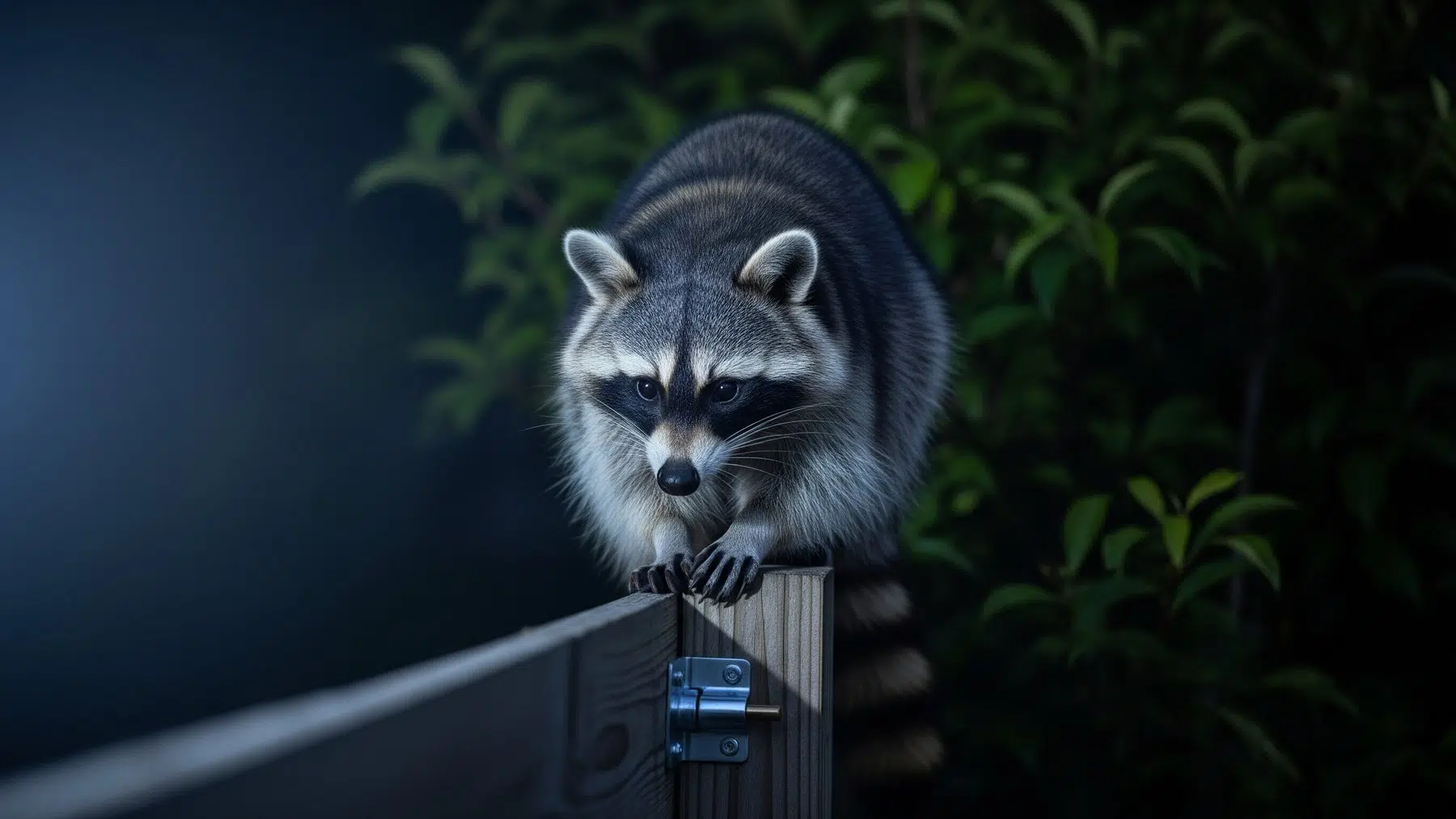
The raccoon looked up, completely unbothered, then went right back to work.
What almost nobody standing at that window guessed was that the animal was doing something far more interesting than stealing dinner, and scientists just found the proof.
The animal everyone thinks they already know
Raccoons are one of the most recognized wild animals in North America.
They show up in backyards from Maine to California, peer down from oak trees, and figure out trash can latches that their owners could not explain to a stranger.
For most people, the story ends there: clever pest, masked nuisance, move along.
But behavioral scientists have been watching raccoons more carefully than almost anyone realized, and what they keep finding has started to change the picture entirely.
The animal most of us wave off as a trash can bandit turns out to carry something inside that brain of theirs that researchers did not expect to find.
A brain built for the city
Cities are full of locks, latches, hinges and sealed containers, and raccoons treat every single one as an invitation.
Research has shown that raccoons pack a number of neurons comparable to primates into their brains.
Scientists have also identified in raccoon brains specialized fast conducting cells known as von Economo neurons, otherwise found in humans, other great apes, and a handful of large brained mammals such as cetaceans and elephants, though in raccoons these neurons appear only in the insula and not in the anterior cingulate as they do in apes.
In one well known experiment, scientists gave raccoons the Aesop’s Fable test: drop stones into a water filled cylinder to raise a marshmallow to the surface.
Two of eight raccoons correctly dropped the stones, but a third changed strategy entirely and tipped over the cylinder to reach the treat.
That kind of improvised thinking is what researchers call behavioral flexibility, and it is rare outside of primates and a handful of birds.
Still, most scientists assumed there was a simple explanation: the raccoons were hungry, and hunger makes animals clever.
The marshmallow test that nobody expected
To really test that assumption, researchers needed to separate hunger from curiosity.
So they built a puzzle box with nine entry points, grouped into easy, medium and hard mechanisms, including latches, sliding doors and knobs.
In each 20-minute trial the puzzle box contained a single marshmallow, yet raccoons often continued opening new mechanisms after eating it.
The food was gone.
The reward had been collected.
And the raccoon kept going anyway, working through door after door after door.
Scientists watching the footage described this as information foraging, because no additional food was given for continuing.
The raccoons were not being driven by their stomachs.
They were genuinely interested in the puzzle itself.
Curiosity as a survival strategy
A study published in the journal Animal Behaviour by researchers at the University of British Columbia revealed something that reframes the raccoon’s entire reputation.
Curiosity, the drive to explore even when there is nothing immediately to gain, is one of the traits scientists most often associate with higher intelligence.
It is the same impulse that leads children to take things apart after the game is over, or that drives researchers themselves down a path with no guaranteed reward.
Earlier field research backed this up: individual raccoons have been documented developing their own unique techniques for solving the same puzzle, including finding ways to unlatch difficult mechanisms from unexpected angles.
Each raccoon developed its own technique, a sign of individual personality, something once thought to belong only to social animals with large brains.
This curiosity likely explains why raccoons have spread into old-growth forests and dense urban cores alike, thriving in environments that defeat most other wildlife.
The trash can was always the classroom
Once you see raccoons through this lens, even a midnight raid on the garbage looks different.
Every latch cracked is a lesson filed away.
Every new container is a puzzle worth exploring beyond the point where hunger would have stopped a less curious animal.
It is a reminder that the boundary between animal instinct and something closer to genuine thought is blurrier than most people assume.
Scientists studying how wild animals adapt to human built landscapes increasingly find that the most successful species are not the biggest or the fastest.
They are the ones most willing to keep pulling at a door long after the food is gone.
A similar story is playing out with other animals scientists once underestimated: ravens in Yellowstone have shown a capacity for strategic thinking that keeps surprising researchers.
As for the raccoon on your fence at 3 a.m., the evidence now suggests it is not just hungry.
It is paying attention, and it almost certainly remembers everything it figures out.
Read the whole thing?
Get the week's signal, not the noise
Our sharpest reporting on energy, climate and nature — free, once a week.