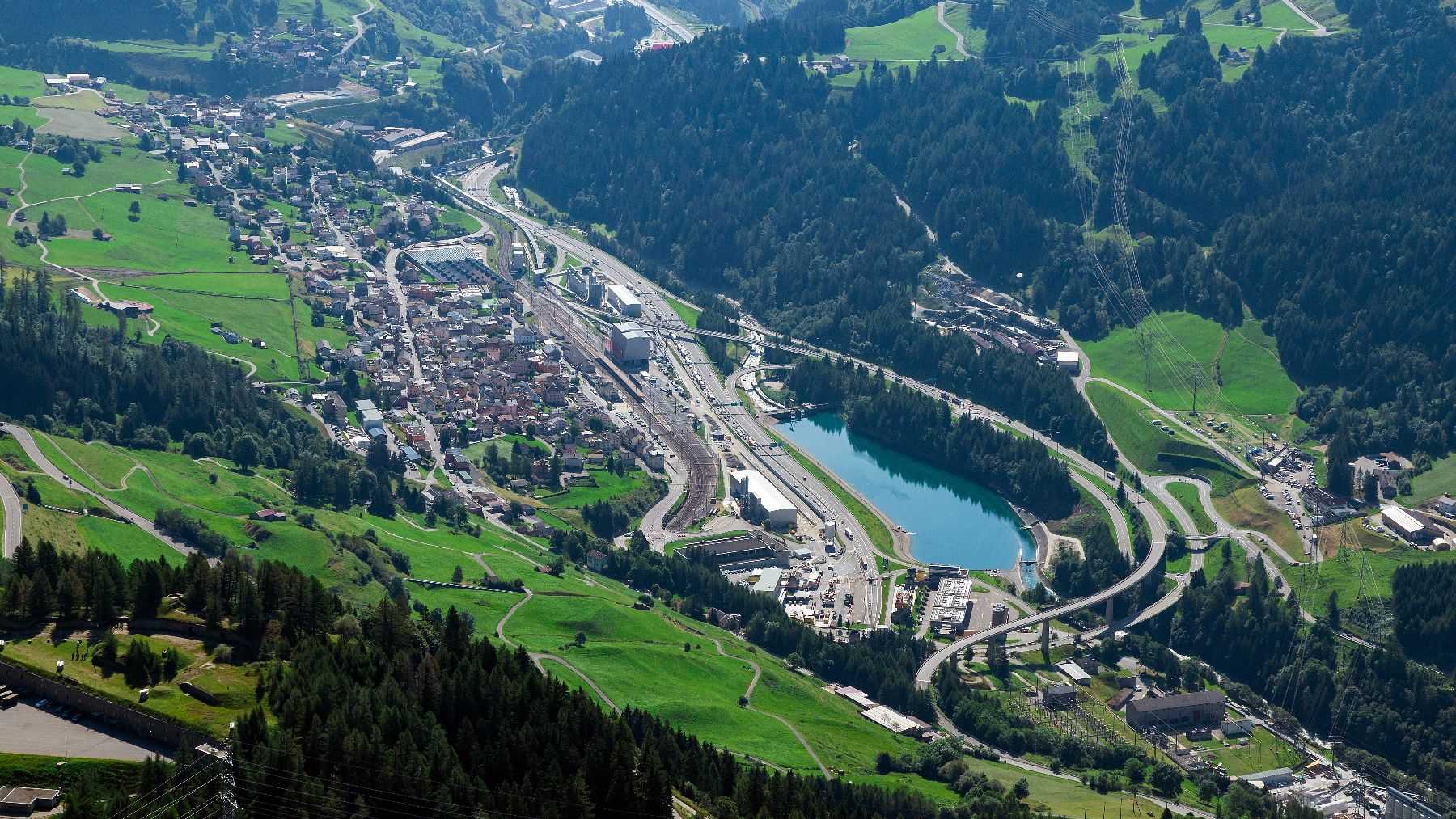
Researchers from Switzerland used state-of-the-art bird radar systems in the Gotthard Pass wind farm for monitoring large groups of birds moving along the Alpine migratory corridors.
Wind farms located at high altitudes usually have to deal with heavy regulations because the rotating blades of wind turbines are hazardous to vulnerable nocturnal songbirds flying over the mountain ridges.
The use of radar tracking and automation systems allowed operators to shut down certain generators when there was a surge in bird activity and poor visibility.
The mitigation system managed to track 1.7 million migrating birds and minimize the downtime of the turbines.
Monitoring high-altitude alpine migration corridors with special radar
The Swiss Gotthard wind park is located on a mountain pass through which millions of migrating birds fly via elevation gaps.
Migrating birds are funneled by the Alpine landscape into narrowly defined elevation bands where turning turbine blades pose a serious physical danger.
Scientists have mounted a radar system some distance from the five-turbine wind farm to monitor approaching airspace around the clock.
The radar system recorded all bird flights through the area both day and night without depending on restricted human observation counts.
Tracking the space provided accurate information about the number of migratory birds passing through the high-elevation pass.
Scanning the wide area guarantees the scientists get the information long before the flocks get to the spinning blades of turbines.
Quantifying millions of bird flights in the seasonal flyway
Multi-year tracking recorded 1.7 million bird flights inside the alpine wind farm from 2021 to 2024.
Millions of small passerine birds migrate in groups through the air during their migration period.
It was found that the bird activity fluctuates greatly depending on the weather front, wind speed, and clouds.
There were differences in individual bird flight speeds and crossing altitudes amongst different bird species groups using the mountain pass.
Density maps confirmed that turbine shutdowns on a 24/7 basis are too stringent in view of fluctuating seasonal traffic patterns.
Setting automated turbine shutdown thresholds during high traffic
Instead of replacing the seasonal ban, the Gotthard wind farm used radar-aided shut-down limits since the beginning in 2021.
In the course of time, the optimal operations were achieved by switching from general limit values (2021-2022) to turbine-specific thresholds (2023-2024), thereby managing to cut down downtime and ensure real-time bird protection.
Turbines stop their work temporarily if the number of incoming birds per hour exceeds the biological safety threshold limit values.
Selective shutdown minimizes downtime of all turbines, providing additional possibilities for energy production while still protecting migrating birds at high-risk times.
The area of the Gotthard Pass from the west – Figugegl CC BY SA 4.0
Managing the production of wind power and wildlife conservation in the region
This renewable energy project could conflict with the local conservation programs aimed at preserving the threatened migratory birds in Europe.
The unregulated operation of the wind turbines makes the project vulnerable to high fatality rates, hence becoming the subject of legal opposition from environmental protection organizations.
Even though the dynamic curtailment reduced the likelihood of operation during the peak migration pulses, the monitoring conducted in 2021-2024 recorded 107 bird fatalities due to collisions with turbines.
Maintaining the local biodiversity ensures that the green energy project is not regulated by the government.
The construction of alpine facilities needs to be concerned about both energy generation and safety of birds, according to the Journal of Environmental Management.
Mitigation technologies scale up globally in wind parks
The monitoring difficulties experienced at alpine wind facilities include the problem of icing, strong winds, and geographical isolation.
The question should be resolved whether the radar systems for bird detection work reliably under the conditions of winter storms and fog.
Scaling the system of automatic shut-down to the larger size of lowland wind facilities involves connecting multi-radar systems in a wide area.
The commercial availability of such technology will highly depend on its ability to analyze complex biological radar information autonomously.
Further development of dynamic shut-down will show how soon intelligent protection technology spreads to other mountain wind parks.
Read the whole thing?
Get the week's signal, not the noise
Our sharpest reporting on energy, climate and nature — free, once a week.