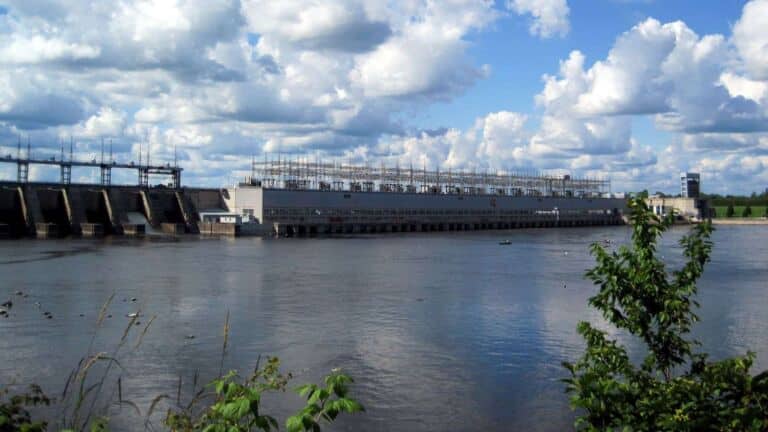
Behind a concrete dam, the water sits flat and brown.
From the bank it looks like storage, not habitat.
Nothing about the surface suggests what is swimming under it.
For decades, the story told about dammed rivers was a story of loss, of fish runs cut off and habitats drowned.
A nationwide tally of reservoir fish complicates that story without erasing it.
So what is actually living in all that impounded water?
Slack water behind a dam suits many fish better than the river did
A reservoir is not a wild river and not quite a natural lake. It is a wide, slow body of water held in place by an earthen or concrete wall, its level rising and falling with the seasons and the demands of the grid. Warm, nutrient rich and often shallow around the edges, that kind of water tends to suit many warmwater fish better than the fast current it replaced.
Slower flow lets plankton build up, plankton feeds small fish, and small fish feed bigger ones. Researchers who study these systems caution that the yield is uneven, since fisheries biomass and production likely vary across reservoirs that differ in shape, residence time, temperature and depth.
Even so, none of it was planned. The reservoirs were built for power, water storage and flood control, and the fish settled in on their own, finding habitat nobody designed for them.
Bass, catfish and shad fill water nobody designed for them
Bass, catfish, sunfish and shad are the kinds of species that do well in slack water zones, and across much of the country they are what anglers actually catch. The mass is not spread evenly. Reservoirs in the southern states hold an estimated 4.2 billion pounds of total fish weight, more than half the national figure, a reflection of warmer water and the sheer density of impoundments across the region.
The top five states for total weight of reservoir fish are Texas, Arkansas, Oklahoma, Florida and South Dakota. In many places, such as arid regions, reservoirs are the only remaining fisheries resource, which is why the authors argue considerable conservation management is warranted for reservoir fisheries.
That framing cuts against the habit of filing these waters under infrastructure. A dam is a piece of plumbing, but the lake behind it behaves like an ecosystem, with a food web dense enough to support fish by the billions of pounds.
Thirty years of poisoning surveys built the national count
The estimate comes from a 2024 paper in Scientific Reports by researchers at the University of California, Davis. The study drew on 1,127 rotenone surveys on 301 USA reservoirs, spanning 1948 to 1978 across twenty two states, work originally collated under the US Fish and Wildlife Service’s National Reservoir Research Program.
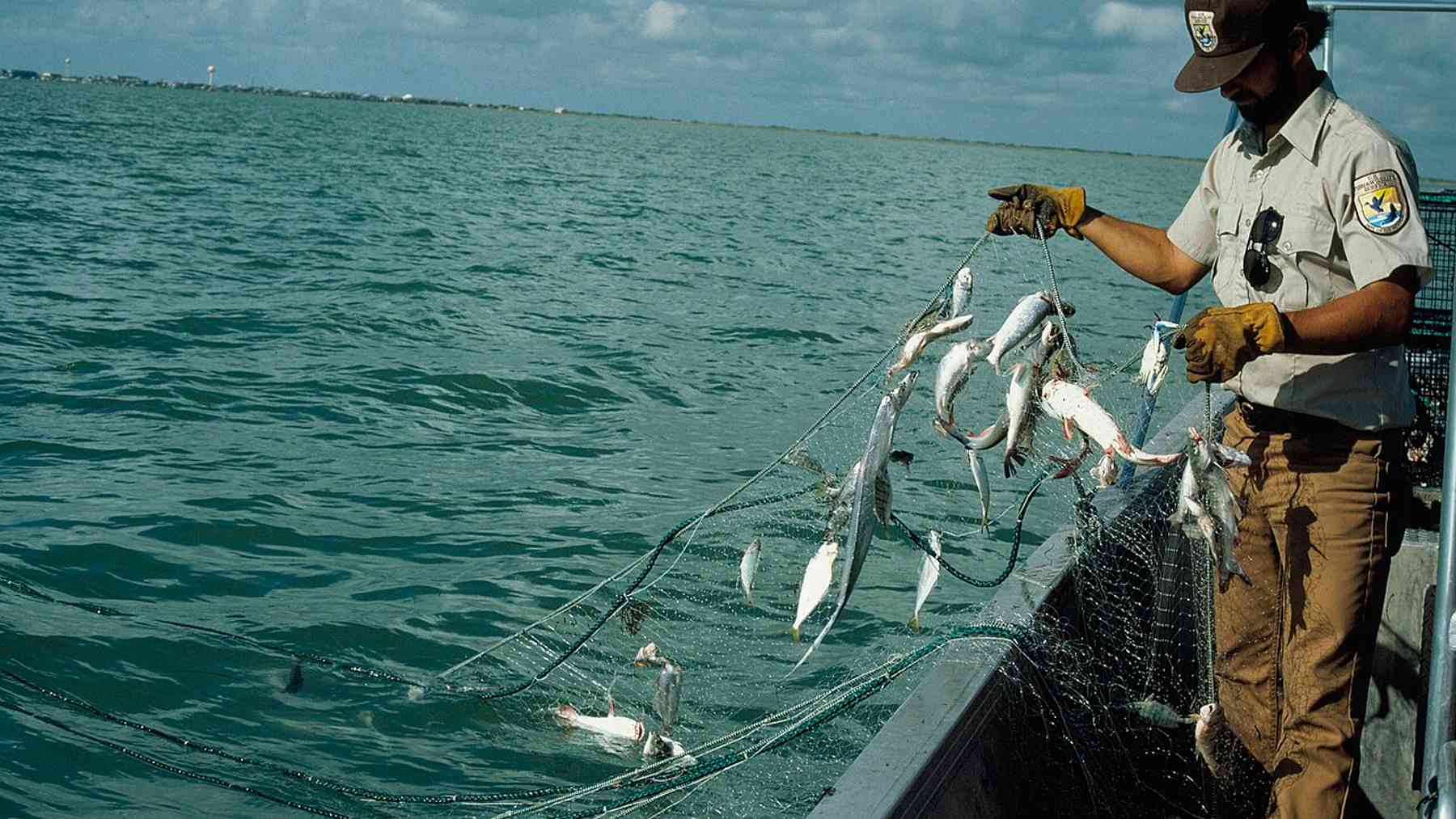
Rotenone, a plant extract, was the primary chemical used in those fish poisoning surveys, and it kills fish by blocking oxygen uptake. That gave crews a weighed count of a test plot rather than only the fish that bite a hook, and the totals were later adjusted for fish that were not recovered. Scaled across the country’s reservoirs, the national standing stock works out to 3.43 billion kilograms, or 7.6 billion pounds.
Christine Parisek, the lead author and a doctoral candidate at the time, put the scale in plain terms in a university announcement. She described “a large amount of fish mass in U.S. reservoirs that are being overlooked,” with a value she compared to fish harvests from fisheries around the world.
Decades of records challenge the assumption of steady decline
One idea the work pushes back on is that reservoir fisheries inevitably decline as the decades pass, as silt accumulates and nutrients wash away. The long term records did not produce a single tidy curve. The authors observed varied and non linear trends in reservoir fish biomass over time, concluding that previous assertions that reservoir fisheries decline over time are not universal.
Instead, some reservoirs held steady or grew richer in fish rather than poorer. That matters for anyone managing these waters, because it means an older reservoir is not automatically a spent resource.
The churn is continuous as well. Annual secondary production, the new fish mass grown each year, was estimated at roughly 4.5 billion kilograms, close to 9.9 billion pounds, rather than a one time inheritance.
Old survey methods still limit a hidden harvest
The honest caveat is that this is a modeled biomass estimate built from decades old field surveys, not a live census of every lake in the country. The sampling method behind it is largely history, since the biomass data came from once widespread rotenone programs that are now mostly banned. Turning that mass into food would also mean rethinking how reservoirs are managed, and species, water quality and local rules all limit what can realistically be caught.
The authors are explicit that the study is not making an argument for prioritizing building reservoirs over protecting and restoring natural flowing rivers. The same paper states plainly that dams decimate native fish diversity and other freshwater riverine communities, and these fisheries are a consequence of that change rather than a justification for it.
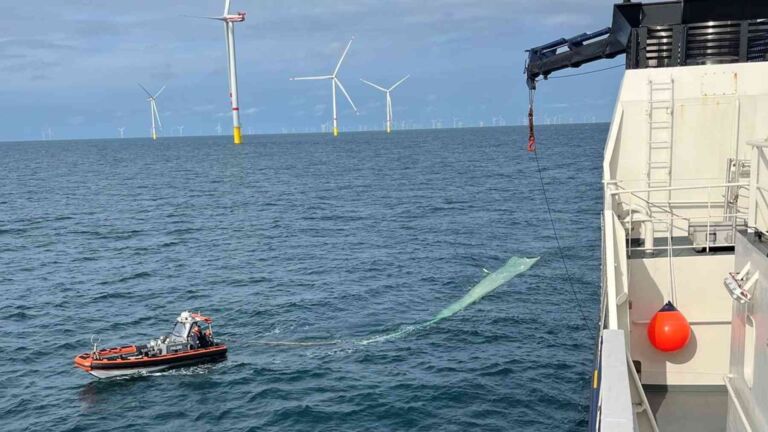
Even so, engineering has chipped away at some of the harm, including the rebuilt turbine installed at a Snake River dam to move juvenile fish downstream. The slow water above hydropower intakes further north belongs to the same picture, infrastructure that holds a living fishery measured in millions of tons.
So the next time somebody pictures the water behind a dam, the image of an empty basin can give way to something closer to a productive lake.
Read the whole thing?
Get the week's signal, not the noise
Our sharpest reporting on energy, climate and nature — free, once a week.