China is not being a good neighbor, according to India. Last year, China approved construction of the world’s future largest hydropower dam, but apparently the government failed to consider how India and Bangladesh would feel about this.
The site of the dam is the Yarlung Tsangpo River in Tibet, which becomes the Brahmaputra River in India and the Jamuna River in Bangladesh, and the potential impact of restricting the water flow on regions downstream has become a serious concern.
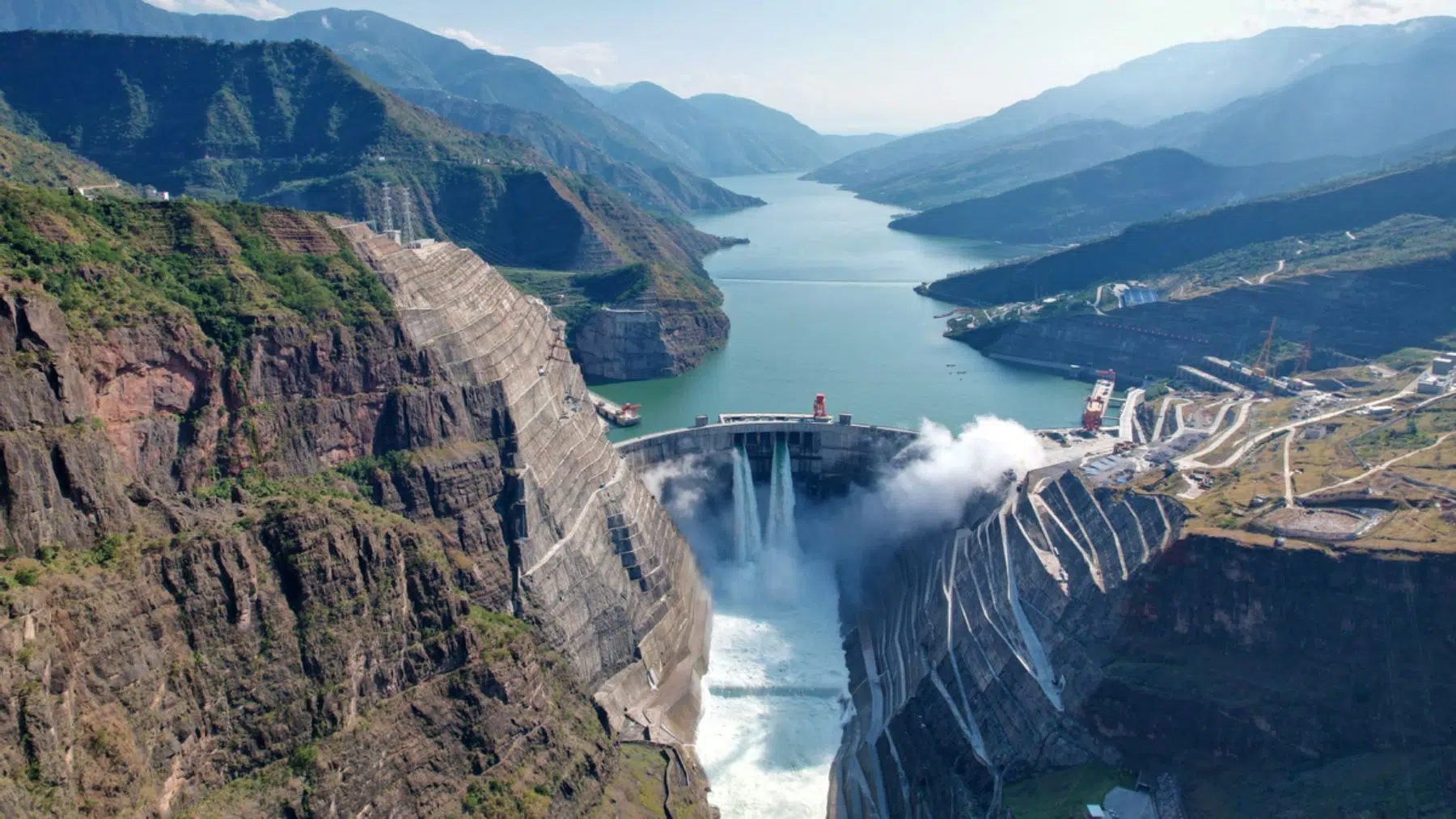
China is cementing its place in renewable power with the world’s biggest hydropower dam
China’s excitement about building the biggest hydropower dam on Earth is being somewhat dampened by the blowback from India and its neighboring country, Bangladesh. Activists have been loudly protesting the gigantic construction project, which is of such a scale that it’s impossible that communities and ecosystems downstream will be unaffected.
The renewable energy project was approved by the Chinese government in Beijing in December 2024. Its location on the lower reaches of Tibet’s Yarlung Tsangpo River was chosen to capitalize on a stretch where the water plunges an incredible 6,560 feet along a section known as the Great Bend. This has huge electricity-generating potential.
The Chinese Xinhua news agency says the hydropower dam will go a long way to achieving the country’s net-zero goals and described the mega-project as a safe one that “prioritizes ecological protection.”
India feels China’s being “dam” inconsiderate
However, it appears that China failed to adequately engage with stakeholders outside its borders before taking the important decision. Soon after the news was announced to the rest of the world, India rose up in arms with Bangladesh not far behind.
Indian environmentalists point to the ecological sensitivity of the mountainous region below the proposed dam site, explaining that harnessing the river and affecting the downstream water flow will have consequences for the northeastern states of India. Bangladesh will also witness the effects further down the line when the Brahmaputra River leaves India and branches into the Jamuna river.
India raised its voice while China made soothing noises
Indian foreign ministry spokesman Randhir Jaiswal reminded China about the interests of downstream states and stated that the country is prepared for action:
“We will continue to monitor and take necessary measures to protect our interests.”
The Chinese government responded to say that scrupulous and rigorous scientific research was carried out before any firm decisions about the construction of the dam were made. Chinese foreign ministry spokesperson Guo Jiakun reassured:
“The project will not have a negative impact on the ecological environment, geological conditions, and the rights and interests related to water resources of downstream countries.”
Concerns about the mega-dam extend beyond ecological
Indian and Bangladeshi experts are not backing down, though. Y. Nithiyanandam, the head of the Geospatial Research Programme at the Bengaluru-based Takshashila Institution, drew attention to a risk of disasters:
“The region proposed for dam construction is highly susceptible to landslides and is located on a geological fault line that intersects the Yarlung Zangbo. Planning a dam of this magnitude in such complex terrain poses significant risks to downstream regions of India and Bangladesh, especially in the event of a mishap or if there is alteration in the water flow.”
Nithiyanandam also highlighted the recent Tibetan earthquake that killed at least 126 people and the region’s vulnerability to further disasters of this nature, saying it should be a reminder of the risks of the environment and the unintended consequences that building this mega-dam could have.
China’s dam may awaken military conflict
The proposed dam is also near the heavily militarized border of India’s northeastern state of Arunachal Pradesh, an area that Beijing has claimed and renamed “South Tibet.” Indian and Chinese relations deescalated toward the end of 2024 when both sides withdrew their troops from two contested border regions. However, analysts say mistrust lingers and extends to the project.
It’s clear that China has great ambitions to rule the renewable power world, but there are concerns that the country is doing too much, too fast. And that’s just on Earth. The Asian country has another super-project in development involving installing a solar version of the Three Gorges Dam in space.
Read the whole thing?
Get the week's signal, not the noise
Our sharpest reporting on energy, climate and nature — free, once a week.