Something foul kept washing up on Sydney’s shoreline, long before anyone found where it came from.
Dark, waxy balls the size of golf balls, then baseballs, rolled in with the tide.
Beachgoers nudged them with sandals, unsure what they were.
Meanwhile, deep underground, a different kind of problem had been growing.
It sat in a tunnel nobody could easily reach, beneath one of the largest sewage systems in the country.
The two were about to turn out to be linked.
A hardened mass built from grease and whatever else gets flushed
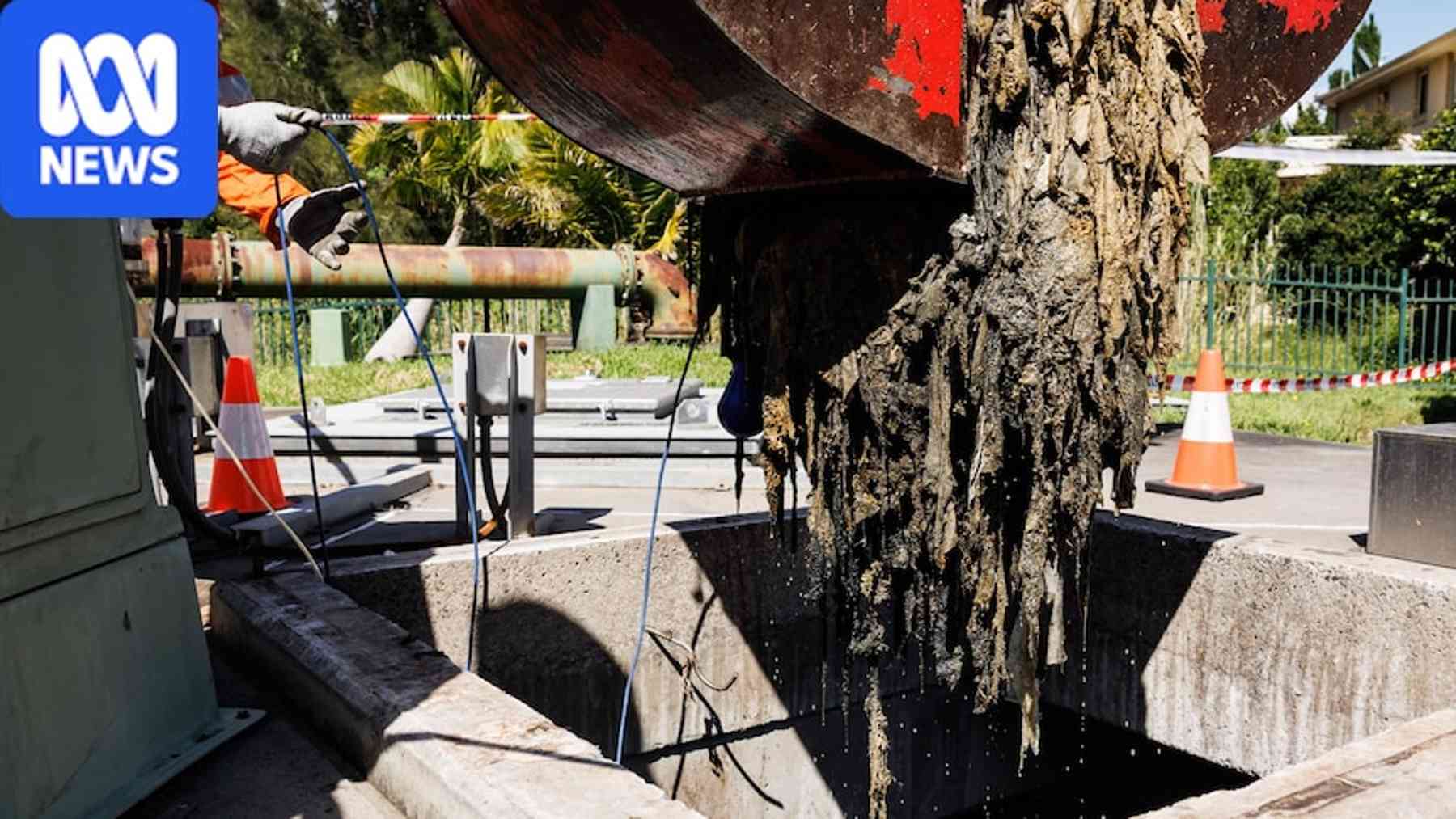
Sydney Water confirmed a fatberg lodged deep in the tunnels of its Malabar wastewater system, a buildup of fats, oils and grease fused with material that never breaks down. The mechanism is simple chemistry turned stubborn: fats and oils cool as they travel through pipes and harden around whatever solid material drifts past, mostly wet wipes, sanitary products and other non flushable waste that holds its shape in water the way toilet paper does not.
Once a crust forms, it collects more of the same.
Sydney Water’s managing director has said the utility does not know the fatberg’s exact size, describing four buses as the maximum potential extent rather than a confirmed measurement. The mass sits in what the utility calls an inaccessible dead zone, a stretch of tunnel crews cannot safely enter, which is why this particular mass had room and time to grow.
Beaches kept collecting foul black balls for months
So how did a blockage deep in a tunnel end up on the sand. The balls first appeared on eastern suburbs beaches and kept returning along the coast, a sticky, foul smelling mix that chemical analysis traced to household waste rather than an oil spill.
Local council crews were called out repeatedly to clear them, with specialist hygienists brought in to lift balls and contaminated sand off Coogee and several nearby beaches. Randwick City Council ran up a cleanup bill of roughly half a million Australian dollars, which the mayor sent to Sydney Water, and the utility agreed to pay it.
Each time a batch washed ashore, residents asked the same question: where was this actually coming from. The New South Wales Environment Protection Authority identified Sydney Water’s sewage network, and later the Malabar system specifically, as the likely source, after samples from the balls matched material from the system. The fatberg is the suspected source within that system, though officials stop short of calling it proven.
Crews pulled 58 tons from the tunnel in one operation
The scale of the removal is what separates this fatberg from a routine clog. In April 2025, Sydney Water crews extracted 58 tons of accumulated fat, oil, grease and debris balls, a figure the utility reported as 53 metric tons, from the part of the system they can reach.
Even that haul did not clear the whole blockage.
Material remains lodged deeper in the tunnel, in a section crews say was never built for routine access, and the utility has described the cleaning work it can do as extremely risky. That leaves two numbers sitting side by side, 58 tons hauled out, and an unspecified remainder still fused underground, and it explains why the job needs specialized and risky access rather than a truck and a hose.
A multibillion dollar overhaul aims to cut the flows feeding it
Where does the fix go from here. The New South Wales government and Sydney Water have announced a roughly three billion Australian dollar program to upgrade key facilities in the Malabar system over the next decade, reducing the volume of wastewater treated and discharged through the deep ocean outfall.
Shorter term steps include more frequent cleaning and inspection of the outfall screens, tighter trade waste controls and a wider public campaign on fats and oils. Sydney Water’s managing director has said he cannot guarantee debris balls will not return in the meantime.
The utility’s working explanation is that flows skimming the surface of the buildup slough off pieces that drift out to sea, a hypothesis drawn from timing and composition rather than one definitive test.
What one blocked tunnel reveals about where grease actually goes
Zoom out and the Malabar case reads like a lesson in plumbing most people never think about. A few spoonfuls of grease down a kitchen drain, multiplied across the nearly two million people the system serves, can fuse into a mass heavy enough to need measuring in tons.
The same mechanism behind famous wipe blockages dug from riverbeds elsewhere is at work here, just hidden underground instead of piled on a shoreline.
There is a hopeful thread too. Once utilities can describe a problem like this in tons and locations rather than vague odor complaints, they can engineer around it, the way plants elsewhere have redesigned intake screens after similar discoveries at treatment plants dealing with their own wipe buildups. Sydney’s overhaul will take years, but the reachable portion of the fatberg is, for now, mostly gone, and the beaches it may have been feeding are being watched for whether the black balls stop coming back.
Read the whole thing?
Get the week's signal, not the noise
Our sharpest reporting on energy, climate and nature — free, once a week.