In the rocky reefs off the California Coast, wild and wonderful species lurk.
Cordell Bank National Marine Sanctuary is dedicated to protecting these reefs. One such species they look out for is the Giant Pacific octopus.
This is the largest octopus species in the world, and it has lived peacefully in these reefs for a long time.
Now, they are fighting an enemy one would not expect: the Dungeness crab trap.
Why is a manmade predator battling them for their home?
Where the Giant Pacific octopus dwells
Divers and scientists from the Cordell Bank National Marine Sanctuary have documented these animals on several expeditions.
In 2023, technical divers from Bay Area Underwater Explorers and the Lee Oceans Foundation surveyed these reefs. The expedition set out to record the sanctuary’s rocky reef communities.
Along the way, they met several giant Pacific octopuses.
One was occupying a den near the top of the Northern West Ridge. Two more were around 200 feet deep.
They seemed friendly enough, with one of the creatures coming up close to the divers as they photographed it. These images later helped represent the species on the sanctuary’s commemorative poster.
Nothing seemed unusual at first. The species sheltered in rocky dens, and these reefs offer rugged ground for them.
But slowly, they have been making their way to other areas, where manmade devices were taking over.
The largest octopus in the world
The giant Pacific octopus, Enteroctopus dofleini, is the largest octopus in the world. Adults commonly reach 30 to 50 pounds, and some grow even larger.
Their arms can span several feet from tip to tip. Each arm is lined with hundreds of suckers that are used to grip, taste, and investigate their surroundings.
These animals live quite long for an octopus species, in the cold waters of the North Pacific. Some have also been found in the Greater Farallones National Marine Sanctuary and deep in the Santa Cruz Canyon.
These beautiful creatures feed opportunistically on crabs, clams, fish, and other marine animals.
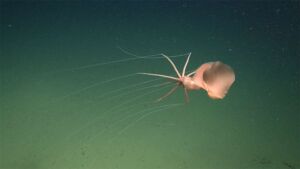
When a female reproduces, she lays tens of thousands of eggs, and then guards them inside a den. Then, she eventually stops feeding them and dies soon after the young hatch. They usually remain within the rocky areas that keep them safe.
An unexpected catch
In 2026, the fishing representative on the Cordell Bank National Marine Sanctuary Advisory Council, Dick Ogg, reported something a bit different.
He described how an unusual number of giant Pacific octopuses were entering baited cages that fishermen had set to catch Dungeness crab.
These traps had been set on the continental-shelf area of the bay, which is not usually where these octopuses dwell.
Ogg was far more accustomed to seeing this species in the more rocky areas.
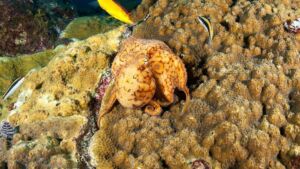
As extremely intelligent creatures, they were not there by accident. Octopuses do feed on crabs, so their presence there could be food-related. Research will be needed to understand more of what is going on with this species.
NOAA National Marine Sanctuaries notes that a shift in the distribution of a species can offer scientists clues about broader ecosystem change. But a single report from one fisherman cannot conclude such a shift.
What it does show is how much there is to be learned about where these animals live or how their living area is changing. The species has also been recorded around reefs, wrecks, and canyons along the California coast. Ogg’s interesting finding adds an open sandy continental shelf to that list. Who knows where else they might turn up.
This isn’t the strangest place Octopuses have been found. They are becoming more abundant in this strange new habitat they have moved into.
Read the whole thing?
Get the week's signal, not the noise
Our sharpest reporting on energy, climate and nature — free, once a week.