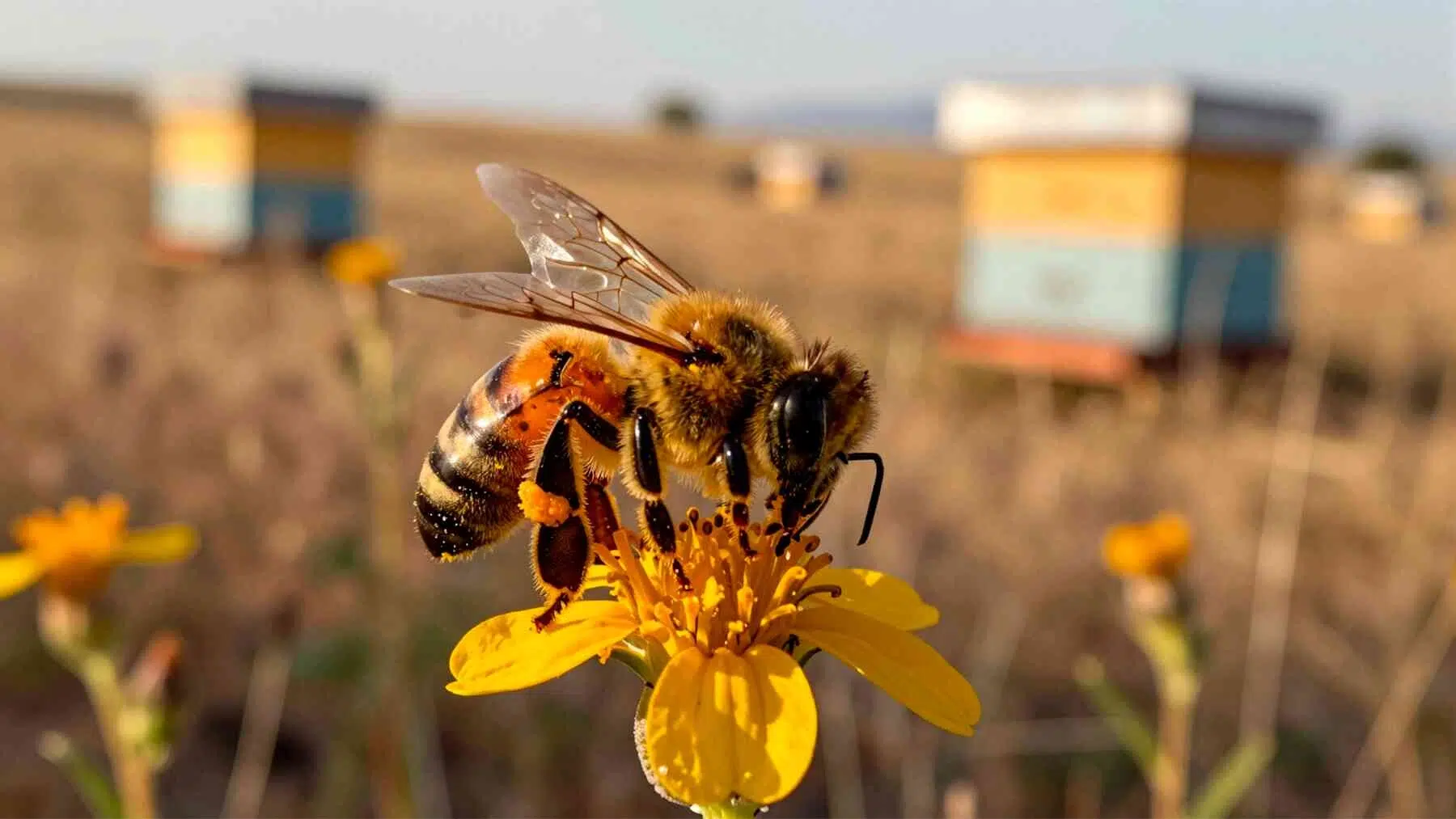
Honeybees in the state appear to be immune to a major pest that threatens populations everywhere else in the U.S.
While colonies all over America are collapsing, they remain stable.
Some areas have even shown evidence of thriving ones. For years, researchers have studied these bees.
They’ve tracked their behavior and compared the results to colonies around the world.
But there remains one big unanswered question: what is the parasite that affects honeybee colonies and where can it be found?
How does threat spreads across colonies
There is an aggressive pest that is attacking honeybee colonies nationwide.
This pest causes colonies to die off over time by feeding on the honeybees themselves.
It usually goes undetected until after the damage has occurred.
Colonies infected with this parasite eventually collapse.
Many times, once a colony collapses, you’ll find a hive that was once full of bees. Now the hive stands empty.
There is also little or no brood (baby bees), along with less pollination occurring in the area.
This is a problem that affects multiple areas of the nation.
Both managed and wild honeybee populations are affected.
This raises concerns about the long-term survival of the honeybee species.
California is the exception to this trend. While losses are expected in some areas due to the parasite, bees elsewhere are able to thrive.
In those places, they would otherwise not survive.
An unusual resilience that does not follow the rules
The fact that bees are able to survive longer in areas that were expected to lose them does not seem significant at first.
It could easily be dismissed.
However, as time passes, it starts to become apparent.
Some of these populations exhibit minor variations from standard honeybee behavior.
At first, these minor changes can be difficult to detect. As time progresses and more data is collected, it becomes increasingly obvious.
Bees in these areas show greater tolerance for environmental stressors than expected.
Additionally, despite similar environmental stresses, some populations are maintaining colonies.
These colonies should theoretically be declining or dying entirely.
These observations collectively point toward an interesting phenomenon.
It is a resilience that cannot be explained. Why are these bees reacting differently than others?
These comparisons don’t explain what type of organism is being observed, which led researchers to highlight their findings through the University of California, Riverside while studying these patterns further.
A pattern that becomes clearer over time
The first sign of a potential issue is always difficult to identify. It is not always obvious.
Sometimes it takes several weeks before the first indication of a problem is recognized. When problems arise, they tend to be subtle.
A typical response is to dismiss them initially.
When the differences begin to show
Bees in California appear to be responding differently to the parasite threatening their colonies across much of the U.S. The reasons for this difference are still unclear.
The parasite mentioned above is widespread throughout the U.S.
It infects them and causes them to gradually deteriorate.
Eventually, enough damage occurs and they collapse.
Despite being exposed to the same parasite, these bees show a higher level of resistance.
This is greater than what had been anticipated based on previous studies. They continue to function, maintain their colonies, and survive exposure.
These are levels that would normally cause a honeybee population to collapse.
Research has indicated a unique combination of genetic material from two parent lineages.
This appears to allow these bees to better withstand the parasite. However, research into how this works is still ongoing and not yet complete.
Because some bees are developing ways to cope with parasites, what does this mean for future pollinators?
And what additional benefits may exist among different types of bees that we have not yet identified?
Read the whole thing?
Get the week's signal, not the noise
Our sharpest reporting on energy, climate and nature — free, once a week.