Astronomers are making remarkable findings in deep space.
The launch of the James Webb Telescope was seen as a landmark achievement for us as a species. Allowing us to gaze into the abyss of space to unravel the universe of mysteries that exist in the earliest days of time and space. A new finding of a cosmic speeder has baffled the best minds.
How are these little red dots racing through the cosmos at breakneck speed?
How space telescopes have changed our world over the past few decades
Our collective set of knowledge about the universe has benefited tremendously as we launch new telescopes into the inky darkness of the sky.
Observations made by the Hubble telescope helped us pin down the birth of the universe to around 13.8 billion years ago. Our space-based telescopes have allowed us to study the strangest and most important factors about the cosmos, such as dark energy or dark matter.
Through our scientific and technological progress, we now know that within every large galaxy a supermassive black hole exists.
The latest crowning achievement in telescope technology, the James Webb telescope, can actually “sniff” the atmospheres of thousands of planets that orbit the millions of stars in the universe, revealing their chemistry.
We are finally exploring the final frontier of space after decades of wondering
The last time that we sent a team of astronauts into deep space was the Apollo missions.
Since then, we have made significant progress in our collective technological capabilities. NASA has now revealed that it is accelerating the next lunar mission, the Artemis venture. By moving up the launch date, NASA has amateur astronomers in a state of glee.
Through the significantly powerful telescopes we have launched into space, NASA has started to unravel some of the longest-held mysteries about the universe.
Everything from strange sounds being emitted from the deepest regions of space and time to the more recent discovery of planets that may support life has been made possible by the James Webb and Hubble telescopes.
However, we only started studying space properly over the last 60 years or so, meaning there is still so much to discover out there.
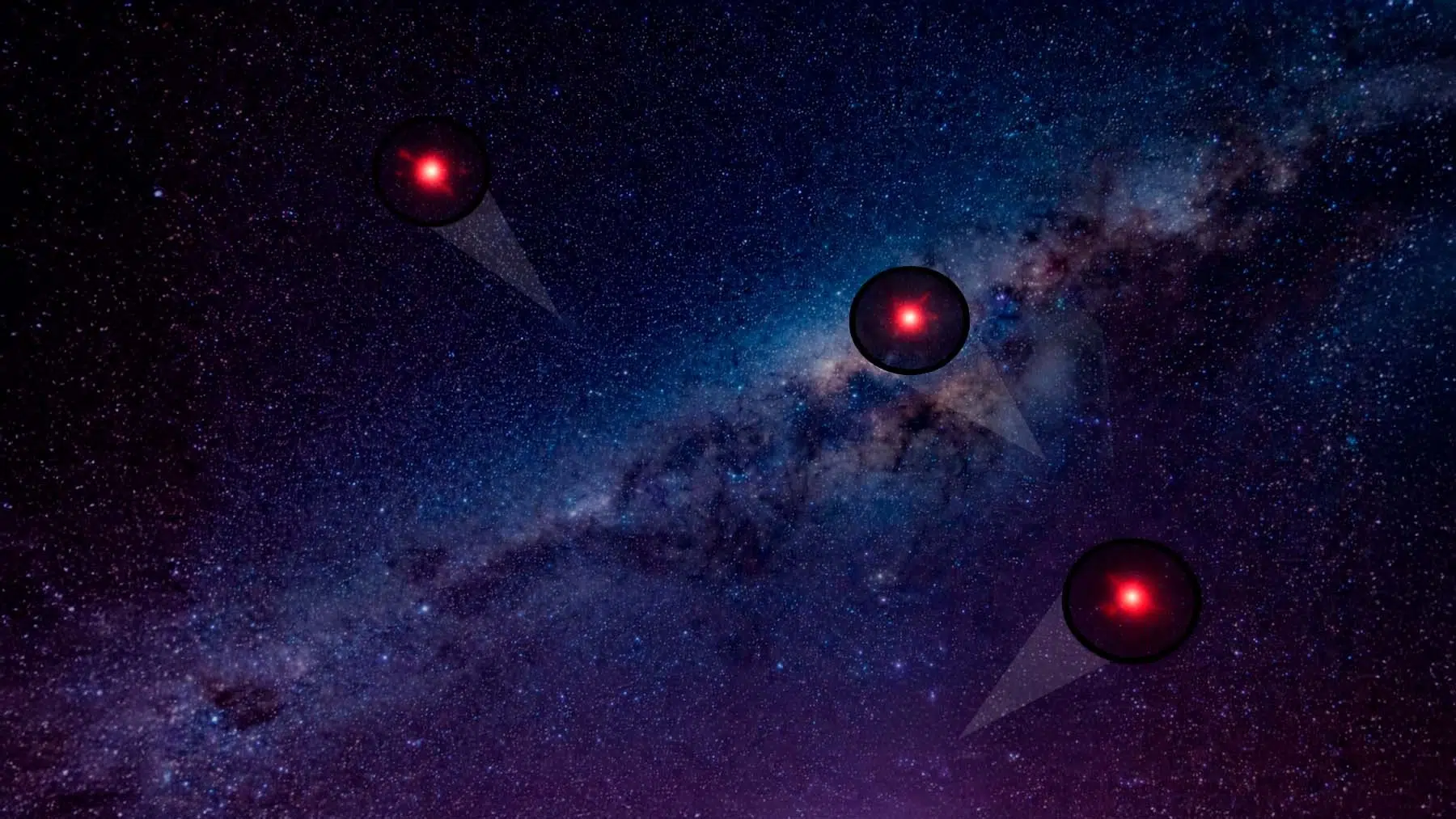
NASA has recently found mysterious little red dots that are traversing the cosmos while their gases orbit at astonishing speeds. So what exactly has been discovered by the iconic space institution?
Tiny red objects racing through the universe have puzzled the best and brightest
NASA and others have been studying these strange “little red dots” in the deepest parts of the universe.
Based on data provided from the James Webb Telescope, scientists and astronomers have theorized several answers as to what exactly these strange red dots in the sky might be. The majority of the scientific community is concerned with Dark Matter, but these new findings may answer some burning questions.
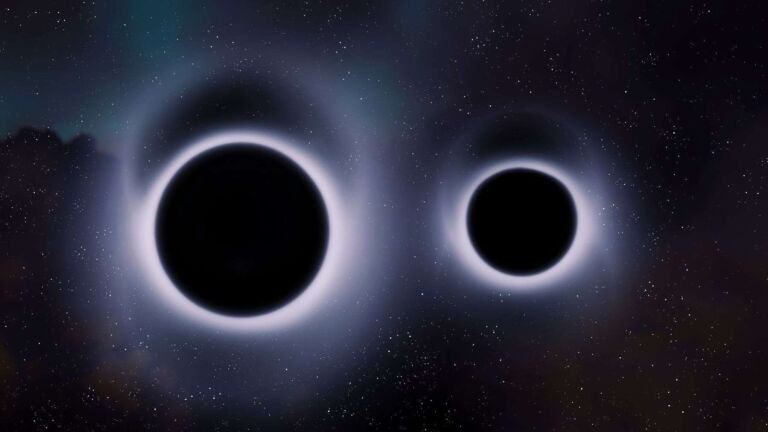
NASA has noted that these odd little red dots could be a variety of space objects, including but not limited to very young supermassive black holes.
Red dots traveling in the earliest parts of the universe
The study finds that as these black holes consume the space gas around them, they generate massive amounts of heat. Due to our distance from these celestial objects, we can only perceive them for a moment in time when they appear as tiny red dots.
These red dots are travelling through space at roughly 600,000 mph, with other institutions noting that the speeds could reach as high as 2 million mph.
While most of us down here on Earth are preparing for the next eclipse, the findings made by NASA have lifted the veil on the earliest days of the universe and how black holes affect the space around them.
Read the whole thing?
Get the week's signal, not the noise
Our sharpest reporting on energy, climate and nature — free, once a week.