Pulsar Timing Array (PTA) astronomers have spent years listening to a faint signal from across the universe.
These signals do not appear to come from a single energetic event or its aftermath. Instead, they resemble a faint cosmic “hum.”
This hum appears to affect the timing of some of the most precise “clocks” in existence. These “clocks,” called pulsars, are remnants of dead stars rotating at incredibly high speeds and emitting remarkably consistent radio pulses.
Tiny variations in the timing of these radio pulses may carry signatures tracing back to the earliest supermassive-black-hole seeds in the universe.
What can explain this weak persistent cosmic hum?
Scientists realized this was not a single cosmic event
Unlike gravitational waves produced by an individual event, the signal observed by PTAs appears to be the result of multiple events occurring over very long timescales at vastly different locations in the universe.
Scientists monitor pulsars scattered throughout the galaxy. Each of these pulsars generates radio pulses that scientists record with great precision.
When gravitational waves pass between Earth and a pulsar, they slightly alter the arrival time of the pulsar’s radio pulses.
Over prolonged observation, several collaborations have provided evidence for the existence of a gravitational wave background.
The signal behaves more like a constant background feature of spacetime than a single event. However, confirming the existence of the gravitational wave background has been only one part of this investigation.
The clues pointed back toward the cosmic dawn
To see if this was true, researchers looked much farther back in time, according to a report from Colgate University published via Science Daily. Researchers investigated whether events from the early universe could help explain the signal being detected today.
Part of the research involved modeling populations of massive early black-hole seeds and tracking how they evolved over time.
The results suggest that observations made today may help researchers test ideas about the types of objects that formed when the universe was still young.
The simulations also allowed researchers to compare current observations with different scenarios involving those early populations.
Some black holes appear far earlier in the universe than many researchers expected. Their presence has created new questions about how they formed and grew.
Scientists are still testing different ideas about the seeds that came first.
That challenge helped motivate studies like this one. However, the study does not establish that Dark Stars existed or that they are responsible for the signal.
Researchers found an unexpected candidate
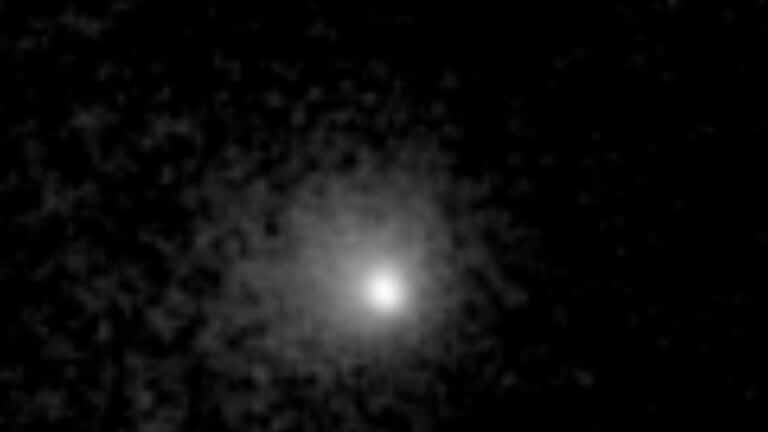
One way to explain the data collected by the researchers was through hypothetical Dark Star objects.
These objects are thought to have formed in the very early universe, according to the theory.
In contrast to normal stars, which produce light and heat through nuclear fusion, Dark Stars would obtain most of their power from annihilating weakly interacting massive particles, known as WIMPs.
If Dark Stars obtained enough energy, they could have grown enormously before collapsing into black holes.
Their influence may have lasted for billions of years
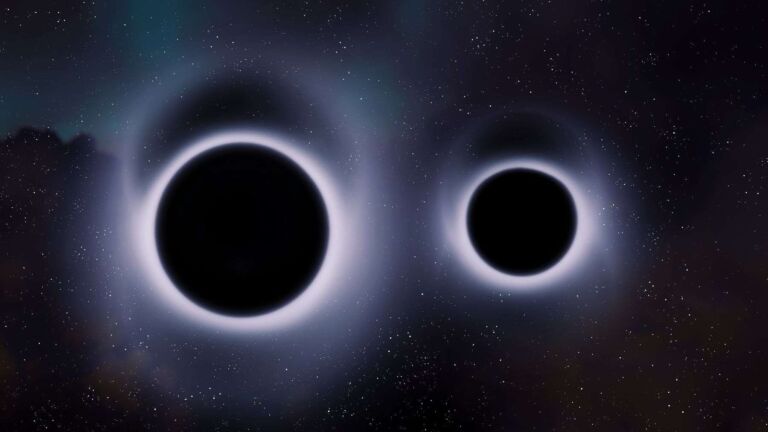
Their subsequent evolution into a binary system, ultimately leading to eventual merger, would likely occur over billions of years.
Mergers between many of these black-hole binaries could contribute to the background signal now being measured by Pulsar Timing Arrays.
According to the study, remnants of supermassive Dark Stars could provide a significant contribution to the gravitational-wave background detected by Pulsar Timing Arrays. If they existed in sufficient numbers in the early universe, that contribution could even be dominant.
The paper concludes that, instead of being a final answer, the authors consider remnants of supermassive Dark Stars to be just one possible explanation.
Future observations may help test what caused the gravitational hum detected today.
Read the whole thing?
Get the week's signal, not the noise
Our sharpest reporting on energy, climate and nature — free, once a week.