A long-dormant galaxy has been awakened in spectacular fashion.
Astronomers have been like kids in a candy shop with an unlimited price tag, thanks to the amazing data from the Hubble and James Webb telescopes. The truth about the universe has been slowly revealing itself to us as these astonishing telescopes make their way further away from Earth.
How can a “space volcano” erupt following millions of years of lying idle?
How NASA has become immensely important to our progress as a species
In 1958, the world looked very different. Dwight D. Eisenhower started us down a path toward reaching the deepest regions of our universe.
NASA was created to be a more civilian-based space agency as opposed to the military-minded National Advisory Committee for Aeronautics or NACA. Since then, it has changed how we study the cosmos for answers and has enabled our species to gaze into the inky darkness of space like never before.
The now iconic “vommit comets” used to simulate zero gravity have become emblematic of the picture we all have in our minds of astronaut training.
Exemplifying the international cooperation in space exploration is the fact that all astronauts, regardless of nationality, need to learn Russian to operate the technical systems on the International Space Station.
The Webb and Hubble Telescopes: Marvels of modern engineering
The revolutionary Hubble and James Webb telescopes have given us unprecedented access to a treasure trove of information about the universe.
For generations, we relied on Earth-based telescopes, but these two marvels of modern engineering have acted like time machines. Giving us the chance to peer into a distant point in time to reveal answers to our burning questions about the universe and how it was born.
NASA has seen objects travelling backwards in time, as we know space and time are intrinsically connected.
The Webb telescope took what Hubble started and boosted the potential tenfold. It’s 18 hexagonal mirrors, along with its tennis court-sized sunsheild allow it to be unfolded in space after launch, providing new deep field images of the furthest regions of the sky.
While we here on Earth spend our immediate time focusing on the Artemis mission, the Webb and Hubble telescopes have spotted a “space volcano”.
And NASA has stated that what it found reversed a previously held theory that stood for thirty years.
In a galaxy far, far away, a space volcano has erupted
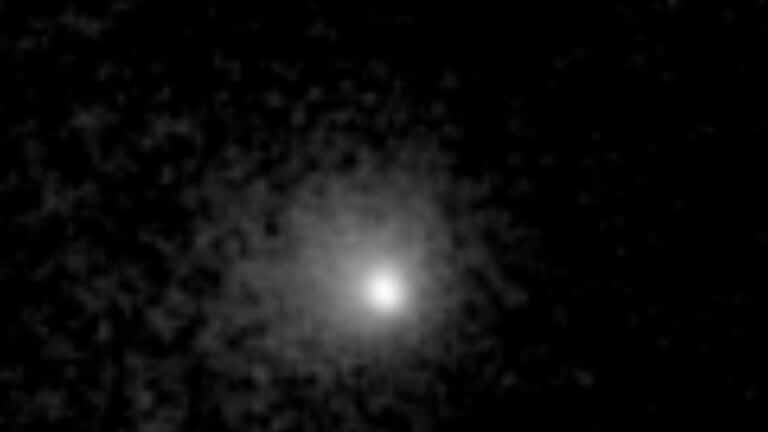
The revolutionary data from the James Webb Telescope has revealed that the Circinus Galaxy has a massive black hole that has been acting like a space volcano.
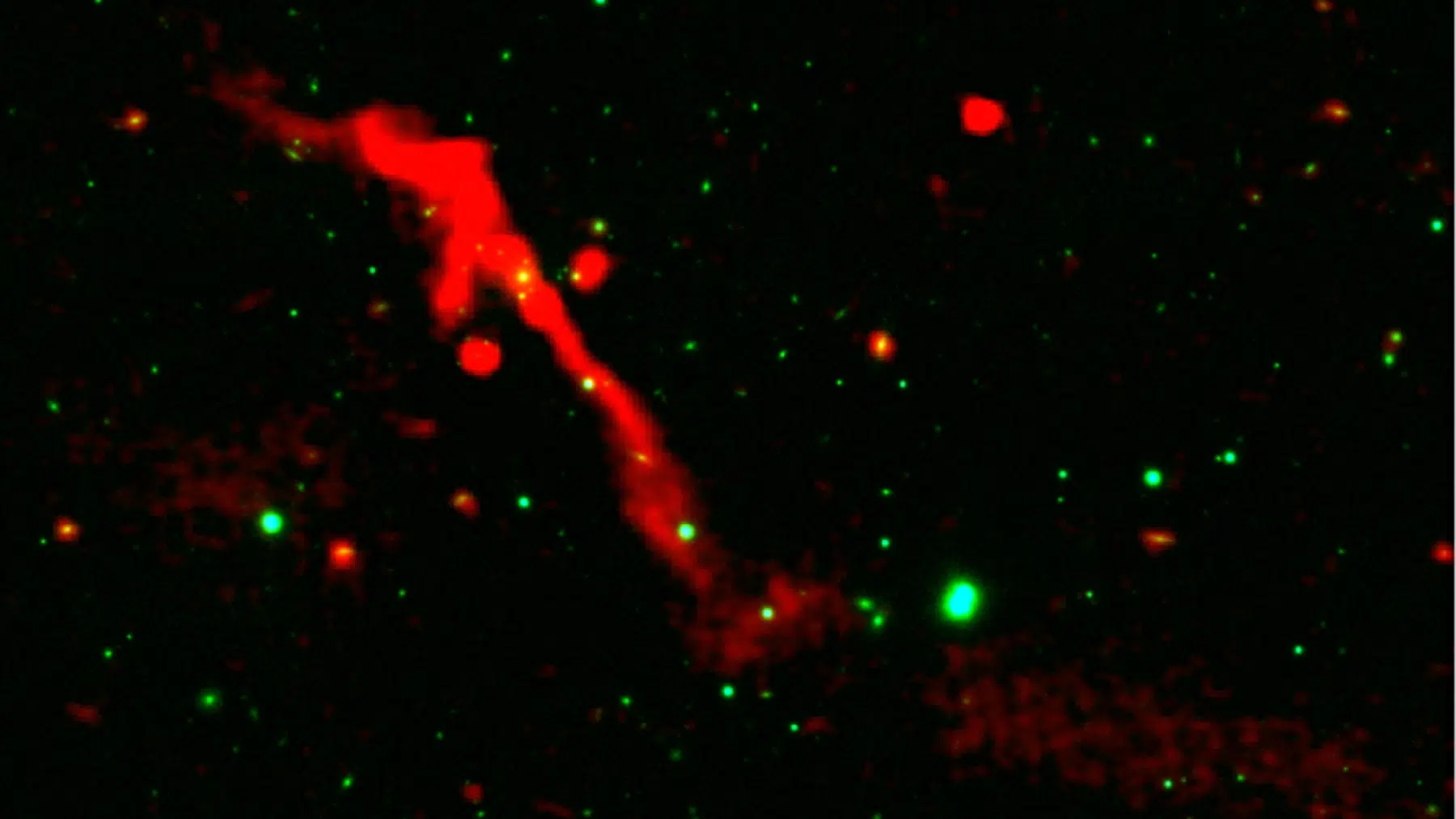
The findings noted that the supermassive black hole has been consuming the surrounding space dust in an inward spiral, shooting out massive jets of energy that look like a volcano erupting. This theory reverses a long held beleif that supermassive black holes in the Circinus galaxy exerted energy.
NASA has stated that the galaxy in question produces nearly 87% of its central infrared emissions from the material that feeds the supermassive black hole.
The recent blood moon is not the only development in the collective expansion of our knowledge of the cosmos.
A space photo with profound implications for the world
By using the latest technology, such as aperture masking interferometry, the “space photographers” were able to capture the most detailed image of the Circinus galaxy to date, revealing the “space volcano” that is blasting out jets of energy like a Jedi using the force.
The galaxy has been silent for over 100 million years, but the space volcano of energy has proven that at the drop of a hat, things can change. Dramatically.
While some photos of the universe may reveal the chemistry of celestial bodies out there, the recent “space volcano” has painted a very different picture of how supermassive black holes behave and their impact on the region around them.
Read the whole thing?
Get the week's signal, not the noise
Our sharpest reporting on energy, climate and nature — free, once a week.