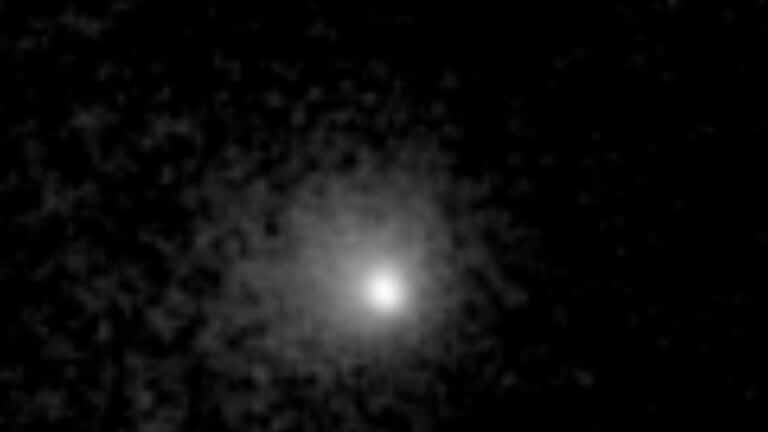
In 1604, astronomers and other people around the world witnessed a bright new star appear in the evening sky.
Among those watching was German astronomer Johannes Kepler, who would later make detailed observations of the event.
To everyone looking up, it seemed as though a new star had suddenly appeared.
According to NASA, the source of that brilliant light is about 20,000 light-years away. The explosion itself happened roughly 20,000 years before its light finally reached Earth.
The star that wasn’t new
Today, the event is known as Kepler’s Supernova (or SN 1604). Later studies revealed that the explosive event responsible for this burst of energy was a Type Ia supernova.
These occur when a massive white dwarf accumulates enough material for extreme pressure to build until the star explodes.
The blast releases enormous amounts of energy in a very short time.
Although the event became visible from Earth in 1604, it had actually occurred thousands of years earlier. It simply took that long for the light to reach our planet.
More than 400 years later, scientists are still uncovering new details about this remarkable explosion.
A remnant still revealing new clues
The remnants include extensive clouds of debris radiating outward from the site of the initial explosion.
For more than two decades, NASA’s Chandra X-ray Observatory has monitored these changes. The observations come from five campaigns conducted in 2000, 2004, 2006, 2014, and 2025.
Additional information about Kepler’s Supernova Remnant is available from NASA.
Researchers combined these datasets to create a visual “time-lapse” showing how the remnant continues to expand. Even on human timescales, scientists can measure changes in the remnant.
Astronomical objects are immense in both age and scale.
Being able to watch one change over just a few decades is extremely unusual.
These data show that different areas of the remnant are moving at varying rates.
NASA measured the highest speed of any portion of the debris field at approximately 13.8 million miles per hour. That equals roughly 5,400 miles per second.
Many other sections are moving much more slowly.
Researchers think the velocity differences result from changes in the density of the surrounding material. NASA found that denser material slows the expanding debris much more quickly than less dense regions.
Kepler’s Supernova Remnant gives scientists a rare opportunity to compare modern observations with historical records.
Because researchers know exactly when the light reached Earth in 1604, they can measure how the remnant has changed over time.
The explosion is still unfolding
The expanding bubble is Kepler’s Supernova Remnant. It represents the debris field left behind after the destruction of a white dwarf star.
The remnant also gives scientists a rare opportunity to study a Type Ia supernova centuries after the explosion.
Scientists use these explosions as “standard candles” to measure distances throughout the universe. That makes these explosions valuable far beyond their own stellar systems.
They help astronomers compare distances across enormous regions of space.
Every year, the expanding shell interacts with new clouds of gas and dust. Those interactions continue giving researchers fresh details about the explosion.
The bubble-like shape formed because the explosion hurled material outward in every direction from the center.
Some of that debris still carries enough momentum to push against surrounding matter long after the initial explosion.
Still expanding after four centuries
Rather than moving through space unchanged, the expanding debris gradually slows as it collides with surrounding gas and dust.
More than four centuries after people first noticed the appearance of a bright new star in the sky, this explosion is still unfolding. Light from the explosion reached Earth in 1604.
Today, its debris continues traveling thousands of miles per second through space.
Read the whole thing?
Get the week's signal, not the noise
Our sharpest reporting on energy, climate and nature — free, once a week.