Walking through a quiet forest in Utah — everything is normal.
The largest organism disappearing here isn’t something you would notice right away.
The wind stirs the branches of the trees, and sunlight catches the leaves; it all seems just so… ordinary.
However, beneath our feet lies a very different story.
Every single tree we walk past is part of something much larger – a single organism named Pando. For years, scientists have been monitoring it, and still, there’s something about its slow disappearance that doesn’t quite fit.
What is actually going on with Pando, and why is it quietly fading away?
Beneath this forest, something isn’t what it seems
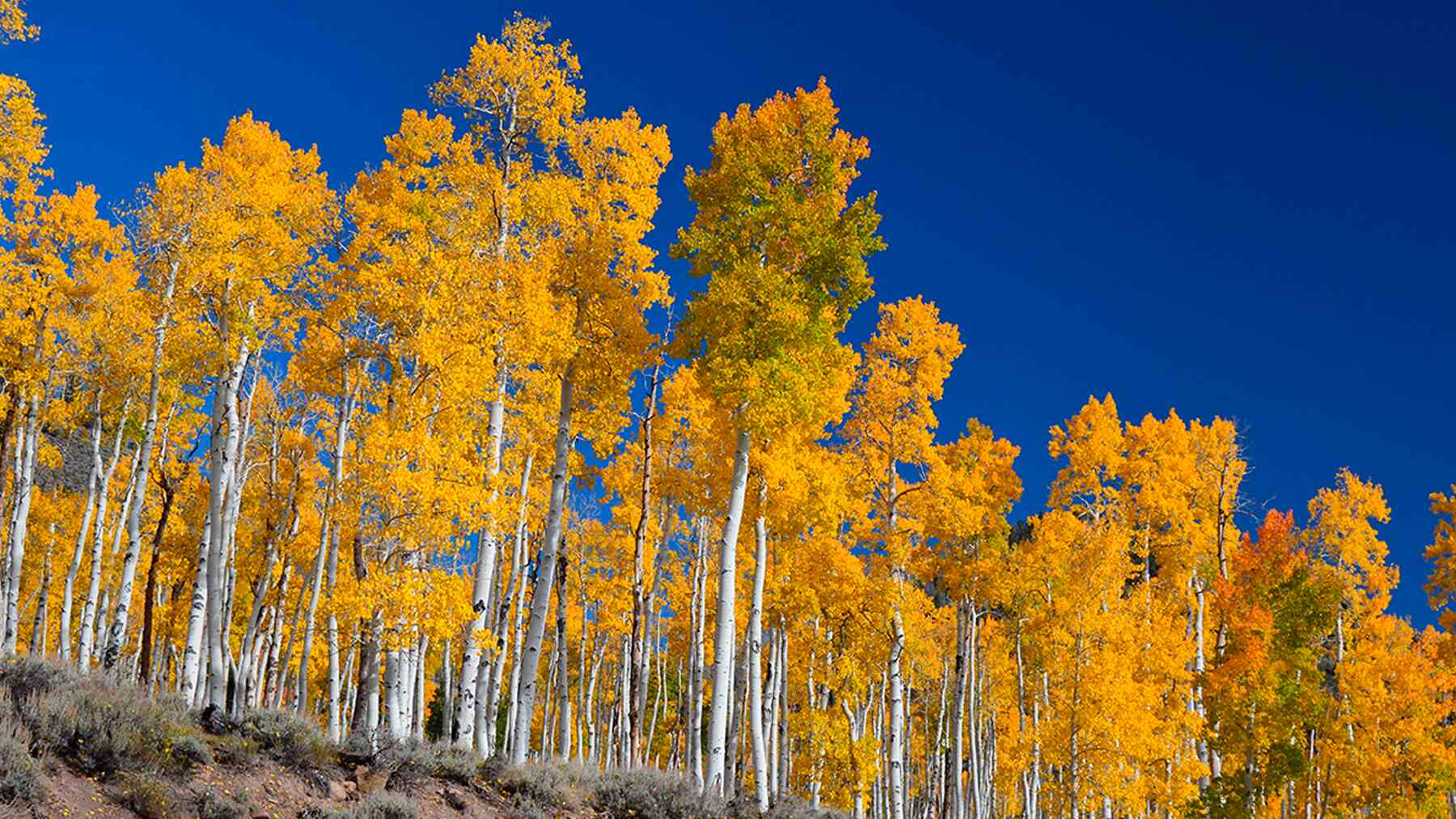
Pando appears to be simply a grove of quivering Aspen trees.
In fact, this is not a typical forest.
All of the individual trees share the exact genetic makeup and are physically linked by an extensive network of roots that form a massive single entity.
It spans over 100 acres and is officially regarded as the world’s largest organism.
As each individual trunk grows old and dies, the roots of the network continue to thrive by producing new shoots.
This method allows Pando to survive for thousands of years. However, despite being a self-sustaining system, it has begun to exhibit problems.
Younger replacement trees do not seem to be sprouting at the same rate as they used to.
Something is subtly altering the natural process, although it may take some observation to detect it.
At first, something doesn’t quite add up
As time goes by, slight patterns emerge.
Certain sections of the grove contain healthy, thick stands of vegetation, whereas in other regions the vegetation appears sparse and aging.
New growth does not appear evenly spaced throughout the grove, suggesting that certain parts of Pando may struggle to produce replacements at the same level.
Some observers have noted that younger shoots generally do not live long enough to reach maturity.
In a few locations, they don’t even make it off the ground before disappearing completely.
A major question emerges concerning whether this once seemingly immortal system will remain viable in the future. If Pando can continually reproduce indefinitely then what would cause this cycle to cease functioning?
It is fascinating to see how archival research intersects with ecology, as shown in this project from the Utah State Historical Society.
The change isn’t happening all at once
Although the forest still appears intact from the outside, the system beneath the surface is beginning to change.
The trunks of the trees continue to stand upright, and the general landscape remains unaltered.
Beneath this appearance, however, something is slowing significantly. Regrowth is occurring less rapidly than previously observed.
When regeneration quietly begins to fail
This particular biological system relies upon developing shoots becoming strong enough to serve as replacements for dying trunks.
Unfortunately, most developing shoots fail to reach such strength prior to their demise.
Multiple areas within the grove demonstrate that new growth is frequently either consumed or damaged early in development.
Increased mobility of deer and elk through these areas due to lack of fencing and removal of predators is placing continued stress on developing shoots.
At the same time, management practices of the area surrounding Pando have altered the overall balance of the ecosystem in which it resides.
Fencing, predator removals, along with shifts in population levels among animals have collectively resulted in changes in how this ecological area functions.
Rather than experiencing a rapid failure of function, the forest has exhibited gradual degradation. Some areas are continuing to grow, while others are falling progressively farther behind.
If this trend continues, rather than suddenly collapsing, it will gradually fade away piecemeal.
And if something as large as Pando can decay so slowly that it goes unnoticed, what else might be changing in ecosystems in ways we don’t yet understand?
Read the whole thing?
Get the week's signal, not the noise
Our sharpest reporting on energy, climate and nature — free, once a week.